
15 Creative Pea Gravel Patio Ideas for High Country Homes
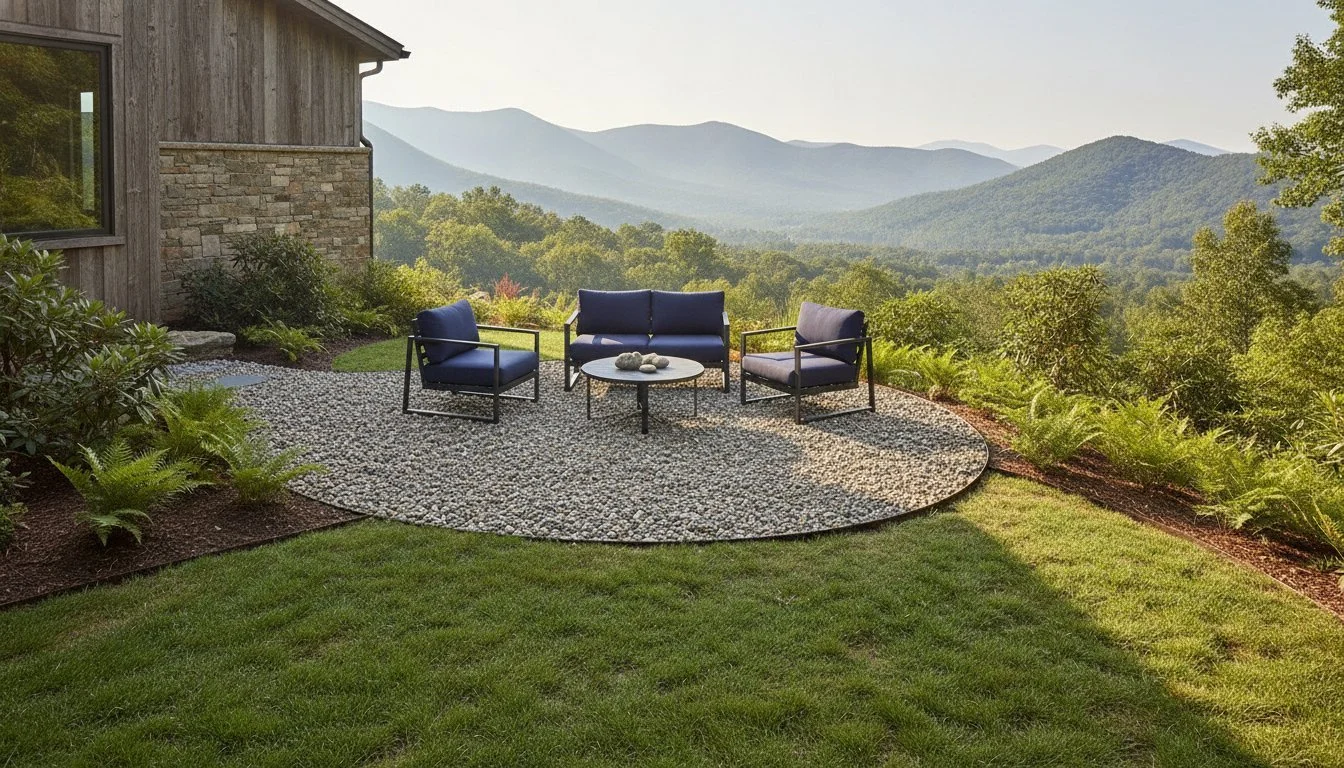
What if your patio could actually improve your property's drainage while providing a high-end look for a fraction of the cost of traditional pavers? Many homeowners in the North Carolina mountains find that standard concrete slabs crack on slopes or cause washouts during heavy rain. Exploring specific pea gravel patio ideas allows you to work with the natural landscape of the High Country rather than fighting against it.
In this guide, we share 15 creative designs tailored to handle the specific challenges of our local terrain. You'll learn how to transform uneven ground into a stable, low-maintenance retreat that protects your home foundation and complements the surrounding scenery. We'll cover everything from structural edging techniques to design layouts that turn a simple gravel bed into a professional-grade outdoor living room. From selecting the right stone to managing runoff, this overview provides the practical steps needed to build a durable space that stands up to the elements for years to come.
Key Takeaways
Implement functional pea gravel patio ideas that leverage natural permeability to manage heavy mountain rainfall and improve site drainage around your home.
Explore diverse aesthetic styles ranging from contemporary minimalist designs to traditional rustic retreats that utilize local materials like river rock.
Master the engineering principles of depth and containment to ensure your outdoor living space remains stable and secure on uneven High Country terrain.
Identify the logistical benefits of bulk material delivery to streamline your project timeline and reduce overall costs compared to buying individual bags.
Learn specific site preparation and excavation techniques designed to handle the unique soil conditions and slopes found in Watauga County.
Why Pea Gravel is the Smartest Choice for High Country Patios
Homeowners in the High Country face unique environmental challenges that require specific landscaping solutions. When exploring pea gravel patio ideas, the material choice is often the most critical decision for long-term stability. Pea gravel consists of small, rounded stones that have been smoothed by natural water erosion. What is Pea Gravel? Essentially, it's a versatile decorative aggregate that offers a softer texture underfoot than crushed stone or industrial gravel. Its smooth edges make it comfortable for foot traffic while providing a clean, finished look for any outdoor space.
In regions like Boone and Blowing Rock, heavy rainfall is a constant factor. Traditional concrete or asphalt surfaces are impermeable. This means water runs off the surface and can cause significant erosion or foundation issues on sloped lots. Pea gravel is naturally permeable. It allows water to filter directly into the ground, which reduces the load on your home's drainage system and prevents pooling. This functionality makes it a strategic tool for managing moisture in mountain yards.
Building a wood deck or pouring a concrete slab on a sloped mountain lot often requires expensive structural engineering and professional labor. Pea gravel is a significantly more cost-effective alternative. It adapts easily to the irregular footprints common in mountain landscaping. If your yard has a unique curve, a protruding boulder, or a steep grade, the gravel settles into the shape of the land. It doesn't require the rigid forms or perfectly level ground needed for masonry or timber construction.
The Aesthetic Appeal of Natural Stone
The varied hues of pea gravel naturally complement the native flora of the Blue Ridge Mountains. You can achieve a sophisticated "European Courtyard" aesthetic that feels right at home in a rustic setting. By pairing gravel with larger River Rock, you can create distinct textures that define different outdoor rooms. This approach allows you to organize your space without building physical walls that block your mountain views.
Practical Benefits for Mountain Properties
Maintenance is straightforward and predictable. Unlike concrete, which often cracks during the intense freeze-thaw cycles of a High Country winter, pea gravel is resistant to frost heave. The loose stones shift individually, which prevents the structural failure seen in rigid materials. If a low spot develops after a heavy season, repairs involve simply raking the stone back into place or adding a small amount of fresh material to the surface.
Design Inspiration: 5 Pea Gravel Patio Styles for Your Yard
Selecting the right aesthetic is the first step in turning a functional drainage solution into a lifestyle asset. Many High Country homeowners struggle to visualize how loose stone fits their specific architecture. By reviewing proven pea gravel patio ideas, you can select a style that balances visual appeal with the rugged demands of a mountain climate.
The Modern Minimalist style focuses on precision. It utilizes thin steel edging to create sharp, geometric boundaries. This look often features dark stone accents or monochrome furniture to emphasize clean lines. It's a sophisticated choice for newer builds in developments around Boone where contemporary architecture is becoming more common.
For a more traditional look, the Rustic Mountain Retreat incorporates River Rock along the perimeter. This blending of stone sizes mimics a natural creek bed. When paired with native shrubs like rhododendrons, the patio feels like a natural extension of the forest floor rather than an artificial addition.
The Hybrid Patio is a high-performance design that addresses a common gap in standard landscaping plans. It combines large-scale Flagstone pavers with pea gravel infill. This creates a stable walking surface for heavy patio furniture while retaining the drainage benefits of a gravel base. This hybrid approach is one of the most durable pea gravel patio ideas for high-traffic areas because it prevents furniture legs from sinking into the stone.
Safety is paramount on mountain lots. The Fire Pit Hub uses pea gravel as a non-combustible base. This is a critical safety feature during dry spells in the Blue Ridge. It provides a level area for seating while ensuring that stray embers land on stone rather than dry grass or wood decking.
Finally, the Tiered Mountain Terrace is essential for steep yards. This design uses timber or stone retaining walls to create flat "steps" filled with bulk pea gravel. Sourcing materials from a local provider like All Seasons Supply ensures you have the volume of stone needed to fill these terraces effectively without the high cost of individual bags.
Integrating Flagstone and Fieldstone
Using large flagstone steppers provides a predictable path through the gravel. This is particularly helpful for primary walkways leading to the house. Framing the entire area with local fieldstone creates a built-in, permanent look. When selecting stone, match the colors to your home's foundation or chimney to create a cohesive visual theme. This attention to detail ensures the project feels like a planned part of the property.
Defining the Space with Edging
The choice of edging dictates the final character of the project. Natural wood timbers offer a classic mountain cabin aesthetic and are cost-effective for large areas. Brick or concrete pavers provide a more formal, finished perimeter. If you prefer a contemporary look, metal edging offers nearly invisible containment that keeps the stone in place without a visible border. Before you start, consider which edging material best suits your property's slope. If you need help selecting the right materials for your project, All Seasons Supply offers a wide inventory of River Rock and Flagstone to help you find the perfect match.
Engineering for Stability: Drainage and Containment
A patio in the High Country must do more than look good; it has to stay in place. The steep grades and high-velocity runoff common in Watauga County can quickly turn a poorly planned gravel bed into a washout. When evaluating pea gravel patio ideas, the structural engineering beneath the surface determines whether your investment lasts through the next heavy storm cycle. Stability starts with a clear understanding of depth and containment.
The secret to a stable surface is maintaining a consistent 3-inch depth of stone. If the layer is too thin, the underlying base or landscape fabric becomes visible. If it is deeper than 3 or 4 inches, the surface becomes difficult to walk on, creating a "sinking" sensation. To prevent the stone from migrating into the soil, always install a professional-grade landscape fabric. This barrier serves a dual purpose: it suppresses weed growth and maintains the separation between your decorative gravel and the raw mountain earth.
Managing a slope requires more than just a sturdy border. For yards with a significant grade, consider using terraces or "check dams." These are horizontal tiers built into the slope using heavy timbers or stone. They break up the downward flow of water and gravity, keeping your gravel level and secure. Without these structural breaks, gravity and rain will eventually move your patio to the bottom of the hill.
Solving the "Sinking" Problem
High-traffic areas require a reinforced foundation. For patios that will host heavy dining sets or frequent gatherings, a compacted ABC Stone base is essential. This dense layer of crushed stone provides a rigid platform that prevents the top layer of pea gravel from shifting under weight. After compacting the base, use a thin layer of screenings to level the ground. This creates a perfectly flat plane before you apply the final decorative stone. A 2-3 inch finish of gravel on top of this engineered base provides the most comfortable and stable walking surface.
Advanced Drainage Solutions
Proper drainage protects your home foundation. Always pitch the patio away from the house at a minimum slope of 1/4 inch per foot. In areas with extreme runoff, integrating a French drain beneath the gravel layer provides a dedicated path for water to exit the site. Pea gravel acts as a natural filter for yard runoff, slowing down the water and allowing it to soak into the ground rather than creating erosive streams. This engineered approach ensures your outdoor space remains functional and dry throughout the wettest months of the year.
Step-by-Step Guide to Installing Your Pea Gravel Patio
Executing successful pea gravel patio ideas requires a methodical approach to site preparation. Start by marking your perimeter with stakes and mason's string to establish clear boundaries. In the High Country, this often involves clearing dense mountain brush or navigating around established tree roots. Removing all organic material from the site is essential. If grass or roots remain beneath your patio, they will eventually decompose and cause the surface to become uneven.
Excavation in Watauga County often reveals heavy clay or large subterranean stones. You must dig deep enough to accommodate the engineered layers discussed in previous sections. For most residential projects, a total depth of 5 to 6 inches is required. This allows for 3 to 4 inches of compacted base material and a 2-inch finish of pea gravel. Ensure the bottom of your excavated area is smooth and follows the desired pitch for drainage. Once the soil is clear, lay down a professional-grade, heavy-duty landscape fabric. This barrier is non-negotiable; it prevents your stone from sinking into the mountain clay while allowing water to pass through freely.
The "Pour and Level" phase is the final step in the installation. Instead of dumping the entire load in one spot, distribute the gravel in small piles across the area. Use a heavy metal rake to spread the stone evenly. Work from the center of the patio outward toward the edges to maintain a consistent depth. A final pass with a wide landscape rake will remove any ridges and create the smooth, level finish characteristic of a professional installation.
Calculating Your Bulk Material Needs
To determine the volume of material required, multiply your square footage by the desired depth in inches, then divide by 324. This formula converts your measurements into cubic yards. For example, a 200-square-foot patio at a 3-inch depth requires approximately 1.85 cubic yards of stone. Always order at least 10% more than your estimate to account for settling and edge containment. You can use our online tool to calculate bulk materials for more precise planning. Ordering in bulk is significantly more efficient than handling hundreds of individual bags for a project of this scale.
Long-Term Maintenance Tips
Maintaining the integrity of your patio involves a simple "Rake and Refresh" schedule. Use a leaf blower on a low setting to remove fallen leaves and pine needles from surrounding trees. High Country winters can cause some stone migration, so raking the surface toward the center once a season keeps the depth consistent. Every few years, you may need a small "top-off" delivery to replace stone that has settled or moved. To ensure you have the materials needed for a successful project, order bulk pea gravel delivery from All Seasons Supply to streamline your installation process.
Sourcing Quality Materials in Boone and Watauga County
Sourcing materials for your outdoor project requires a balance of quality and logistical efficiency. While many pea gravel patio ideas focus on the final aesthetic, the success of the build depends on having the right volume of stone delivered directly to your site. In the North Carolina mountains, where driveways are often steep and narrow, traditional retail solutions like bagged gravel often prove impractical and expensive.
Selecting the right stone variety is about more than just color. Pea gravel comes in different sizes and textures, typically ranging from 1/4 inch to 3/8 inch. Smaller stones provide a denser, more walkable surface, while slightly larger varieties offer better weight distribution for furniture. Local expertise is vital here; the soil in Boone and Blowing Rock often contains heavy clay that requires a specific aggregate base to prevent the decorative stone from disappearing into the mud over time.
All Seasons Supply simplifies this procurement process by leveraging over 50 years of combined industry expertise. We help homeowners navigate the complexities of mountain landscaping by providing the exact materials needed for a durable finish. From the initial ABC Stone base to the final layer of pea gravel, our team ensures you have the right products to handle the High Country's unique climate and terrain.
Bulk vs. Bagged: The Real Cost Analysis
For any patio project exceeding 50 square feet, bulk delivery is the professional standard. Buying by the ton is significantly more cost-effective than purchasing individual bags at a retail store. Beyond the financial savings, bulk sourcing reduces environmental impact by eliminating dozens of heavy plastic bags that would otherwise end up in a landfill. The labor savings are equally important. Having a truck drop your gravel exactly where you need it saves hours of manual lifting and hauling, allowing you to focus on the installation itself.
The All Seasons Supply Delivery Experience
We provide dependable delivery services across Boone, Foscoe, Blowing Rock, and the surrounding Watauga County area. Our drivers are experienced in navigating the challenging terrain of the High Country, ensuring your materials arrive safely and are placed as close as possible to your project site. We also offer expert advice on matching stone colors and textures to your existing landscape, helping you create a cohesive look that complements your home’s exterior. If you are ready to start your project, request a quote for bulk pea gravel delivery to see how we can support your next outdoor improvement.
Build Your Durable Mountain Retreat
Implementing these pea gravel patio ideas transforms a challenging mountain slope into a functional, low-maintenance living space. Success in the High Country depends on proper engineering, specifically managing high rainfall with the right base layers and drainage solutions. Choosing bulk delivery ensures you have the necessary volume to achieve a stable depth without the repetitive labor of hauling individual bags up a mountain driveway.
All Seasons Supply is a family-owned business with over 50 years of combined landscaping expertise. We provide dependable service and quality materials tailored to our local terrain. Order Bulk Pea Gravel for Your High Country Project to secure reliable delivery to Boone, Blowing Rock, or Banner Elk. We understand the logistical challenges of mountain property upkeep and remain committed to supporting your project from procurement to completion. With a solid foundation and the right materials, your new patio will serve as a resilient outdoor sanctuary for years to come.
Frequently Asked Questions
Is pea gravel hard to walk on in flip-flops or bare feet?
Pea gravel is generally comfortable for bare feet and flip-flops because the stones are naturally rounded by water erosion. Unlike crushed stone, which has sharp, jagged edges, these smooth pebbles shift slightly under pressure to provide a softer walking surface. This texture makes it a preferred choice for residential seating areas where comfort is a priority.
How do I keep my pea gravel from moving into my lawn or flowerbeds?
Effective containment requires a sturdy edging material like steel, heavy timber, or local fieldstone. A proper border creates a physical barrier that prevents stones from migrating into your lawn or landscape beds during heavy mountain rains. Installing the edging slightly higher than the gravel surface ensures the material remains secure even with frequent foot traffic.
Will furniture sink into a pea gravel patio?
Furniture will stay stable if you limit the gravel depth to 2 or 3 inches over a compacted base of ABC Stone. If the stone layer is too deep, chair legs will sink into the loose aggregate. Incorporating large flagstone pavers into your pea gravel patio ideas provides a solid platform for heavy dining sets while maintaining the drainage benefits of the surrounding gravel.
How much does a pea gravel patio cost per square foot in Boone?
The total investment for a pea gravel patio is generally more budget-friendly than masonry or wood decking. Most of the cost is determined by the volume of bulk material needed and the complexity of your site preparation. Choosing bulk delivery over bagged products provides the best value for larger High Country properties while reducing the labor of hauling material up steep driveways.
Can I install a pea gravel patio directly over dirt or grass?
Installing gravel directly over grass or raw dirt is not recommended because it leads to immediate weed growth and uneven settling. You must excavate the area, remove all organic debris, and install a heavy-duty landscape fabric first. This process ensures the stone remains clean and prevents it from mixing with the underlying mountain clay over time.
What is the best way to clean leaves and debris off pea gravel?
A leaf blower on a low setting is the most efficient tool for removing leaves and pine needles without disturbing the stone. You can also use a light fan rake to gather larger debris from the surface. Because the stones are small and loose, avoid using high-pressure water or heavy metal rakes that might displace the material or tear the underlying fabric.
Does pea gravel attract snakes or pests in the North Carolina mountains?
Pea gravel is not a primary attractant for snakes or pests because it doesn't hold moisture or provide the dark, damp cover found in wood mulch. The dry, shifting surface is difficult for many insects to navigate. Keeping the area clear of leaf litter further reduces the likelihood of local wildlife nesting near your outdoor living space.
How deep should the pea gravel layer be for a stable patio?
A depth of 2 to 3 inches is the industry standard for a stable and comfortable patio surface. This thickness provides full coverage of the landscape fabric without making the ground feel too soft or difficult to traverse. Maintaining this specific depth ensures your pea gravel patio ideas result in a functional space that supports both foot traffic and outdoor furniture.