
Low-Maintenance Landscaping Ideas for Beech Mountain: High-Altitude Strategies
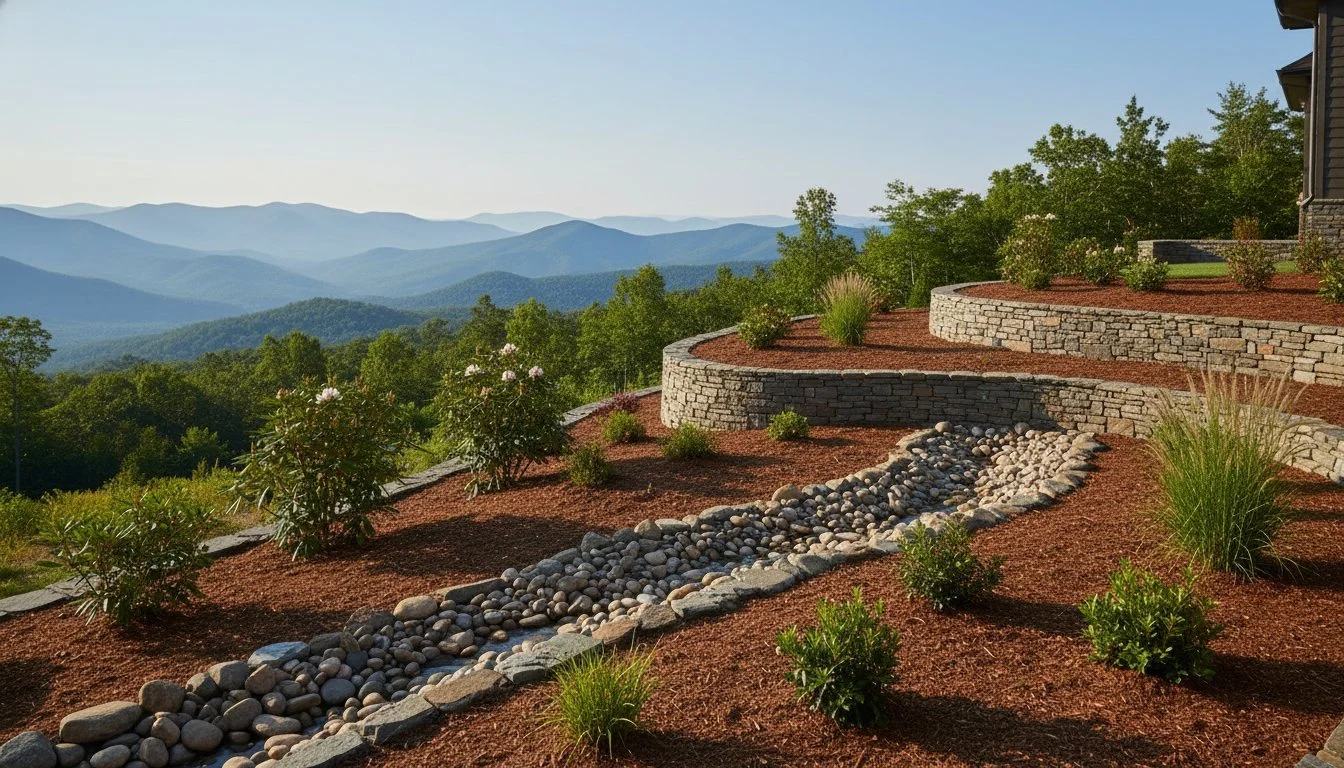
At 5,506 feet, maintaining a traditional manicured lawn isn't just difficult; it's a battle against the elements that most homeowners eventually lose. You likely already know the frustration of digging into thin, rocky soil only to have your efforts undone by extreme winds or heavy deer pressure. It's exhausting to plant a garden in late May only to see it struggle when the short growing season ends in early September. If you're looking for low-maintenance landscaping ideas that Beech Mountain properties actually support, the secret lies in working with the mountain's rugged character rather than fighting it.
We understand that you want a dependable, professional look that offers curb appeal without requiring constant upkeep. This article shows you how to utilize durable materials like river rock, fieldstone, and heavy hardwood mulch to manage erosion on steep slopes while keeping your property looking pristine. We'll outline the best Zone 5 hardy shrubs and perennials that can survive the cold and wind, helping you transition to a "set it and forget it" landscape that respects your time and the unique high-altitude environment.
Key Takeaways
Identify how the Beech Mountain microclimate requires Zone 5 hardiness and specialized wind-resistant strategies to ensure plant survival.
Implement low-maintenance landscaping ideas for Beech Mountain properties by using river rock and fieldstone to create durable, erosion-resistant foundations.
Select heavy hardwood mulch over lighter alternatives to maintain soil stability and effective weed suppression during intense mountain rain cycles.
Prioritize native nursery stock and deer-resistant perennials that are biologically equipped to thrive in short growing seasons.
Optimize project efficiency and reduce costs by using bulk delivery for heavy materials such as ABC stone, topsoil, and designer mulches.
The Beech Mountain Challenge: Why High-Altitude Landscaping is Different
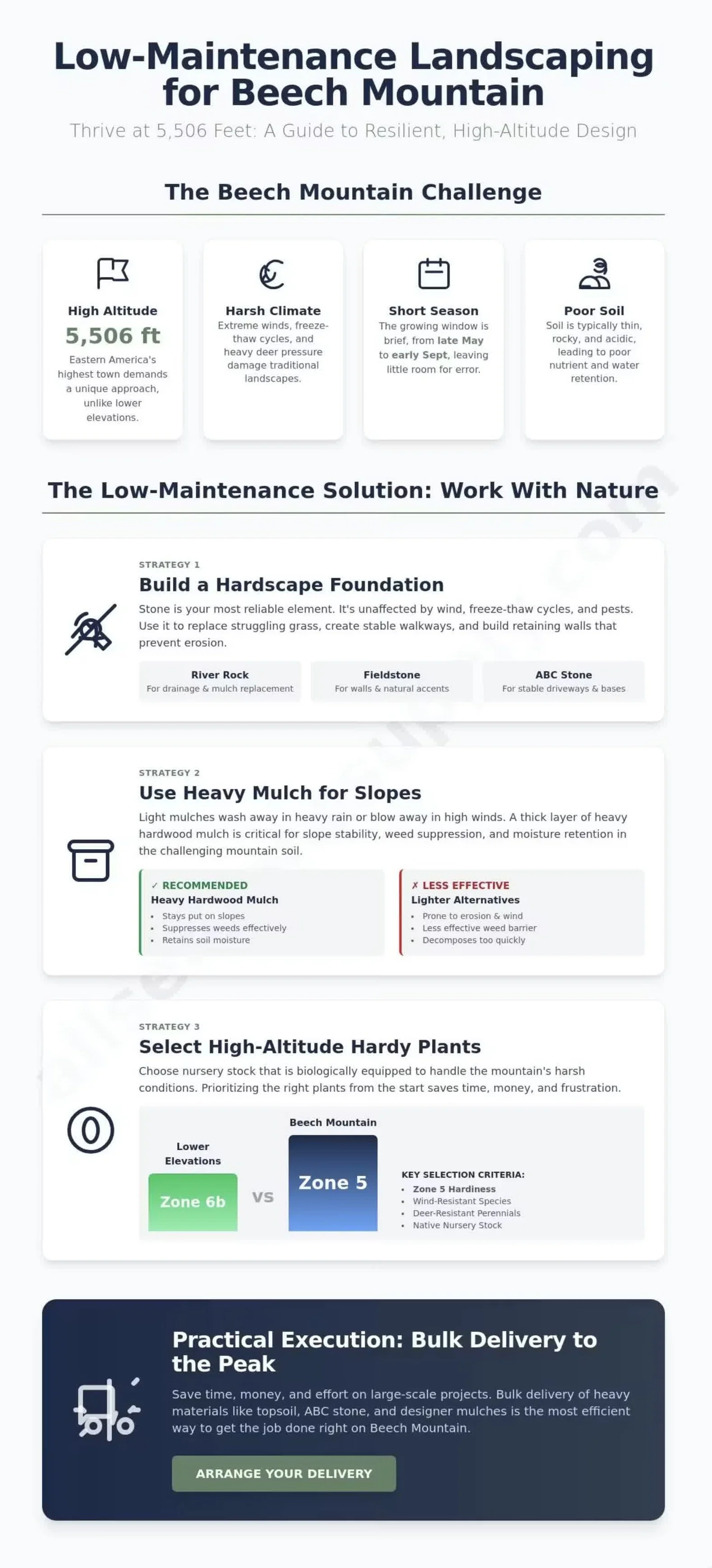
Designing for the Eastern United States' highest town requires a fundamental shift in strategy. Many property owners arrive with expectations based on lower elevations, only to find that traditional methods fail in the face of 5,506-foot conditions. The Beech Mountain Challenge: Why High-Altitude Landscaping is Different involves managing a microclimate that shares more in common with New England than the rest of North Carolina. While nearby Boone or Blowing Rock may enjoy a Zone 6b rating, the Peak often demands nursery stock rated for Zone 5 to survive the winter. The growing season is remarkably short, typically running from late May through early September, which leaves little room for error.
The "Wind Factor" is a primary operational hurdle. High-velocity gusts don't just cause physical damage; they strip moisture from foliage and accelerate soil erosion on the steep slopes of Avery and Watauga counties. Successful low-maintenance landscaping ideas that Beech Mountain residents can rely on focus on rugged, "wild" aesthetics that embrace the mountain's natural state. Instead of fighting to maintain a thirsty, high-maintenance lawn, it's more efficient to transition to hardy shrubs and stone-heavy designs that thrive with minimal intervention. This approach ensures your property remains attractive without requiring constant labor while you are on the mountain.
Understanding Hardiness Zones at 5,000 Feet
Elevation changes everything. A plant that thrives 1,500 feet below us in the valley will likely perish during a Beech Mountain freeze. It's vital to identify microclimates on your specific acreage. Windward sides of a ridge face the brunt of winter storms, requiring the most resilient species. Leeward areas might offer enough protection for slightly more delicate perennials. Selecting plants with proven mountain resilience is a dependable way to ensure your investment survives the first frost. We recommend prioritizing species that are biologically equipped for the High Country's specific pressures.
The Role of Soil Quality in Maintenance
The soil on Beech Mountain is notoriously thin, rocky, and acidic. This combination leads to rapid nutrient depletion and poor water retention. For any new bed to succeed, topsoil and compost amendments are essential to provide a functional growing medium. Once planted, applying a thick layer of hardwood mulch or pine bark mulch protects root systems from the extreme temperature swings common at high altitudes. This layer acts as a dependable barrier, suppressing weeds and retaining the moisture that the mountain wind tries to steal. Using low-maintenance landscaping ideas, Beech Mountain strategies often start with these foundational soil improvements to reduce long-term care needs.
Hardscaping: The Ultimate Low-Maintenance Foundation
Stone represents the most dependable element in a mountain landscape because it remains unaffected by the extreme freeze-thaw cycles and high winds of the Peak. While nursery stock requires seasonal attention, stone offers a permanent solution that doesn't demand water, fertilizer, or pest control. Implementing low-maintenance landscaping ideas for Beech Mountain properties often begins with replacing struggling turf with decorative stone beds. This strategy eliminates the need for lawn maintenance in areas where grass naturally fails due to thin soil and heavy shade.
River rock and pea gravel serve as excellent alternatives to traditional mulch in high-traffic areas or zones prone to heavy runoff. These materials provide a clean, intentional look that fits the local cabin aesthetic while ensuring proper drainage. For homeowners looking to balance these structural elements with greenery, hardscaping provides the necessary framework for Selecting High-Altitude Hardy Nursery Stock. By establishing stone boundaries first, you create protected pockets where soil stays put, and plants can thrive.
Erosion Control with River Rock and Rip Rap
Managing heavy mountain runoff is a logistical necessity on Beech Mountain's steep slopes. Large fieldstone and riprap serve as anchors, preventing your topsoil from washing away during intense summer storms or spring snowmelt. On driveways and parking pads, ABC stone provides a stable, compacted base that resists the rutting common in the High Country. If you're planning a structural retaining wall, remember that any wall exceeding four feet in height requires a design from a licensed North Carolina engineer to ensure long-term stability and safety.
Functional Beauty with Flagstone and Fieldstone
Walkways built from flagstone or fieldstone offer a rugged elegance that requires zero weeding or edging when installed correctly with screenings or pea gravel in the joints. These materials are heavy enough to stay in place during high-wind events that might scatter lighter landscaping products. You can find detailed material comparisons in The Essential Guide to Landscape Stone in Vilas, NC, to help determine which textures best suit your property's specific grade. If you're ready to secure the materials for your next project, you can view our current inventory of mountain-grade stone to find the right fit for your site's requirements.
Strategic Mulching for Slopes and Weed Suppression
Surface-level advice often suggests a standard two-inch layer of mulch for any garden, but on the steep grades of the High Country, this is rarely sufficient. Heavy mountain rains can quickly displace lighter materials, sending your investment to the bottom of the slope. Effective low-maintenance landscaping ideas for Beech Mountain homeowners include choosing mulch with the right weight and texture to resist washout. For those prioritizing Strategic Mulching for Slopes and Weed Suppression, selecting a material that stays put is just as important as selecting the right nursery stock. A deeper application of three to four inches is often necessary to suppress aggressive mountain weeds and protect soil from the rapid nutrient depletion mentioned earlier.
Shredded hardwood mulch is a dependable choice because the individual wood fibers physically interlock, or "knit," together. This creates a stable mat that resists both wind and water movement, making it the superior option for exposed ridges. While functional, mulch also serves a design purpose. Designer Black Mulch or Designer Brown Mulch provides a sharp, professional contrast against the rugged stone foundations discussed in the previous section, giving modern mountain homes a clean, intentional look that fits the local aesthetic.
Mulch Types for High-Wind Environments
High-velocity winds at 5,000 feet can easily scatter dry, light materials. Shredded hardwood remains the industry standard for stability, but pine bark mulch offers specific chemical benefits for the acid-loving plants native to our region, such as rhododendrons and mountain laurels. When planning for large-scale acreage, calculating your bulk needs is more efficient than handling hundreds of individual bags. Ordering in bulk ensures consistent coverage across your entire property, providing a uniform barrier against the elements.
Supplanting Maintenance with Groundcovers and Mulch
Creating "soft" hardscape with mulch and pine straw is a practical way to eliminate mowing requirements on difficult terrain. Pine straw is particularly effective for properties that lean into a natural, forest-floor aesthetic, as it mimics the local environment while providing excellent insulation for root systems. You can find more detailed comparisons of these materials in The Ultimate Guide to Mulch Near Me. Transitioning from struggling grass to a well-mulched landscape is one of the fastest ways to achieve a "set it and forget it" property that maintains its value year-round.
Selecting High-Altitude Hardy Nursery Stock
Selecting nursery stock for the Peak requires a disciplined approach to hardiness zones. While standard North Carolina gardens thrive in Zones 7 or 8, Beech Mountain's 5,506-foot elevation demands plants rated for Zone 5 to survive the winter. High-altitude success depends on prioritizing native species that have biologically evolved to handle the High Country's specific pressures. Many homeowners make the mistake of purchasing plants from big-box stores at lower elevations, only to see them fail during the first freeze. Locally grown nursery stock offers a significantly higher survival rate because these plants are already acclimated to our shorter growing season and extreme temperature swings.
Deer pressure is another operational reality that can destroy a landscape overnight. Effective low-maintenance landscaping ideas for Beech Mountain properties focus on species deer naturally avoid. While no plant is 100% "deer-proof" when food is scarce, choosing shrubs and perennials with pungent scents, fuzzy textures, or bitter tastes reduces the need for protective fencing or constant repellent applications. Focusing on evergreens provides the necessary structure to keep your property looking professional even when covered in snow, serving as a dependable windbreak for more delicate areas of the yard.
Top Shrubs and Trees for Beech Mountain
Rhododendrons and Azaleas are the primary choices for High Country landscapes. These native species thrive in the acidic, rocky soil common in our region and provide spectacular spring color with minimal intervention. For year-round privacy and wind protection, hardy evergreens like Norway Spruce or Canadian Hemlock are essential. You can find specific species lists in The Complete Guide to Nursery Plants in Blowing Rock to help plan your layout. We recommend grouping these plants in beds prepared with the compost and topsoil discussed in earlier sections to give them the best possible start.
Perennials That Return Year After Year
To maintain a "set it and forget it" garden, focus on Zone 5-rated perennials that can withstand a late May frost without dying back. Species with deep-rooting systems are particularly valuable for properties with steep slopes, as they provide biological reinforcement for the soil alongside your hardscaping. This approach allows you to enjoy seasonal color without the labor and expense of replanting annuals every spring. If you're ready to upgrade your property's resilience, browse our selection of hardy nursery stock to find plants suited to the Peak.
Practical Execution: Bulk Delivery to the Peak
Executing the low-maintenance landscaping ideas that Beech Mountain properties require often involves moving tons of material up steep, winding roads. Negotiating the climb to 5,506 feet with heavy loads of river rock, fieldstone, or ABC stone requires specialized equipment and local knowledge of the terrain. For owners managing larger acreage, bulk delivery isn't just a matter of convenience; it's a strategic choice for cost-effectiveness. Handling individual bags of topsoil or mulch for a significant project is inefficient and labor-intensive compared to a single, well-placed bulk drop that serves as your central staging point.
Successful delivery starts with a clear assessment of your site's physical constraints. Beech Mountain driveways are notoriously steep, and low-hanging overhead wires or narrow access points can complicate the unloading process for larger trucks. It's essential to identify a staging area accessible to heavy equipment, while remaining close enough to your project site to minimize manual hauling. Planning these logistics early ensures your project stays on schedule during the High Country's narrow window of favorable weather, which typically spans only a few months from late May to early September.
Planning Your Material Staging
Drop your materials as close to the final installation point as possible to save time and physical effort. If you're receiving a load of hardwood mulch or compost, consider covering it with a tarp to protect it from the mountain's frequent rain and high winds before you're ready to spread it. This prevents the mulch's interlocked fibers from becoming waterlogged or scattered. Timing is also critical; securing your materials early in the season allows you to maximize the summer growth period for your new nursery stock before the first frost arrives in early autumn.
The All Seasons Advantage
We serve as a steady partner for both DIY homeowners and local contractors, providing the high-quality materials needed to ensure your landscape operations run smoothly. Our team brings over 50 years of local experience to every order, offering a deep understanding of the High Country's unique logistical needs and soil conditions. We prioritize providing hardy, locally acclimated shrubs and perennials that can withstand the environment described throughout this guide. When you're ready to move from planning to action, schedule your bulk delivery for Beech Mountain today to secure the dependable resources your property needs.
Building a Resilient Mountain Landscape
Success on the Peak requires a shift from traditional gardening to a resilience-and-stability approach. By prioritizing structural hardscaping and interlocking mulches, you create a foundation that resists the extreme winds and heavy runoff unique to our elevation. Integrating these low-maintenance landscaping ideas for Beech Mountain properties ensures your acreage remains an asset rather than a constant labor drain. Selecting locally acclimated nursery stock further guarantees that your investment survives the harsh winters of the High Country.
We provide the logistical support and professional-grade materials necessary to complete these projects efficiently. Our team brings 50+ years of combined High Country industry experience to every order; we offer locally grown nursery stock and convenient bulk delivery across Avery and Watauga Counties. We are ready to act as your steady partner in maintaining property value regardless of the mountain's external cycles. Order Your Bulk Landscape Materials for Delivery to Beech Mountain and begin your transition to a more durable mountain aesthetic. Your property's potential is within reach when you work with the natural character of the Peak.
Frequently Asked Questions
What are the best deer-resistant plants for Beech Mountain?
Native shrubs like Andromeda and certain varieties of Boxwood are among the most dependable options for resisting heavy browsing. While no plant is entirely deer-proof, these species possess textures and scents that typically discourage local herds. Incorporating these into your low-maintenance landscaping ideas, the Beech Mountain plan reduces the need for constant monitoring and chemical deterrents.
How do I stop mulch from washing down my steep mountain driveway?
Shredded hardwood mulch is the most effective material for steep grades because the individual fibers interlock to form a stable mat. This knitting action prevents the material from sliding during heavy mountain rains. For the most severe slopes, using river rock or rip rap provides a permanent solution that requires no replacement or maintenance.
Can I grow a grass lawn on Beech Mountain?
Maintaining a traditional lawn at 5,506 feet is exceptionally difficult due to the acidic soil and short growing season. If you must have grass, select cold-hardy fine fescues, though we recommend replacing high-maintenance turf with stone or mulch beds. These alternatives offer better curb appeal and eliminate the need for constant fertilization and mowing in a harsh climate.
What is the best stone for a natural-looking mountain walkway?
Flagstone and fieldstone are the industry standards for creating walkways that match the rugged mountain aesthetic. These materials are heavy enough to resist shifting during freeze-thaw cycles and high-wind events. Using screenings or pea gravel to fill the joints creates a permeable, stable surface that requires zero weeding when installed correctly.
When is the best time to plant shrubs in the High Country?
The optimal planting window on the Peak begins in late May and extends through early June. This timing ensures that your nursery stock isn't exposed to the late-season hard freezes common in the High Country. Planting early in this window allows root systems to establish themselves before the growing season concludes in September.
How much mulch do I need for a typical mountain flower bed?
You should apply a layer of mulch between 3 and 4 inches deep to ensure proper weed suppression and soil insulation. A thinner layer will likely wash away or fail to prevent nutrient depletion in the thin mountain soil. Calculating your needs in cubic yards is the most efficient way to manage large-scale, low-maintenance landscaping ideas, such as Beech Mountain projects.
Do I need to amend my soil before planting on Beech Mountain?
Soil amendment is a non-negotiable step for any new planting bed on Beech Mountain. The native ground is typically too rocky and acidic to support healthy growth without help. Mixing in high-quality topsoil and compost provides the organic matter and drainage your shrubs and perennials need to thrive in the long term.
Is bulk delivery available for steep or narrow mountain roads?
Our delivery team is specifically equipped to handle the logistical challenges posed by steep, narrow mountain roads. We coordinate bulk deliveries of stone, mulch, and soil to safe staging areas that avoid overhead obstructions and driveway ruts. This service ensures your materials arrive exactly where you need them while maintaining the safety of your property and our equipment.