Pine Straw vs. Pine Bark Mulch: Choosing the Best Ground Cover for the High Country
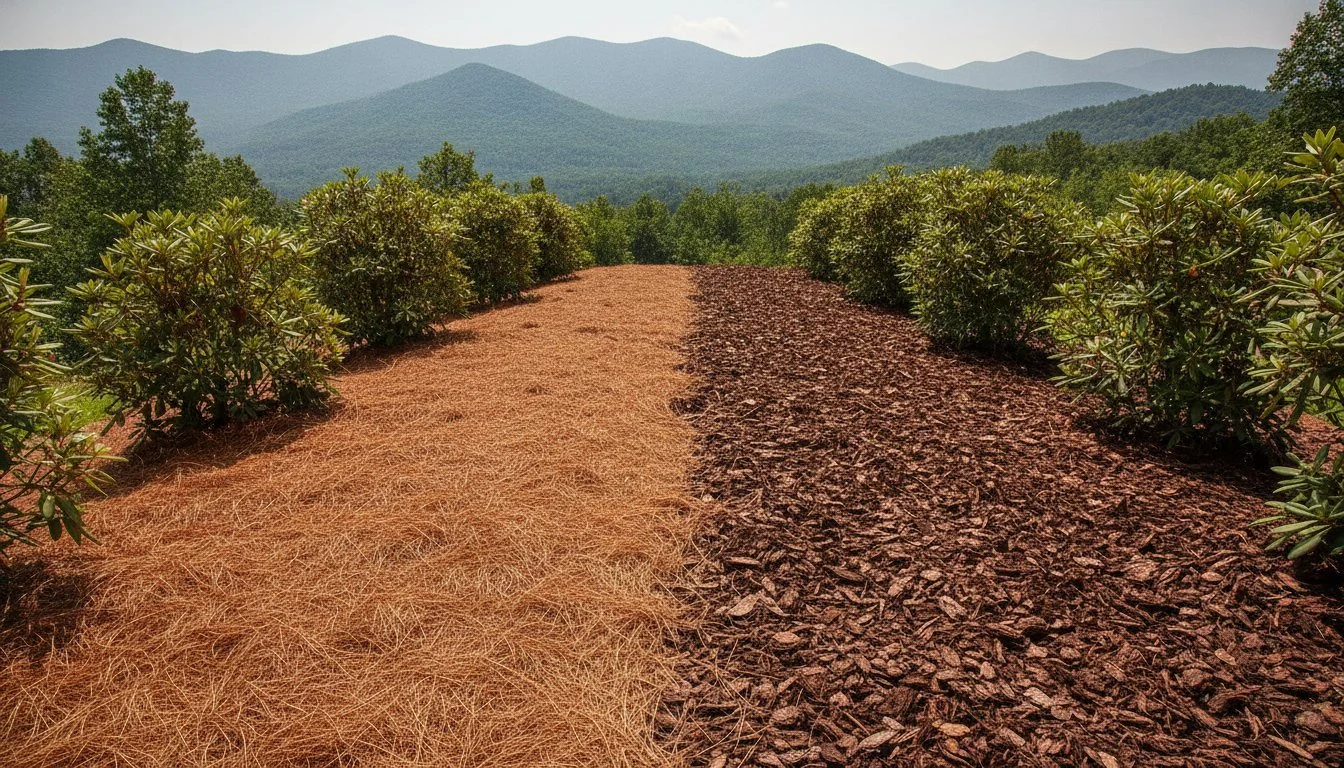
After a single heavy afternoon thunderstorm in Boone, you might find your expensive garden cover sitting at the bottom of the hill instead of protecting your plants. It's a common frustration for High Country homeowners who want a professional look but struggle with steep terrain and heavy rainfall. Choosing between pine straw vs pine bark mulch isn't just a matter of aesthetics; it's a strategic decision that affects your soil health and your maintenance schedule.
We've outlined the practical differences between these two materials to help you determine which offers the best protection and value for your property. We'll evaluate how each option performs in heavy rain, how it affects soil acidity, and which one provides the most effective weed suppression for a professional, low-maintenance garden bed. Whether you're looking to support local favorites like rhododendrons or simply want a ground cover that stays put, this guide provides the clarity you need to make an informed choice for your North Carolina mountain landscape.
Key Takeaways
Identify why the interlocking structure of pine straw provides superior stability on steep High Country slopes to prevent erosion.
Compare the maintenance cycles of each material to determine which fits your property's seasonal upkeep schedule.
Analyze the strategic value of pine straw vs pine bark mulch based on initial cost and multi-year durability.
Select the ideal ground cover to maintain soil moisture and acidity for native mountain plants like rhododendrons.
Understanding Pine Straw and Pine Bark Mulch
High Country landscapes require ground covers that can handle steep gradients and specific soil requirements. Pine-based products are the gold standard in North Carolina because they naturally complement the region's native flora. Choosing between pine straw vs pine bark mulch involves understanding how these materials are harvested and how they function as strategic tools for your property. While both provide protection, they offer distinct aesthetic profiles. Pine straw delivers a rustic, woodland appearance that blends into the natural mountain environment. Pine bark mulch provides a rich, dark texture that creates a more structured and formal look for residential or commercial properties.
For a comprehensive overview of mulch and its various organic types, industry resources highlight how material choice impacts long-term maintenance and soil health. In the High Country, where heavy rains and wind are frequent, the physical structure of your ground cover is a primary operational concern.
What is Pine Straw (Pine Needles)?
Pine straw consists of dried needles harvested sustainably from the forest floor, typically from Longleaf pine trees. These needles possess a unique physical property; they interlock to form a cohesive, breathable mat. This structure allows the straw to remain stable on hillsides where other materials might wash away. When sourcing straw, look for "clean" bales that are free from sticks, cones, and weeds. High-quality straw is lightweight and easy to distribute around delicate perennials without causing physical damage. It provides a protective layer that shelters roots while allowing rain to permeate the soil efficiently.
What is Pine Bark Mulch?
Pine bark mulch is a byproduct of the timber industry, created by stripping the outer protective layer of pine trees. This material is available in two primary forms: shredded bark and bark nuggets. Unlike standard hardwood mulch that contains the interior wood of a tree, pine bark is rich in organic compounds that resist rapid decay. These properties help the bark maintain its deep color and structure over time. Shredded varieties offer excellent weed suppression by creating a dense barrier, while nuggets provide a chunky, professional texture that works well in flat, formal garden beds. The decision of pine straw vs pine bark mulch often rests on whether you prioritize the interlocking stability of needles or the long-lasting visual weight of bark.
Performance Comparison: Soil Health and Plant Growth
Effective ground cover serves as a functional barrier that helps manage moisture and maintain soil stability. When evaluating pine straw vs pine bark mulch, the primary consideration is how each material interacts with the specific soil conditions found in Watauga County. Bark nuggets serve as a dense cap that effectively traps moisture in the soil; this is ideal for flat beds during dry spells. In contrast, pine straw is highly porous. It allows heavy mountain rainfall to permeate the ground immediately while still providing a layer that slows surface evaporation.
Weed suppression is another area where physical structure dictates performance. Pine bark mulch relies on its weight and density to smother emerging weeds. A layer of three to four inches creates a formidable barrier that prevents light from reaching the soil. Pine straw achieves suppression through its interlocking needles. This creates a tight mesh that blocks sunlight while still allowing the soil to stay cool. Both materials provide essential temperature regulation. This insulation is critical for protecting root systems from the High Country’s unpredictable late-spring frosts, ensuring that early growth isn't compromised by a sudden temperature drop.
Managing Soil pH for High Country Species
A common misconception suggests that pine-based products will instantly acidify the soil. According to this university guide to mulching, while pine needles are acidic when they fall, they do not significantly change soil pH as they decompose on the surface. However, they are exceptionally well-suited for native species like Rhododendrons and Azaleas that thrive in slightly acidic environments. For properties in Watauga County with thin, rocky soil, the gradual breakdown of these organic materials adds vital structure. This long-term decomposition process turns poor, rocky earth into a more hospitable environment for ornamental shrubs and perennials.
Nutrient Cycling and Soil Aeration
Soil health depends on the balance between protection and breathability. Pine straw offers superior gas exchange, allowing plant roots to "breathe" more effectively than under heavier wood products. Pine bark mulch excels in high-traffic garden areas where its rigid structure prevents soil compaction from foot traffic or heavy rain. Nutrient cycling in this context refers to the biological process by which decomposing pine bark releases stored minerals back into the soil, supporting plant vitality. If you are managing a large mountain property, choosing the right bulk ground cover helps keep your landscape healthy and professional throughout the growing season. This proactive approach to soil health reduces the need for supplemental fertilizers and excessive watering.
Durability in High Country Landscapes: Slopes and Wind
Managing a property in Boone or Blowing Rock requires ground cover that respects gravity and heavy precipitation. When evaluating pine straw vs. pine bark mulch for durability, the material's physical behavior under stress is the most critical factor. Many homeowners discover too late that lightweight bark nuggets act like tiny boats during a typical mountain summer downpour. Because they are buoyant, they float and wash out of beds, often ending up in drainage ditches or driveways. Choosing the right mulch for your landscape means matching the material's physical properties to your property's specific topography.
Strategic placement is the most effective way to ensure your investment stays put. We recommend using pine bark products for flat garden beds where its weight provides a professional, stable finish. For embankments and steep hillsides, pine straw is the more dependable tool. It creates a functional barrier that doesn't rely on weight alone; instead, it uses its structure to resist movement. This approach ensures your landscape remains intact regardless of the weather cycle.
Erosion Control on Mountain Slopes
Pine straw provides a distinct operational advantage on steep Boone hillsides. The long needles weave together, creating a natural web that anchors itself to the soil. This interlocking structure resists the force of rushing water, keeping the ground covered even on sharp inclines. You can improve this stability by "tucking" the edges of the straw into the soil with a spade. This prevents water from getting under the mat and lifting it. While shredded pine bark offers better grip than nuggets on slight inclines, it still lacks the comprehensive "webbing" effect that makes pine straw the industry standard for erosion control.
Performance in High-Wind Areas
High-wind areas along the ridge lines of Beech Mountain or Blowing Rock pose a unique challenge for lightweight materials. Pine straw can be susceptible to wind lift immediately after installation before it has had time to settle. It's vital to allow for a "settling" period; once the straw has been through a few rain cycles, the needles knit together into a heavy, cohesive mat. Conversely, pine bark mulch has a weight advantage when it's wet. Its density helps it stay grounded in exposed areas during high-wind events. For properties facing extreme exposure, a combination of these materials, tailored to wind patterns and slope, can provide the most reliable long-term solution.
Maintenance, Longevity, and Value
The operational efficiency of your landscape maintenance depends on understanding the lifecycle of your chosen materials. When comparing pine straw vs pine bark mulch, you must weigh the upfront labor against the frequency of replacement. Pine bark mulch offers a longer service life, typically lasting two to three years before it needs a significant top-dressing. Pine straw is a more temporary solution, usually requiring an annual refresh to maintain its structural integrity and color. While pine straw requires a lower initial investment, pine bark mulch often proves more cost-effective over a three-year period because it doesn't require annual replacement.
Color retention is a primary aesthetic concern for property managers in the High Country. Pine straw begins to transition from a vibrant bronze to a weathered grey within six months of installation. This rustic look is often preferred for naturalized mountain areas, but it lacks the formal impact of pine bark. Bark products retain their deep, earthy tones much longer, helping commercial properties and residential entries look professional year-round. This durability ensures your beds look well-maintained even during the harsh winter months when plant growth is dormant.
Labor intensity is the third pillar of this value calculation. Spreading straw is a fast, straightforward process that requires minimal equipment; you can carry bales into tight spaces where a wheelbarrow cannot reach. Shoveling and hauling bulk pine bark requires more physical effort and specialized tools. For large properties with difficult terrain, the ease of carrying straw bales often compensates for its shorter lifespan. Choosing the right material allows you to allocate your maintenance resources more effectively based on your yard's specific layout.
Replacement Cycles and Decomposition
Pine straw decomposes relatively quickly, which is beneficial for adding nutrients to the soil but necessitates more frequent attention. You don't need to remove the old material when it fades. The freshening process for pine straw involves applying a thin, one-inch layer of new needles over the existing mat to restore the color and density without disturbing the underlying organic matter. Pine bark breaks down much more slowly, acting as a more permanent barrier that prevents soil erosion over several seasons. This slow decomposition means you spend less time ordering and spreading material over a five-year cycle.
Calculating Volume for Bulk Delivery
Efficient resource management starts with accurate measurements. Generally, five to seven bales of pine straw provide the same coverage as one cubic yard of pine bark mulch at a standard two-inch depth. Planning for delivery is essential in areas like Boone and Banner Elk, where steep, winding driveways can complicate the drop-off of bulk materials. We specialize in navigating these logistical challenges to ensure your project stays on schedule. You can use our resource on How to Calculate Bulk Mulch for Your Boone Yard to determine exactly how much material your beds require. If you are managing a large-scale renovation, purchasing bulk ground cover ensures you have the volume needed to complete the job in a single phase.
The Verdict: Which Should You Choose?
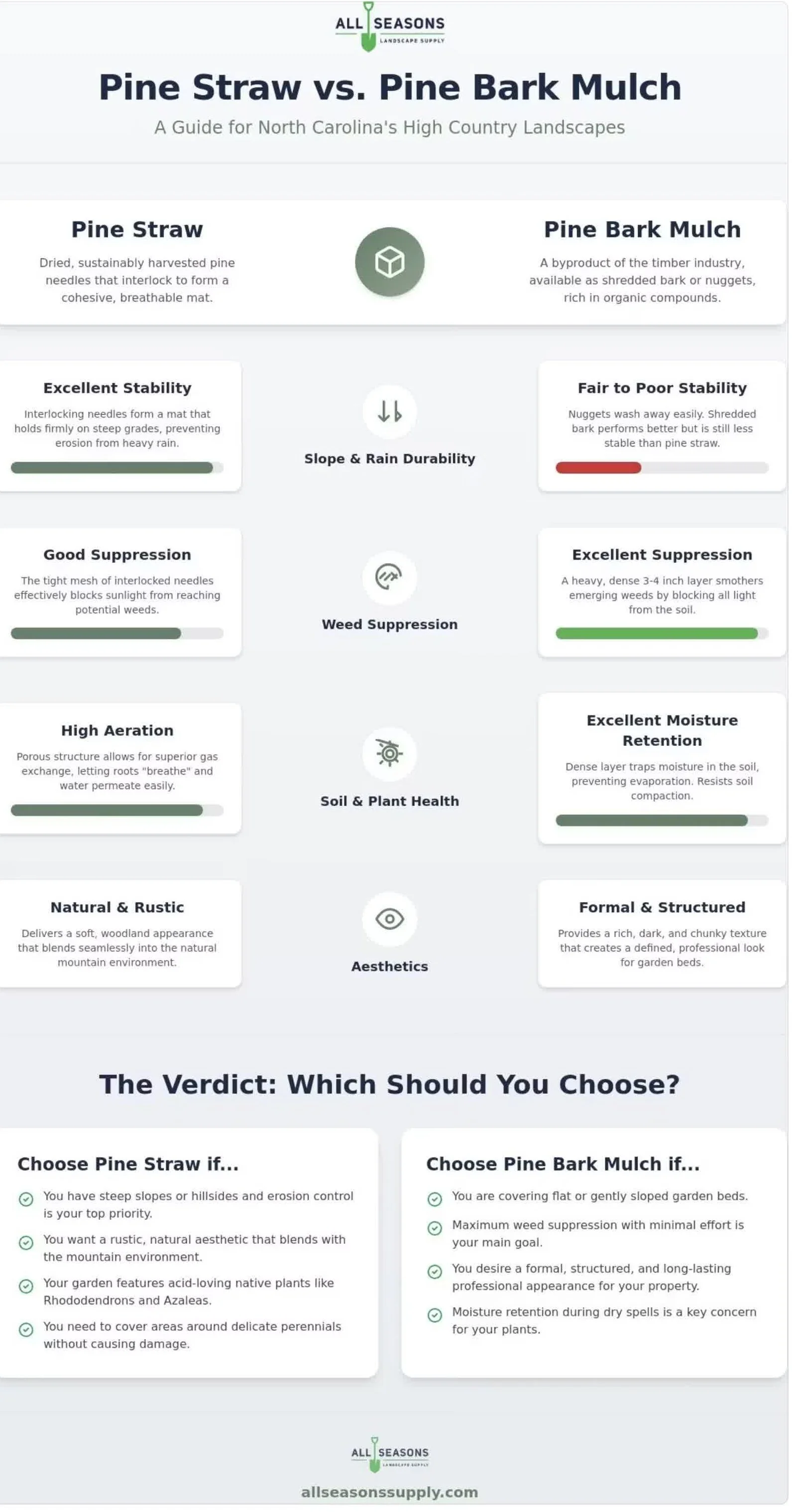
The final decision regarding pine straw vs pine bark mulch rests on the specific topographical and maintenance requirements of your property. If your landscape features steep embankments or large naturalized areas that require rapid coverage, pine straw is the most effective solution. It provides immediate stability and supports the health of native, acid-loving plants. Conversely, if you prioritize a formal aesthetic with long-lasting color and superior moisture retention in flat garden beds, pine bark mulch is the superior choice. This material offers a durable finish that requires fewer interventions over a multi-year cycle.
Many successful property managers in the High Country utilize a hybrid approach. They apply pine bark mulch in high-visibility areas near building foundations and walkways to maximize curb appeal. They then transition to pine straw for peripheral hillsides and woodland zones where erosion control is the primary objective. This strategy optimizes your maintenance budget while ensuring every zone of the property receives the appropriate protection. Consulting with a partner like All Seasons Supply allows you to leverage 50 years of combined industry experience to tailor these ground covers to your site's unique conditions. Choose based on terrain.
High Country Best Uses for Pine Straw
Pine straw is the ideal selection for naturalized areas, woodland gardens, and steep embankments where traditional wood chips might fail. It's particularly effective for properties with existing pine trees; the needles blend naturally into the environment, creating a seamless transition between manicured beds and the surrounding forest. This material allows you to maintain a professional look while respecting the rugged nature of the mountain terrain. For more detailed applications, read our guide on Best Uses for Pine Straw in High Country Flowerbeds.
High Country Best Uses for Pine Bark
We recommend pine bark mulch for front-yard curb appeal, walkways, and foundation plantings where a structured look is essential. It's the best option for homeowners who prefer a maintenance schedule that doesn't require annual attention. The weight and slow decomposition of the bark ensure that your garden beds remain protected and visually striking for several seasons. If you're ready to enhance your property's value with a dependable ground cover, consult The Ultimate Guide to Mulch Near Me to explore our bulk delivery options. It's the best option.
Secure Your High Country Landscape Today
Choosing between pine straw vs pine bark mulch requires a clear understanding of your property's topography and maintenance goals. We've established how the interlocking needles of pine straw protect steep embankments from heavy runoff, while the durability of pine bark nuggets maintains professional curb appeal for several seasons. Both materials act as strategic tools to regulate soil temperature and preserve moisture for your native mountain plants. This thoughtful approach to ground cover ensures your landscape remains resilient against the High Country's unpredictable weather cycles.
As a family-owned and operated business since 2019, All Seasons Supply brings over 50 years of combined High Country landscaping experience to every bulk order. We provide dependable delivery to Watauga, Avery, and Ashe Counties, ensuring you have the materials needed to protect your property investment regardless of the terrain. Order Bulk Pine Straw or Pine Bark for Delivery in Boone and the surrounding areas today. Your property deserves a ground cover that works as hard as you do to maintain its health and beauty year-round.
Frequently Asked Questions
Does pine straw attract termites more than pine bark mulch?
Neither pine straw nor pine bark mulch is a preferred food source for termites because they lack the high cellulose content found in solid wood. While any ground cover can provide moisture that insects like, pine-based products are generally less attractive than hardwood chips. We recommend maintaining a small gap between your mulch and the foundation to ensure operational visibility for pest inspections.
How many bales of pine straw do I need to cover 100 square feet?
You will generally need two bales of pine straw to cover 100 square feet at a standard depth of two to three inches. Each bale typically covers approximately 50 square feet. If you're applying a thinner refresh layer, a single bale might extend further, but two bales ensure a professional and functional barrier against weeds and moisture loss.
Is pine bark mulch safe for pets and children?
Pine bark mulch is safe for pets and children because it's a natural, organic byproduct without the synthetic dyes found in some designer mulches. Its chunky texture is non-toxic, although nuggets can be a tripping hazard for small children if they aren't spread evenly. For active play areas, we offer Playground Mulch engineered for impact absorption and safety.
Can I put pine bark mulch directly over old pine straw?
You can place pine bark mulch over old pine straw, but we advise against building up excessively thick layers. When transitioning between pine straw vs pine bark mulch, a combined layer that exceeds four inches can prevent oxygen and water from reaching root systems. Raking away the most weathered straw before applying bark ensures better soil contact and long-term stability for your garden beds.
Why does my pine straw turn grey so quickly in the NC mountains?
Pine straw turns grey due to intense UV exposure and the frequent rain cycles common in the North Carolina mountains. At higher elevations, sunlight bleaches the natural oils and pigments in the needles more rapidly than in the lowlands. This color change is purely aesthetic and doesn't reduce the material's ability to protect your soil or suppress weeds.
Will pine bark mulch float away during a heavy Boone rainstorm?
Pine bark mulch nuggets are buoyant and will likely float away during a heavy Boone rainstorm if they are placed on an incline. Because they're lightweight and don't interlock, they're easily displaced by rushing surface water. When comparing pine straw vs pine bark mulch for drainage areas, pine straw is the more dependable tool because its needles knit together to resist movement.
Does pine straw acidify the soil enough to harm non-acid-loving plants?
Pine straw doesn't acidify the soil enough to harm non-acid-loving plants. While the needles are slightly acidic when they first fall, they neutralize as they decompose on the soil surface. This makes them a safe ground cover for a wide variety of perennials and shrubs, even those that prefer a more neutral pH balance. It provides a stable environment for diverse High Country flora.
Which is easier to blow leaves off of in the fall: straw or bark?
Pine bark mulch is significantly easier to clear of leaves in the fall. Because the bark has a smooth or chunky surface, a leaf blower can move debris without disturbing the mulch itself. Leaves tend to get trapped in the interlocking mesh of pine straw, making it difficult to remove them without also pulling up the needles. This makes bark a more efficient choice for properties with heavy deciduous tree cover.