
Achieving Backyard Privacy with Native Shrubs in Blowing Rock, NC
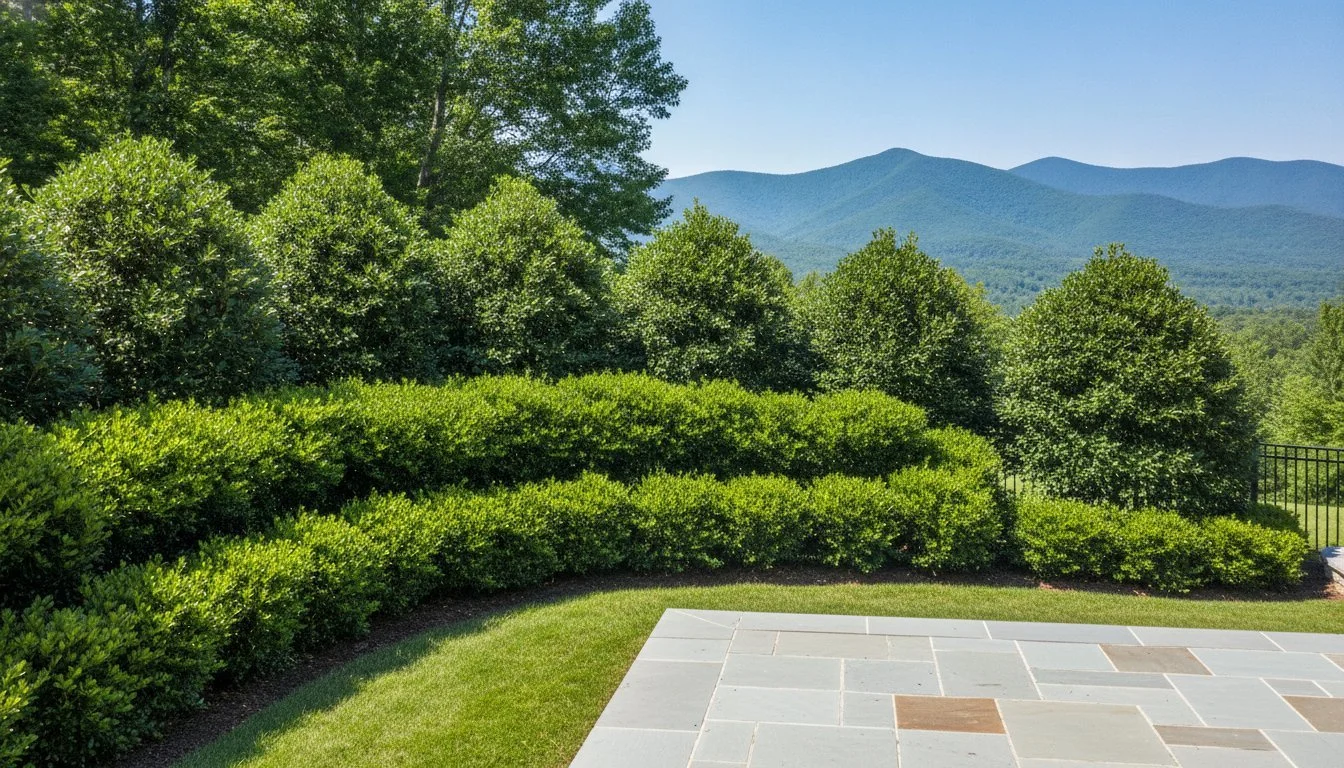
A six-foot wooden fence might technically meet local building codes, but it rarely provides the true sense of sanctuary that High Country homeowners expect. Achieving backyard privacy with native shrubs in Blowing Rock requires a more durable strategy that accounts for our unique mountain climate and acidic soil conditions. You want a secluded outdoor space, yet it is frustrating when expensive nursery additions don't survive their first winter or grow too slowly to block the neighbor's view.
We understand the importance of a landscape that works as hard as you do. This guide teaches you how to use cold-hardy, native North Carolina shrubs to create a beautiful and sustainable privacy screen that withstands heavy snow and mountain winds. You will learn which species provide a dense, year-round green barrier without looking messy or unkempt. We also cover how the right soil amendments and mulch can accelerate growth rates in mountain soil. This ensures your living wall attracts local pollinators while providing the long-term reliability and peace of mind your property deserves.
Key Takeaways
Native species like Rosebay Rhododendron are naturally adapted to the High Country's heavy snow and provide essential erosion control on steep slopes.
Learn how to select specific evergreens to establish backyard privacy with native shrubs Blowing Rock that remains dense and green throughout the harshest winters.
Discover why a multi-layered "living wall" of diverse species is more resilient and visually appealing than a standard single-species hedge.
Identify the critical soil amendments, including bulk topsoil and compost, required to help native plants thrive in the region's acidic, rocky ground.
Understand why sourcing locally-grown nursery stock is the most dependable way to ensure high survival rates for your mountain landscape.
Table of Contents
Why Choose Native Shrubs for Privacy in Blowing Rock?
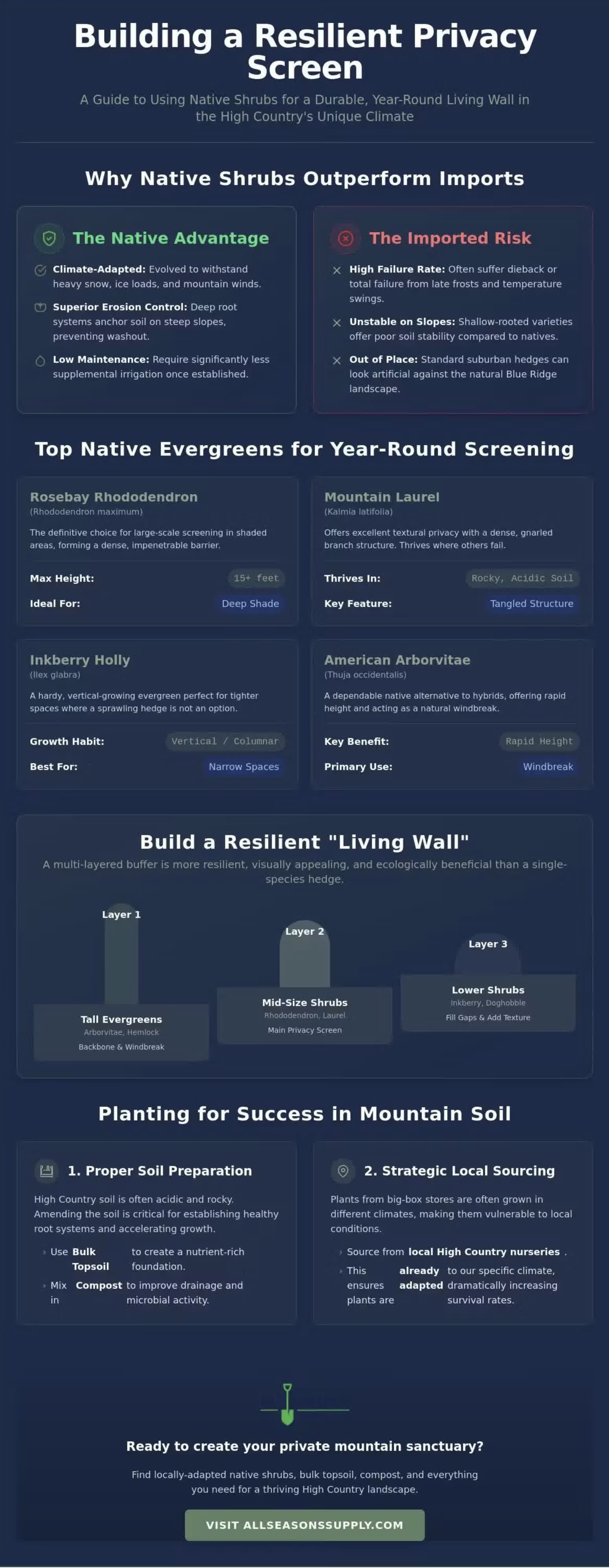
Choosing the right vegetation for your property is an operational decision that impacts long-term maintenance costs and privacy effectiveness. While many homeowners initially consider fast-growing imports, achieving backyard privacy with native shrubs Blowing Rock offers a higher return on investment. These species have evolved to withstand the specific stressors of the Watauga County environment. From heavy ice loads to the relentless winds common along the Blue Ridge Parkway, native plants possess the structural integrity required to survive where others fail.
Beyond structural durability, native shrubs provide critical functional benefits for mountain properties. Many Blowing Rock homes are situated on steep gradients where soil stability is a constant concern. Deep-rooted natives act as a biological anchor; they offer superior erosion control compared to shallow-rooted ornamental varieties. Once these plants establish their root systems, they require significantly less supplemental irrigation. This makes them a more efficient choice for sustainable landscaping that prioritizes operational continuity. This strategic approach to backyard privacy with native shrubs Blowing Rock ensures your landscape remains a dependable asset for years to come.
The High Country Climate Advantage
Blowing Rock typically falls within USDA Hardiness Zones 6b to 7a. This classification only tells part of the story. Our region experiences volatile temperature swings and late-spring frosts that can devastate plants sourced from big-box retailers. These commercial plants are often cultivated in controlled greenhouse environments or warmer coastal climates. When they encounter a true High Country winter, they frequently suffer from dieback or total failure. Selecting locally adapted shrubs ensures your privacy screen remains intact and functional regardless of the weather cycle.
Aesthetic Harmony with the Blue Ridge
A privacy buffer should enhance your property value by blending into the natural environment. Standard suburban hedges often look out of place against the rugged backdrop of the Appalachian range. By utilizing plants endemic to the Appalachian Mountains, you create a seamless transition between your managed landscape and the surrounding forest. This approach avoids the "artificial wall" look while supporting local biodiversity. A native screen provides essential habitat for Blue Ridge songbirds and pollinators. It turns a simple utility barrier into a thriving ecological asset that truly belongs in the High Country.
Top Native Evergreen Shrubs for Year-Round Screening
Establishing a screen that maintains its density through the winter months is a logistical priority for High Country homeowners. Deciduous plants leave properties exposed for nearly half the year; therefore, evergreens must form the backbone of any effective barrier. Achieving backyard privacy with native shrubs Blowing Rock requires selecting species that retain foliage in sub-zero temperatures and resist the heavy ice loads common to our region. These plants serve as strategic operational tools for your landscape, providing a permanent solution to visibility concerns.
A successful privacy strategy often begins with a selection of robust, regionally appropriate species. The North Carolina Native Plant Society identifies several varieties that excel in our unique mountain conditions. By focusing on these proven performers, you ensure your landscape remains a dependable asset regardless of the season. When planning your layout, consider these high-performance native evergreens:
Rhododendron maximum (Rosebay Rhododendron): Known as the king of mountain privacy, this species is ideal for large-scale screening in shaded areas.
Kalmia latifolia (Mountain Laurel): This shrub offers a dense, gnarled branch structure that provides excellent textural privacy and thrives in rocky, acidic soils.
Ilex glabra (Inkberry Holly): A hardy, vertical-growing evergreen that works well in tight spaces where a traditional sprawling hedge isn't feasible.
Thuja occidentalis (American Arborvitae): A dependable native alternative to hybrid varieties, offering rapid height and acting as a natural windbreak on exposed slopes.
The Power of Rhododendrons
The Rosebay Rhododendron is the definitive choice for deep-shade privacy in the Blue Ridge. These shrubs are capable of reaching heights of 15 feet or more, effectively blocking views from multi-story neighboring homes. In Watauga County, Rosebay Rhododendron exhibits a robust, multi-stemmed growth habit that naturally fills gaps in the lower forest tiers. They are particularly effective when planted in groups to create a continuous wall of thick, leathery foliage that dampens noise and wind.
Mountain Laurel for Textural Privacy
Mountain Laurel excels in the well-drained, acidic conditions typical of Blowing Rock properties. While it grows more slowly than some alternatives, its intricate branch structure provides a level of screening even before the foliage fully fills in. It's a durable choice for ridgelines where wind resistance is a requirement. Selecting high-quality shrubs from a dependable source ensures your plants are healthy enough to establish quickly in these challenging microclimates. This species ensures that backyard privacy with native shrubs Blowing Rock remains effective while adding significant aesthetic value to your mountain retreat.
Building a Multi-Layered Privacy Buffer
Relying on a single row of identical plants creates a single point of failure for your property's security. In the High Country, a monoculture hedge is vulnerable to localized pest outbreaks or specific disease cycles that can decimate an entire screen in one season. Building a multi-layered buffer is a more resilient operational strategy. This approach ensures that if one species struggles, the overall integrity of your backyard privacy with native shrubs Blowing Rock remains intact. By combining different growth habits, you create a dense thicket that provides superior visual blockage and wind resistance.
Effective layering involves placing taller species at the rear and shorter, denser shrubs in the foreground. For properties overlooked by multi-story neighbors, incorporating native nursery trees into the back row provides the necessary vertical reach to block upper-level windows. This staggered height creates a naturalized appearance that mirrors the forest edge. It moves the eye across various textures rather than focusing on a flat, artificial wall. This method is the most dependable way to ensure your screen functions as a comprehensive barrier.
The Benefits of Deciduous Additions
While evergreens provide the year-round foundation, deciduous shrubs offer seasonal utility and aesthetic value. Species like the American Beautyberry introduce vibrant purple berries in the fall, while Carolina Allspice provides a deep fragrance near outdoor living spaces. These plants often have flexible branch structures that fill the gaps between larger, more rigid evergreens. Following expert native shrub recommendations allows you to select varieties that support local wildlife while serving a clear functional purpose in your privacy screen.
Staggered Planting vs. Straight Rows
A straight line of shrubs is often the least effective way to achieve total seclusion. We recommend the "zigzag" or staggered planting method. This configuration allows for faster privacy because the plants overlap visually from day one. It also facilitates better airflow between the branches, which is critical for preventing fungal issues in the humid mountain air. A deeper, staggered border also improves sound dampening. A multi-layered screen that is 10 to 15 feet deep can significantly reduce noise from nearby roads or neighbors. This method creates a "naturalized" edge that requires less precision pruning than a formal hedge, saving you time and resources over the long term. This strategic layout is the most dependable way to secure backyard privacy with native shrubs Blowing Rock while maintaining a low-maintenance landscape.
Planting for Success: Soil Prep and Spacing in Blowing Rock
Planting in the High Country isn't as simple as digging a hole and walking away. The rocky, thin soil of the Blue Ridge presents a significant operational hurdle for landscape establishment. Most generic gardening guides assume a standard loam, but Blowing Rock properties often sit on "High Country Hardpan," a dense layer of clay and rock that restricts root expansion. Success in establishing backyard privacy with native shrubs Blowing Rock requires a proactive approach to soil engineering. Most native mountain species require acidic conditions to absorb nutrients effectively; therefore, testing your soil pH is a necessary first step. If your soil is too alkaline, even the hardiest native will struggle to reach its full privacy potential.
Amending the planting site with high-quality bulk topsoil or compost provides the structural support young plants need to overcome poor drainage. When you dig your planting holes, they should be twice as wide as the root ball but no deeper. This encourages outward root growth into the amended soil rather than creating a "bathtub effect" where water pools at the bottom. Proper spacing is equally critical. While the temptation is to plant shrubs close together for immediate coverage, overcrowding leads to poor airflow and increased disease risk. Consult mature width specifications to ensure your living wall remains healthy and manageable a decade from now.
Preparing the Mountain Ground
Breaking through the compacted subsoil of a mountain slope is labor-intensive but essential for long-term plant health. We recommend a mixture of 50 percent native soil and 50 percent organic matter to bridge the gap between the existing ground and the new plant's root ball. Incorporating compost is essential for native shrub health in Watauga County because it introduces vital microorganisms and improves the moisture-retention capabilities of rocky slopes. This preparation phase ensures your investment is anchored in a medium that supports rapid establishment and structural stability.
The Importance of Mulch
Blowing Rock's climate is characterized by frequent freeze-thaw cycles that can heave young plants right out of the ground. Applying a thick layer of hardwood mulch is a dependable way to regulate soil temperature and protect sensitive root systems. Mulch also serves as a barrier against invasive weeds that compete for the same resources as your new hedge. For a more traditional mountain aesthetic that complements the Blue Ridge landscape, pine straw is an excellent alternative. It stays in place on sloped terrain better than lighter materials, making it a practical choice for hillside privacy borders. To secure the best start for your landscape, schedule a delivery of bulk topsoil and mulch today.
Sourcing Native Shrubs and Materials in the High Country
Securing the right inventory is the final step in executing a successful landscaping plan. When you aim for backyard privacy with native shrubs Blowing Rock, the origin of your plants determines their eventual success. Locally-grown nursery stock has a significantly higher survival rate because these plants are already acclimated to the regional atmospheric pressure and temperature fluctuations. Sourcing materials from outside the High Country often introduces specimens that are genetically unprepared for our early autumn frosts or heavy winter snow loads. This can lead to costly die-offs during the first season.
All Seasons Supply acts as a dependable partner by selecting species specifically for High Country hardiness. Our procurement process prioritizes shrubs and trees that have demonstrated resilience in Watauga County ecology. We understand that a privacy screen is a long-term investment. Providing plants that are already hardened to local conditions reduces the risk of replacement costs and ensures your project stays on track. Consulting with experts who understand the nuances of mountain soil and microclimates allows you to avoid common pitfalls and build a screen that remains a permanent asset.
Selecting Your Plants at All Seasons Supply
Choosing the right species requires a clear understanding of your property's specific sun and shade profile. Our team helps you evaluate your site to ensure you select the most effective shrubs for the High Country. Whether your border faces the harsh afternoon sun or sits in the deep shade of a north-facing slope, we provide specific recommendations that align with your privacy goals. We also assist in planning for the necessary support materials. Coordinating your plant selection with a delivery of bulk mulch ensures you have everything required for a professional-grade installation from day one.
Professional Delivery for DIY Success
Large-scale privacy projects involve significant logistics. Moving dozens of mature shrubs and cubic yards of soil is a challenge for any property owner. Our delivery service is designed to support DIY success by bringing heavy materials directly to your site. This allows you to focus on the technical aspects of planting and spacing rather than the physical strain of transport. We work with you to coordinate material arrival with your specific planting schedule. This synchronized approach prevents soil from drying out and ensures mulch is available as soon as the last root ball is in the ground. If you're ready to secure your property, Visit our nursery in Blowing Rock to start your privacy project!
Securing Your High Country Sanctuary
Building a functional and resilient property border requires more than just picking plants; it requires a commitment to regional ecology and proper site preparation. By prioritizing native evergreens and implementing a multi-layered planting strategy, you create a living barrier that withstands the High Country's volatile weather cycles. Success depends on using locally adapted stock and amending rocky soil with high-quality organic matter to ensure deep root establishment.
Establishing long-term backyard privacy with native shrubs Blowing Rock is a strategic investment in your property’s value and your own peace of mind. All Seasons Supply supports this goal with over 50 years of combined industry experience in the region. We offer locally grown nursery plants that are genetically prepared for Blowing Rock winters, alongside convenient bulk delivery for mulch, stone, and soil. Our team acts as a steady partner in your landscape management, providing the dependable resources needed for operational continuity in your outdoor spaces.
Take the first step toward a more secluded and sustainable landscape today. Browse our High Country Hardy Native Shrubs and discover how our professional-grade materials can transform your property into a private mountain retreat.
Frequently Asked Questions
What is the fastest-growing native shrub for privacy in Blowing Rock?
Eastern Red Cedar and American Arborvitae are the most dependable fast-growing natives for mountain screening. These species are structurally resilient and can add significant height each year when planted in well-drained soil. They provide a dense, evergreen barrier that functions as a natural windbreak. This makes them an excellent operational choice for homeowners who need to establish a visual boundary quickly on exposed High Country slopes.
Do Rhododendrons stay green all winter in the mountains?
Native Rhododendrons are true evergreens and retain their thick, leathery leaves throughout the winter months. You might observe the leaves curling or drooping during extreme cold snaps; this is a physiological response to protect the plant from desiccation. The foliage returns to its normal state as temperatures stabilize. This reliability ensures your privacy screen remains functional and aesthetically consistent regardless of the winter weather cycle.
How far apart should I plant native shrubs for a thick hedge?
Standard spacing for a dense screen is typically three to five feet on center, though this varies by the specific species' mature spread. To achieve backyard privacy with native shrubs Blowing Rock more efficiently, we recommend a staggered or "zigzag" planting pattern. This layout allows for better airflow between plants while creating an overlapping visual barrier that closes gaps much faster than a single straight row.
Can I plant native shrubs in the rocky soil of Watauga County?
You can successfully plant in rocky mountain soil by amending the site with a 50/50 blend of native earth and bulk topsoil or compost. This mixture provides the necessary pore space for root expansion and improves water retention on steep grades. Proper site preparation is a critical step in overcoming the "High Country Hardpan" and ensuring your new shrubs have the structural support required for long-term stability.
When is the best time of year to plant native shrubs in Blowing Rock?
Early spring and late autumn are the most effective windows for planting in the High Country. Planting during these periods minimizes transplant shock by allowing root systems to establish while the plants are dormant or semi-dormant. Autumn is particularly advantageous in Blowing Rock because the soil remains warm enough for root development well after the first frost, giving your privacy screen a head start before the spring growing season.
How do I protect newly planted native shrubs from deer in the High Country?
Physical barriers like wire cages or temporary fencing offer the most dependable protection against deer browsing. While some natives like Inkberry Holly are less attractive to wildlife, hungry deer often target new nursery growth during the winter months. Combining physical guards with scent-based repellents during the first two growing seasons ensures your shrubs reach a mature height where they can better withstand occasional grazing without compromising the screen's density.
Do native shrubs require a lot of fertilizer?
Native species are adapted to the acidic, nutrient-lean soils of the Blue Ridge and generally require very little supplemental fertilizer. Excessive nitrogen can actually produce weak, leggy growth that is easily damaged by heavy snow or ice. A single annual application of organic compost is usually sufficient to maintain soil health. This low-maintenance requirement makes native shrubs a highly efficient and cost-effective solution for long-term property management.
How much mulch do I need for a 50-foot privacy screen?
A 50-foot screen with a depth of three feet requires approximately 1.5 to 2 cubic yards of mulch to maintain a protective three-inch layer. This volume is necessary to insulate root systems against the freeze-thaw cycles common in Blowing Rock. Using bulk hardwood mulch or pine straw ensures consistent coverage across the entire border, which suppresses weed competition and preserves the soil moisture essential for young plant survival.