
Best Gravel for Mountain Driveways in Boone, NC: A High Country Buyer's Guide
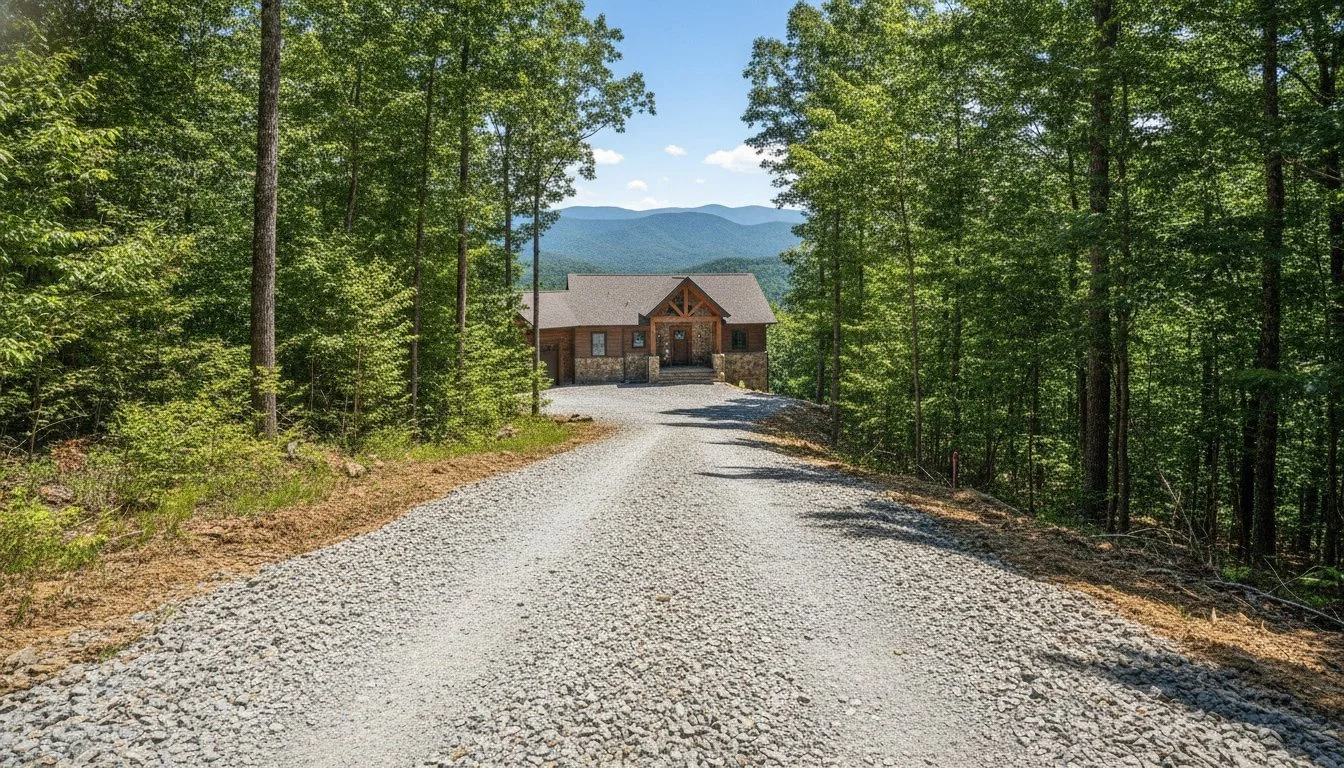
You wake up after a heavy storm to find your driveway at the bottom of the hill, leaving behind deep ruts and exposed mud. In the High Country, where we receive over 50 inches of annual rainfall, choosing the best gravel for driveways isn't just about aesthetics; it's a matter of structural survival. Standard decorative stones often fail on our steep mountain slopes, especially when local ordinances require driveways to maintain specific grades to ensure emergency vehicle access. You need a material that interlocks and resists the heavy erosion common in our region.
We understand the frustration of watching a snowplow scrape away your top layer or seeing your vehicle sink into muddy ruts during the spring thaw. You deserve a surface that stays put and supports heavy loads year-round. This 2026 guide provides a clear path to a stable, long-lasting driveway by explaining the critical differences between materials like ABC Stone and screenings. We'll show you how to build a durable system that handles our vertical terrain and ensures reliable access to your property regardless of the mountain weather.
Key Takeaways
Learn why angular, crushed stone provides superior traction and stability compared to rounded decorative rock on steep mountain inclines.
Identify the best gravel for driveways by understanding how ABC Stone creates a compacted, structural base that resists erosion.
Master the three-layer engineering approach to eliminate muddy ruts and keep your driveway stable through the spring thaw.
Select durable materials that withstand heavy snow plowing and high rainfall to protect your long-term infrastructure investment.
Leverage local High Country expertise to coordinate efficient bulk delivery for large-scale residential and commercial projects.
Understanding Driveway Gravel Requirements for Mountain Terrain
Building a driveway in Boone or Blowing Rock requires a strategy that accounts for verticality. Flat coastal terrain allows for decorative choices that won't work on a 10% grade. In the High Country, the best gravel for driveways is defined by its ability to stay in place under the pressure of heavy rainfall and steep inclines. You aren't just choosing a color; you're selecting an engineering component that must withstand gravity.
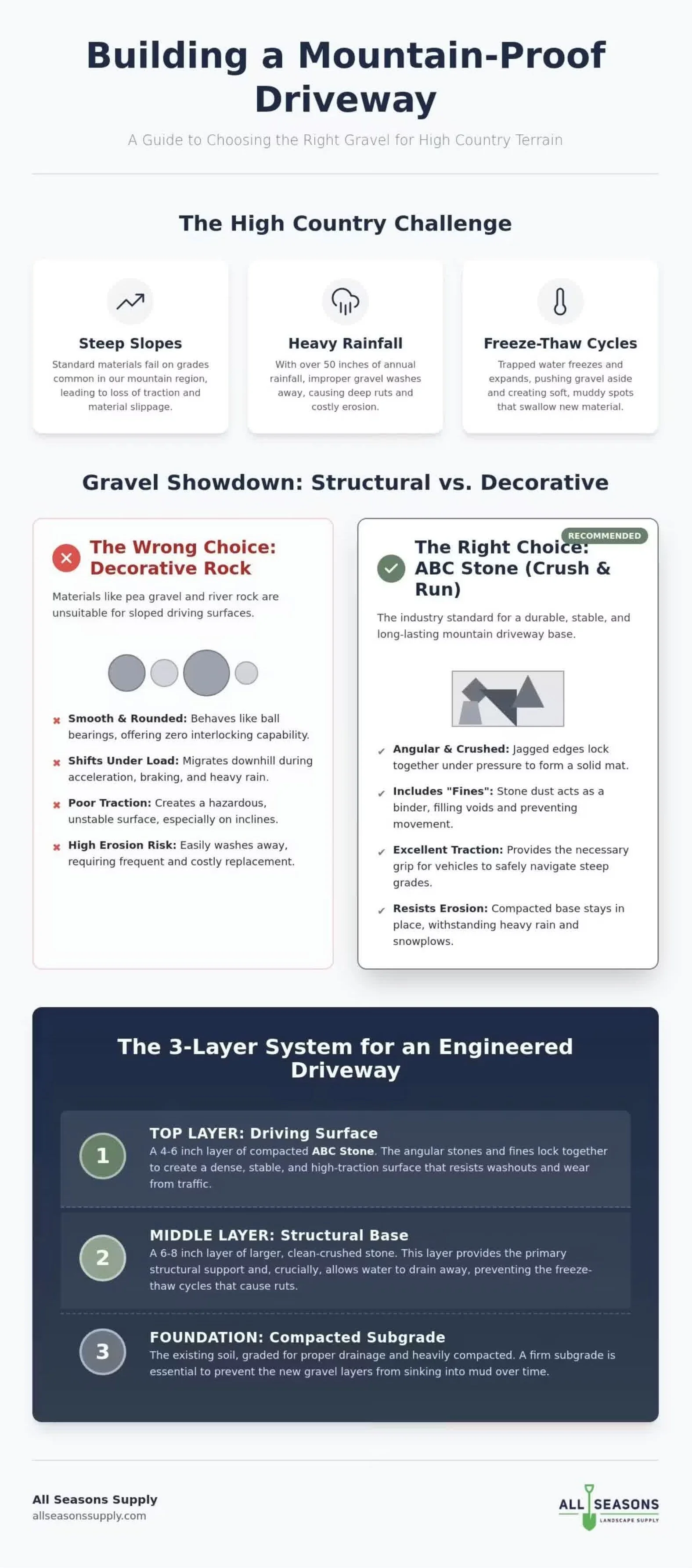
Stone shape is the most important factor for traction. Rounded stones, such as pea gravel or river rock, behave like ball bearings on a slope. They shift under tires and migrate downhill during heavy storms. Crushed stone is different. Because it's angular, the jagged edges lock together under the weight of vehicles. This mechanical bond creates a stable driving surface rather than a shifting pile of rocks. This interlocking property is vital for maintaining access during our unpredictable mountain winters.
We rely on established principles of gravel road construction to ensure longevity. These principles show that a successful road requires a specific crown and slope to shed water efficiently. In our region, we also manage the intense freeze-thaw cycle. When water stays in the driveway base and freezes, it expands. This expansion pushes gravel aside, creating soft spots that become deep ruts by spring. Proper drainage and the right material density are the only ways to prevent these washouts and maintain structural integrity.
The Importance of Compaction on Slopes
Loose material causes most driveway failures in the mountains. To achieve a solid surface, you must use "fines" or stone dust. These tiny particles fill the voids between larger rocks. They act as a binder, locking the stones into a dense, stable mat. Without these fines, even the best gravel for driveways will wash away into your ditches. Angular stone also provides the necessary grip for vehicles to climb steep grades without spinning tires or losing momentum.
Evaluating Your Existing Driveway Base
Inspect your current surface before you schedule a delivery. Deep ruts or areas where gravel has disappeared into the mud indicate a failed subgrade. Dumping fresh stone over a muddy base is a short-term fix. The mud will eventually swallow the new gravel. A healthy base is firm and well-drained. If the foundation is solid but the surface is thin, a simple top-off layer will restore the driveway. If the soil underneath is soft, you may need a more comprehensive renovation to establish a reliable foundation.
Top Gravel Types for High Country Driveways: ABC Stone vs. Decorative
Choosing the best gravel for driveways in mountain environments requires a shift in perspective. While aesthetics matter, your primary goal is creating a surface that remains stable under the weight of a truck and the force of a summer downpour. In the High Country, your choice of material dictates whether your driveway lasts for years or washes away in months. We generally categorize these materials into structural aggregates and decorative accents.
ABC Stone: The Backbone of Local Driveways
ABC Stone, frequently called "crush and run," is the definitive choice for structural integrity. It consists of a specific mix of crushed stone, typically up to one inch in diameter, blended with stone dust known as "fines." These fines are the secret to its success. When spread and compacted, the dust fills the gaps between the larger stones. This creates a binder that locks everything into a solid, pavement-like mat that resists shifting.
This material is the industry standard for new construction and high-traffic areas. It creates a dense base that resists pothole formation and withstands the heavy weight of delivery vehicles. The FHWA Gravel Roads Construction Guide highlights that well-graded aggregates like these are essential for preventing the lateral movement of stone. For any driveway with a significant incline, ABC Stone provides the traction and stability that simpler, washed stones cannot match.
Decorative Accents: River Rock and Pea Gravel
Rounded materials like river rock and pea gravel provide a professional, high-end look for landscaping projects. However, they're often the wrong choice for a primary driving surface in Boone. Because these stones are smooth and rounded, they don't interlock. Driving on them feels like driving on marbles. On a steep mountain slope, these stones will migrate toward the bottom of the hill every time you accelerate or brake. They simply don't have the "grip" required for vertical terrain.
We recommend limiting these decorative options to flat parking pads, walking paths, or decorative borders. If you already have a bumpy driveway and want a smoother finish without the "rolling" effect of pea gravel, screenings are a superior alternative. Screenings are fine-crushed stone particles that can be used to level minor imperfections and create a firm, walkable surface. Selecting the right material ensures your investment stays exactly where you put it. Explore our driveway stone options to find the right balance of durability and style for your property.
The 3-Layer System: Engineering a Driveway That Lasts
In the High Country, a driveway is an investment in your property's accessibility. A single layer of rock spread over raw earth is a recipe for failure. To install the best gravel for driveways on a slope, you must follow a tiered approach that prioritizes structural stability. Selecting the best gravel for driveways involves more than just picking a stone; it's about the system you build around it. A total depth of 8 to 12 inches is standard for mountain roads that need to remain functional year-round.
The first layer serves as the foundation. We use large 3- to 4-inch stones to create a porous yet rigid base. This layer allows water to move through the driveway without washing away the surface. It also prevents heavy vehicles from pushing the gravel into the underlying subgrade. The second layer is the structural base, typically comprised of 4 to 6 inches of ABC Stone. This is where the majority of the compaction occurs. The final surface layer provides the finished texture. Depending on your preference, this could be a thin layer of screenings for a smoother feel or a final lift of ABC Stone for maximum durability.
Step-by-Step Installation Basics
Building a driveway that survives a decade of High Country winters requires precise geometry. You must clear all organic material, such as leaves and roots, from the site before laying stone. Organic matter rots over time, creating air pockets that lead to potholes. You also need to establish a "crown," which is a high point in the center of the driveway that slopes toward the edges. This design ensures that runoff moves off the driving surface quickly. The Gravel Roads: Maintenance and Design Manual emphasizes that water is the primary cause of gravel road failure, making proper grading your most important defense.
Compaction is not optional. While a vehicle's tires provide some pressure, renting a heavy vibratory roller is the most efficient way to lock the layers together. This process creates a dense, impenetrable mat that resists the freeze-thaw cycles common in Watauga County. A well-compacted driveway is significantly less likely to develop ruts during the spring thaw.
Calculating Your Material Needs
To determine how much material you need, use the standard formula for cubic yards: (Length x Width x Depth in inches) divided by 324. When working with ABC Stone, always order an additional 10%-15% to account for compaction. The stone will compress significantly once rolled, and having a surplus prevents project delays. Bulk delivery is the most efficient way to handle these large volumes, as it ensures all material arrives on-site ready for immediate spreading. This logistical efficiency is vital for completing your project before the next High Country storm cycle begins.
Solving Common Mountain Driveway Challenges: Erosion and Winter Prep
High Country topography creates a unique set of maintenance cycles that flat-land guides simply don't address. Heavy runoff from summer storms and frequent snow removal in the winter threaten the integrity of any driveway surface. Choosing the best gravel for driveways is the first step, but you must also implement specific strategies to keep that material on your property. Proper maintenance ensures your infrastructure remains functional regardless of the season.
Managing Drainage and Runoff
Water is the primary driver of driveway erosion in Boone. In areas where runoff is concentrated, such as steep curves or the base of a long incline, standard gravel often fails to stay put. We recommend using larger stones in drainage ditches and identified "problem areas" to slow water velocity and prevent washouts. Screenings are highly effective at filling minor low spots where water tends to puddle, preventing moisture from saturating and softening the structural base. If surface adjustments aren't enough to handle the volume, you may need to incorporate culverts or French drains to redirect water away from the driveway entirely. Additionally, planting native shrubs or perennials along the edges creates a root network that helps stabilize the soil and gravel borders.
Plowing and Snow Removal Tips
Snow plows are a necessity in our region, but they can be destructive to gravel surfaces if not managed correctly. A loose, uncompacted driveway is easily displaced by a plow blade, leading to "plow scars" and piles of expensive gravel in your yard. The best gravel for driveways in this context is ABC Stone because its compacted, hard-packed nature resists being lifted by the blade. When plowing, instruct your operator to adjust the blade height to leave a quarter-inch of snow. This thin layer provides a protective buffer for the underlying stone.
Repeated freeze-thaw cycles can also cause frost heave, pushing stones out of alignment. A well-drained foundation is your best defense against this movement. In the early spring, perform a visual inspection to identify any displacement. You can often "rake back" stone that was pushed to the edges during the winter to restore the driveway's profile before the spring rains begin. To prepare for the upcoming season or repair existing damage, you can schedule a bulk delivery of ABC Stone or screenings to restore your surface's integrity.
Sourcing and Delivering Your Driveway Gravel in Boone
Selecting the best gravel for driveways is only half the battle. The final step is securing a reliable supply chain that can navigate the logistical hurdles of Watauga and Avery counties. Large-scale residential projects require more than just a product; they require a partner who understands the timing and precision needed for successful mountain construction. Sourcing your material from a local High Country supplier ensures that the professional delivering your stone understands the specific challenges of your terrain.
The All Seasons Supply Difference
At All Seasons Supply, we bring over 50 years of combined industry experience to every project. Since 2019, our locally owned and operated facility has served as a steady partner for homeowners and contractors alike. We don't just drop off stone; we offer the quiet confidence that comes from knowing exactly how our materials behave on steep slopes. Whether you are looking for the best gravel for driveways that can withstand steep grades or need decorative landscape stone to finish your property's look, we provide the dependable service you need to keep your project moving forward.
Efficiency in logistics is our priority. Our fleet is ready for bulk delivery to both residential and commercial sites, ensuring you have the volume required for a proper 3-layer system. We handle the complexities of procurement so you can focus on the installation. Our team acts as a practical guide, helping you move from the planning phase to a concrete resolution without unnecessary delays. We prioritize your operational continuity by providing clear, value-driven communication throughout the delivery process.
Preparing for Your Bulk Delivery
Successful delivery requires preparation on your end to ensure safety and efficiency. Identify a clear, flat drop-off point that allows our trucks to maneuver safely. You must also check for overhead clearance. Low-hanging tree branches or power lines can obstruct dump beds when they are fully extended. Providing a clear path and a designated landing zone minimizes the risk of property damage and ensures the stone is placed exactly where your crew needs it. If you're ready to stabilize your mountain access, contact us today to schedule your bulk gravel delivery.
Secure Your High Country Access
Maintaining a stable driveway in the High Country requires moving beyond simple surface fixes. You now understand that the best gravel for driveways is actually a tiered system of structural aggregates designed to manage steep grades and heavy precipitation. By prioritizing a solid foundation of ABC Stone and implementing the three-layer engineering approach, you ensure your property remains accessible through every storm and seasonal thaw.
Reliability is the cornerstone of any successful mountain project. We bring over 50 years of combined local expertise to every delivery, ensuring you receive the exact materials needed for your specific terrain. As a family-owned and operated business in Vilas, NC, we're committed to providing the dependable service your home or business deserves. We handle the logistics of bulk delivery across the High Country so you can focus on building a lasting surface.
Order Your Bulk Driveway Gravel from All Seasons Supply today to begin your project. With the right materials and a professional partner, your driveway will stand strong against the elements for years to come.
Frequently Asked Questions
What is the most durable gravel for a steep driveway?
ABC Stone is the most durable choice for steep mountain grades. Because it contains a blend of crushed stone and "fines" or stone dust, it compacts into a dense, interlocking mat that resists shifting. This structural stability is essential for maintaining traction on vertical slopes, where loose, washed stone would simply roll downhill or be washed away during heavy High Country rainstorms.
How much gravel do I need for a 100-foot driveway?
You can calculate the volume by multiplying the length, width, and desired depth in inches, then dividing by 324. For a standard 100-foot driveway 10 feet wide and 4 inches deep, you would need approximately 12.35 cubic yards. We recommend ordering an additional 10% to 15% to account for compaction during installation and ensure you have sufficient material.
Is ABC Stone the same as "Crush and Run"?
ABC Stone and "Crush and Run" are different names for the same graded aggregate material. This mixture is engineered to include a range of stone sizes down to fine dust, which allows for maximum compaction. It's widely considered the best gravel for driveways in our region because it provides a structural base that mimics the stability of pavement while remaining cost-effective for large residential projects.
Can I put new gravel over my old, muddy driveway?
Spreading new gravel over an active mud hole is generally a temporary solution that fails within a single season. The soft, saturated soil underneath will eventually swallow the new stone, leading to the same ruts and soft spots. For a long-term fix, you must first address the drainage issues or install a foundation layer of larger stones to bridge the soft spots before applying your final surface material.
What happens if I use pea gravel on a hill?
Pea gravel behaves like ball bearings on a slope because the individual stones are smooth and rounded. If you use it on a hill, the material will shift under your tires and migrate to the bottom of the incline after just a few trips. We suggest limiting the use of rounded decorative stones to flat parking areas or walking paths where vertical stability and vehicle traction aren't the primary concerns.
How do I stop my driveway gravel from washing away in heavy rain?
Preventing washouts requires a combination of proper compaction and effective drainage geometry. You must establish a "crown" in the center of the driveway to shed water to the sides rather than letting it run down the middle. Using the best gravel for driveways, such as a well-compacted ABC Stone, creates a dense surface that resists the erosive force of the 50-plus inches of annual rainfall we receive in the mountains.
Does All Seasons Supply deliver to Banner Elk and Blowing Rock?
All Seasons Supply provides bulk delivery to Banner Elk, Blowing Rock, and across the entire High Country. Our fleet is equipped to handle large-scale residential and commercial projects throughout Watauga and Avery counties. We prioritize dependable scheduling and professional service to ensure your materials arrive on-site exactly when your project timeline requires, regardless of your location in the region.