
The Strategic Benefits of Hardwood Mulch for High Country Landscapes
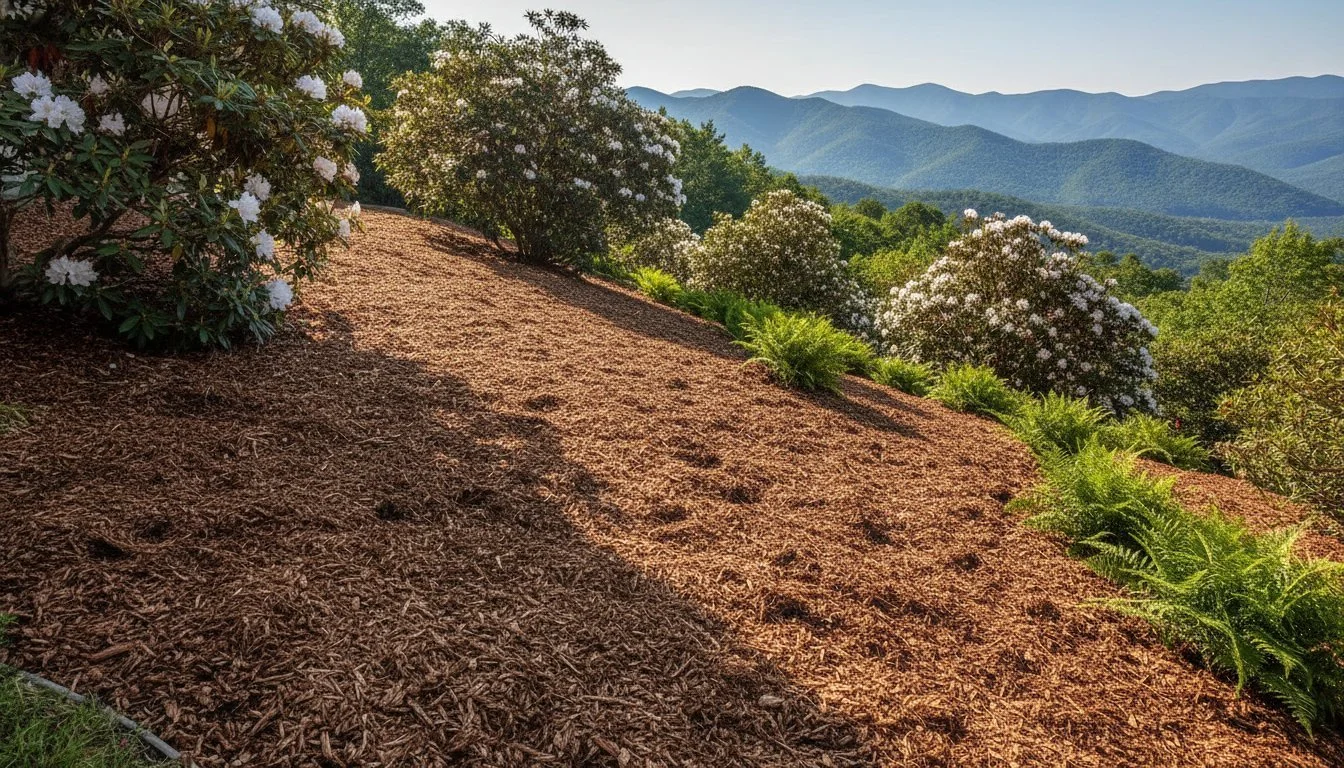
In the steep terrain of the High Country, your choice of ground cover is more than a design preference; it's a critical piece of site infrastructure. If you've ever watched your investment wash down a slope during a Blue Ridge thunderstorm or seen perennials wilt under the intense high-altitude sun, you know that standard gardening rules don't always apply here. Maintaining a professional landscape at elevation requires materials that work as hard as you do. This guide explores the strategic benefits of hardwood mulch that make it the dependable standard for stabilizing mountain soil and protecting expensive nursery stock.
You'll learn how this heavy, interlocking material manages moisture, suppresses aggressive weeds, and prevents erosion on challenging grades. We also cover essential 2026 fire safety regulations, including the mandatory Zone Zero requirements, to ensure your aesthetic improvements remain compliant and secure. By selecting the right organic foundation, you can reduce seasonal maintenance and give your mountain property the longevity it deserves. From soil health to curb appeal, we provide the practical insights needed to manage your landscape with confidence and efficiency.
Key Takeaways
Understand the physical density and fiber interlocking of hardwood that prevents material loss on steep mountain slopes.
Discover specific hardwood mulch benefits for biological health, including soil temperature regulation during erratic high-country freeze-thaw cycles.
Compare hardwood, pine bark, and designer alternatives to select the most durable ground cover for long-term landscape stability.
Learn to calculate precise cubic yardage requirements to optimize bulk delivery logistics for large-scale mountain properties.
Identify how to integrate hardwood mulch with non-combustible materials to meet 2026 fire safety regulations in high-risk zones.
What is Hardwood Mulch and Why Does it Matter?
Hardwood mulch is a robust byproduct of the lumber industry. It's composed of dense deciduous trees like oak, maple, and hickory. This material functions as a strategic operational tool for High Country property owners who require reliability. Unlike lightweight softwoods, hardwood fibers provide a stable foundation that resists displacement by wind or heavy rain. Understanding what mulch is: In a professional context, mulch is a long-term investment in soil structure rather than a temporary cosmetic fix. It serves as a steady partner for your plants, ensuring they have the stability they need to thrive in a mountain environment.
These materials are integral to the local carbon cycle. As the wood breaks down, it returns vital nutrients to the earth. One of the primary benefits of hardwood mulch is its high lignin content. Lignin is a complex organic polymer that provides structural rigidity to wood cells, which causes hardwood to decompose much more slowly than pine or straw. This durability ensures your landscape beds remain protected for longer intervals between applications, maintaining a tidy appearance without constant intervention.
The Composition of High-Quality Hardwood
High-quality mixes in Western North Carolina rely on the region's natural abundance of sturdy species. The texture of the product depends on the grinding process. Single-ground mulch consists of larger, coarser pieces suitable for rugged paths or large slopes. Double-ground is the industry standard for flower beds, offering a balance of aesthetics and protection. Triple-ground is a fine, soil-like texture often used for delicate perennials or small garden beds. Choosing the right grade is a functional decision based on the specific needs of your terrain and the maturity of your plantings.
Organic vs. Inorganic Ground Covers
While stone or rubber options may seem permanent, they lack the biological advantages of organic material. Inorganic covers don't contribute to soil health and can actually trap heat, stressing sensitive root systems during peak summer sun. Hardwood mulch improves soil tilth and microbial activity as it integrates with the ground over time. This transition creates a self-sustaining environment that reduces the need for expensive chemical fertilizers and supplemental soil conditioners. Leveraging the benefits of hardwood mulch ensures a healthier root zone and more resilient nursery stock. For large-scale mountain properties, coordinating bulk mulch delivery in Boone, NC is the most efficient way to establish this biological foundation across expansive acreage. This approach prioritizes long-term operational continuity for your garden beds.
Core Biological Benefits: Beyond the Surface
Hardwood mulch acts as a biological shield for your landscape. In the North Carolina mountains, spring temperatures often swing forty degrees in a single day. This erratic freeze-thaw cycle can heave plants out of the ground, exposing sensitive roots to frost. Applying a thick layer of hardwood provides thermal insulation, keeping soil temperatures consistent throughout these transitions. Beyond temperature control, the primary benefits of hardwood mulch include creating a physical barrier against sunlight. This prevents dormant weed seeds from germinating. It simplifies your maintenance schedule by reducing the need for manual weeding or chemical interventions.
Some property owners hesitate to use wood-based products due to concerns about "nitrogen robbing." This concern is largely a misunderstanding of soil science. Nitrogen depletion only occurs when raw wood chips are tilled directly into the soil. When used as a top dressing, decomposition occurs slowly at the soil-mulch interface. Any nitrogen used by microbes is minimal and restricted to the very surface. Research from the UNH Extension on Garden Mulches confirms that organic mulches, such as hardwood mulch, are superior for long-term plant health. They provide a stable environment without causing the nutrient deficiencies often cited by critics.
Soil Enrichment and Microorganism Support
As hardwood decomposes, it transforms into humus. This dark organic matter improves the earth's structural integrity. It's vital for establishing nursery plants in Blowing Rock, where the soil is often rocky or compacted. The presence of decaying oak and hickory bark serves as a magnet for earthworms and beneficial fungi. These organisms naturally aerate the soil and facilitate a slow-release nutrient profile. This biological activity ensures your plantings receive a steady supply of minerals. It's a predictable, long-term feeding strategy that supports your landscape's health for years.
Moisture Management for High-Altitude Gardens
High-altitude sun and wind accelerate evaporation, drying out garden beds quickly. Hardwood fibers create a functional "sponge effect." They absorb moisture during heavy mountain rains and release it slowly into the root zone. This layer prevents the soil surface from crusting over. Crusted soil repels water, leading to wasteful runoff rather than deep infiltration. To verify your system is working, pull back a small section of mulch after a dry spell. If the soil beneath is cool and dark, your moisture barrier is performing its duty. For those managing extensive mountain properties, choosing bulk hardwood mulch ensures you have sufficient depth to maintain these biological advantages throughout every season.
The High Country Advantage: Durability on Slopes and Slant
Landscaping in Watauga and Avery Counties presents a unique set of physical challenges. Gravity and weather are constant variables that can compromise your site's integrity. One of the most significant benefits of hardwood mulch is its ability to 'knit' together. Shredded hardwood fibers possess a jagged, irregular texture that allows them to interlock effectively. This creates a cohesive mat rather than a loose collection of debris. While pine straw is easily displaced by mountain gusts and bark nuggets often roll down embankments, hardwood stays anchored. This stability is essential for maintaining the visual and structural standards of your property without needing constant reapplications. It functions as a dependable partner in your site management strategy.
Erosion Control for Mountain Properties
Managing water velocity is a primary concern for mountain properties. Hardwood mulch acts as a baffle, breaking the kinetic energy of falling rain and slowing the movement of surface water across a slope. This prevents the formation of unsightly gullies and protects the vital topsoil. When landscaping in the High Country, a depth of 3 to 4 inches is recommended for maximum effectiveness on grades. You should apply it in a uniform layer, ensuring the fibers have ample contact with each other to initiate the interlocking process. This methodical approach transforms a simple ground cover into a strategic tool for erosion mitigation, providing peace of mind during heavy seasonal storms.
Thermal Protection in Zone 6b/7a
The High Country falls within USDA Plant Hardiness Zones 6b and 7a, where rapid temperature fluctuations are common. A 3-inch layer of hardwood mulch provides a functional R-value that insulates the root systems of your perennials and shrubs. This thermal blanket prevents 'frost heaving,' a process where the soil repeatedly freezes and thaws, physically pushing plants out of the ground. By stabilizing the soil temperature, you extend the active growing season and ensure higher survival rates for your nursery stock. Applying mulch in the late fall, before the first hard freeze, is the most effective way to secure this protection for the winter months. Securing these hardwood mulch benefits ensures your landscape remains resilient against the harsh mountain climate.
Hardwood vs. Alternatives: Making the Right Investment
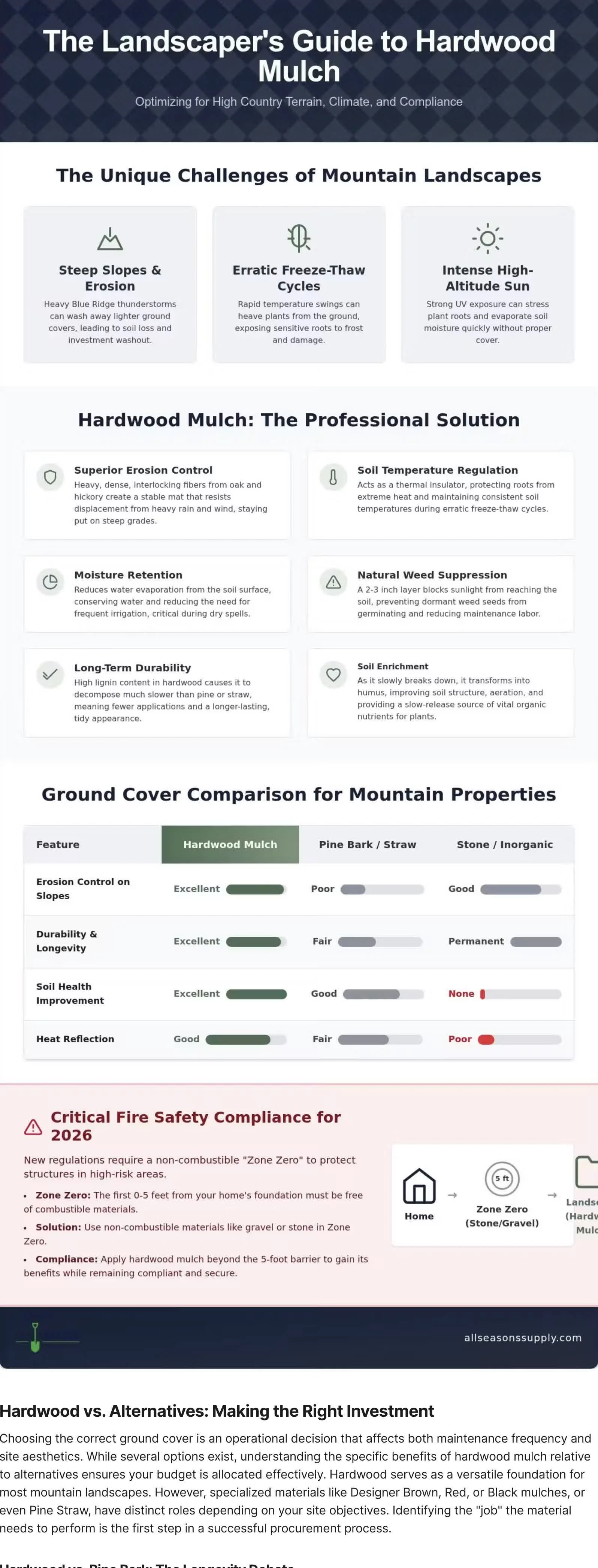
Choosing the correct ground cover is an operational decision that affects both maintenance frequency and site aesthetics. While several options exist, understanding the specific benefits of hardwood mulch relative to alternatives ensures your budget is allocated effectively. Hardwood serves as a versatile foundation for most mountain landscapes. However, specialized materials like Designer Brown, Red, or Black mulches, or even Pine Straw, have distinct roles depending on your site objectives. Identifying the "job" the material needs to perform is the first step in a successful procurement process.
Hardwood vs. Pine Bark: The Longevity Debate
Performance differences between hardwood and pine bark are significant in terms of durability. Hardwood mulch typically lasts six to twelve months longer than pine bark alternatives. Pine bark consists of larger, lighter nuggets that decompose quickly and are prone to floating away during heavy mountain rains. In contrast, the dense fiber structure of hardwood provides a stable, long-lasting barrier. From a chemical perspective, hardwood offers a neutral pH drift. This stability is particularly beneficial for establishing a diverse range of nursery trees, as it won't drastically alter soil acidity as pine products might. Over time, hardwood maintains a more consistent texture, whereas pine bark can become uneven and sparse as it breaks down.
Designer Mulches: When Aesthetics are Priority
When visual impact is the primary requirement, Designer Brown, Red, and Black mulches offer superior performance. These products use carbon-based dyes that are environmentally safe and highly resistant to UV fading. While natural hardwood eventually bleaches to a silver-grey under the high-altitude sun, dyed varieties retain their deep, saturated tones for an entire season or longer. This longevity reduces the need for frequent "top-dressing" to refresh your property's appearance. You can match Designer Black to modern charcoal stone features or use Designer Brown to complement traditional wood siding. This level of customization allows you to treat your landscape as a strategic extension of your home's architecture.
For specific areas with acid-loving plants, such as azaleas, Pine Straw remains a viable secondary option. It's lightweight and easy to apply around delicate stems. However, for most High Country applications where slope stability and soil protection are paramount, the advantages of hardwood are clear. To secure the right material for your next project, you can schedule a bulk mulch delivery to ensure your operational timeline stays on track. Selecting the right tool for the job minimizes labor and maximizes the health of your landscape investment.
Selection and Implementation: Getting the Most from Your Bulk Delivery
Precision in procurement ensures your project remains on schedule and within budget. Moving from material selection to implementation requires a methodical approach to volume and site preparation. Whether you're managing a residential slope or a commercial garden bed, the efficiency of your operation depends on accurate data. By accurately calculating your needs and preparing the terrain, you ensure that the hardwood mulch benefits we've discussed, such as erosion control and moisture management, are fully realized. Professional-grade results are the direct outcome of using the right tools and following a defined process.
Calculating Your Mulch Needs
Avoid the logistical headache of under-ordering by using a standard volume formula. To determine how many cubic yards you need, multiply your total square footage by your desired depth in inches, then divide that number by 324. In the High Country, a depth of 3 inches is the industry standard. This thickness provides the necessary thermal insulation and weed suppression without suffocating the soil. If your property features significant slopes or uneven terrain, it's a practical decision to round your order up by ten percent. This surplus accounts for the settling that occurs on steep grades and ensures you have enough material to maintain a uniform barrier across the entire site.
Best Practices for Application
Successful implementation begins before the delivery truck arrives. Your garden beds should be thoroughly weeded and clearly edged to a depth of 2 to 3 inches. This trench keeps the mulch contained and prevents it from spilling onto turf or walkways. If you're dealing with aggressive mountain weeds, applying a pre-emergent herbicide before mulching adds an extra layer of operational security. When you begin spreading the material, follow these guidelines:
Avoid "Mulch Volcanoes": Don't pile mulch against the trunks of trees or shrubs. This traps moisture against the bark, leading to rot and pest infestations.
Maintain Distance: Keep the material 2 to 3 inches away from the base of any woody plant.
Uniform Depth: Ensure the 3-inch layer is consistent to prevent weak spots where weeds can penetrate.
Logistics are the final piece of the puzzle. Coordinating a bulk landscape supply delivery for your driveway or job site saves significant time and labor compared to handling individual bags. We provide dependable delivery services throughout Watauga, Avery, and Ashe counties, ensuring your materials arrive when you're ready to work. This steady partnership allows you to focus on the technical aspects of your landscape while we handle the heavy lifting. By combining professional application techniques with high-quality hardwood, you create a resilient, low-maintenance landscape that withstands the unique demands of mountain living.
Secure Your High Country Landscape Investment
Managing a mountain property requires materials that withstand the physical demands of the terrain. Hardwood mulch provides the structural integrity needed to prevent erosion on steep grades while simultaneously enriching the soil for long-term health. By choosing a material that interlocks and resists high-altitude winds, you ensure your garden beds remain protected through every season. Maximizing these hardwood mulch benefits requires a combination of high-quality material and precise application. This strategic approach reduces your maintenance workload and secures the survival of your nursery stock.
All Seasons Supply is your dependable partner for professional-grade landscaping materials. As a family-owned business since 2019, we bring over 50 years of local expertise to every order. We provide reliable bulk delivery across Watauga, Avery, and Ashe Counties to keep your operations running smoothly. Order your bulk hardwood mulch for delivery today and take the first step toward a more resilient landscape.
We look forward to supporting the continued success and beauty of your mountain property.
Frequently Asked Questions
Does hardwood mulch attract termites to my home?
Hardwood mulch does not attract termites to your property, but it can provide a moist environment for existing colonies. Termites typically prefer larger pieces of solid wood over shredded mulch fibers. To maintain operational safety, keep a 6-inch gap between your mulch beds and the wooden siding or foundation of your home. This prevents termites from using the material as a bridge to enter your structure and ensures your home's integrity.
How often should I refresh my hardwood mulch in the High Country?
You should typically refresh your hardwood mulch every 12 to 18 months to maintain optimal performance. While the material is durable, the intense UV exposure and heavy precipitation in the North Carolina mountains eventually break down the fibers. A light top-dressing of one inch annually is often enough to restore the aesthetic appeal and biological function. This schedule ensures you continue to receive the full benefits of hardwood mulch without overapplying material.
Is dyed hardwood mulch safe for my plants and pets?
Dyed hardwood products, such as Designer Brown or Black, are safe for pets, children, and plants. These varieties use carbon-based or iron-oxide dyes, which are non-toxic organic compounds. Once the mulch has had 24 to 48 hours to dry after application, the color is stable and won't leach into the soil. This allows you to achieve specific aesthetic goals without compromising the health of your landscape or the safety of your household.
Will hardwood mulch make my soil too alkaline for blueberries or azaleas?
Hardwood mulch is generally pH-neutral and won't make your soil too alkaline for acid-loving plants like azaleas. As it decomposes, it may actually contribute a slight acidity to the surface layer, which most High Country plants prefer. For specialized crops like blueberries that require very low pH levels, you might supplement the soil with elemental sulfur, but the mulch itself is not a significant risk to your soil's chemical balance.
What is the best time of year to apply mulch in Boone, NC?
The most effective times for application are late spring or late fall. Spring mulching suppresses the first wave of aggressive weeds and preserves moisture before the summer sun intensifies. Fall application is a strategic move to insulate root systems against the High Country’s harsh winter freeze-thaw cycles. Timing your delivery within these windows ensures your plants remain protected during the year's most volatile weather transitions, supporting long-term plant survival.
How do I prevent mulch from washing away during heavy mountain rain?
Preventing washout on steep terrain requires using shredded hardwood rather than nuggets. The interlocking fibers knit together to form a stable mat that resists water movement. You should also maintain a consistent 3-inch depth and ensure your garden beds have a defined edge or trench. This physical barrier contains the material during heavy downpours, protecting your investment and preventing debris from reaching your lawn, driveway, or drainage systems during seasonal storms.
Can I put new hardwood mulch directly over old mulch?
You can apply new material directly over old mulch if the existing layer isn't excessively thick or matted. Before adding a fresh layer, use a rake to break up any compacted crust that may have formed. This ensures that water and oxygen can still reach the soil. If the total depth exceeds 4 inches, you should remove some of the old material to prevent suffocating plant roots and maintain proper drainage for your beds.
How much does a cubic yard of hardwood mulch cover at a 3-inch depth?
A single cubic yard of mulch covers approximately 100 to 108 square feet when applied at a depth of 3 inches. This coverage rate is a reliable standard for calculating the volume needed for bulk delivery. For properties with uneven terrain or steep slopes, it's prudent to order slightly more material to ensure uniform coverage. Accurate calculations ensure you maximize the benefits of hardwood mulch while keeping your site management efficient and cost-effective.