
The Best Materials for Natural Stone Steps in the High Country
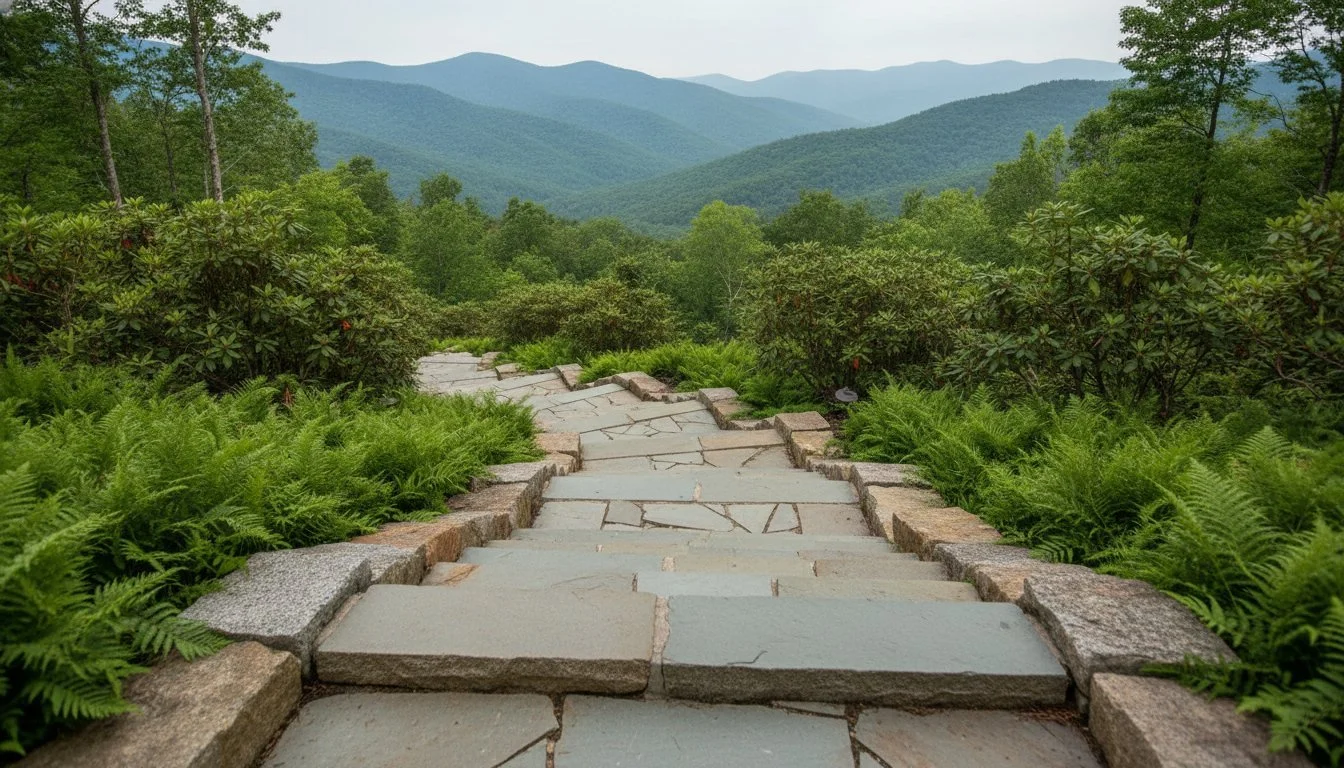
A beautiful stone staircase can be the centerpiece of a mountain landscape, but even the most expensive natural stone steps will fail if they aren't built to withstand the High Country's unique environment. Many homeowners invest in stunning flagstone or fieldstone only to watch their hard work shift and crack after a single season of freeze-thaw cycles. It's frustrating to see a significant investment become a safety hazard due to treacherous mountain terrain and unpredictable weather.
We understand that building on a slope requires more than just an eye for design; it requires a practical approach to logistics and durability. This guide will help you select the most resilient stone types for wet and icy conditions and explain the essential sub-base materials for a permanent installation. You'll learn exactly what to order for delivery and how to prepare a foundation that keeps your staircase level for decades. We'll cover everything from slip resistance to the logistics of transporting heavy loads up mountain roads. By the end, you'll have a clear roadmap for creating a safe, professional-grade entry that blends perfectly with the North Carolina landscape.
Key Takeaways
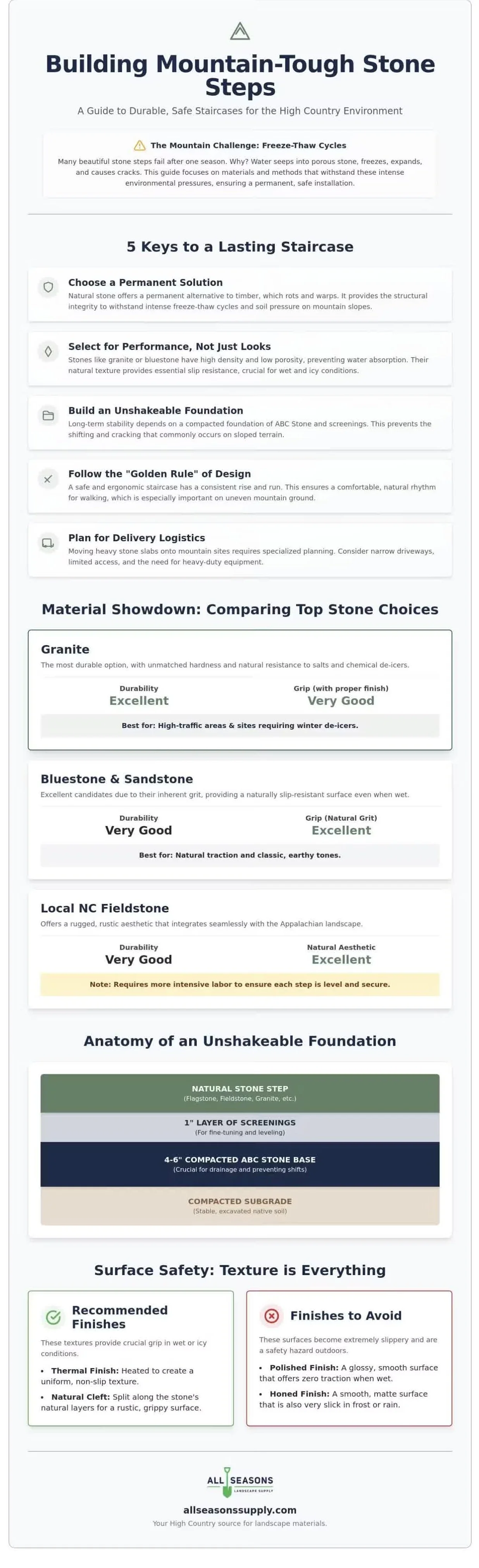
Natural stone offers a permanent alternative to timber, providing the structural integrity needed to withstand the High Country's intense freeze-thaw cycles.
Selecting the correct materials for natural stone steps, such as granite or bluestone, provides essential slip resistance and durability against winter de-icers.
Long-term stability requires a compacted foundation of ABC Stone and screenings to eliminate the shifting and cracking that typically occurs on sloped terrain.
Applying the "Golden Rule" of outdoor step design ensures a safe and ergonomic transition that accommodates the natural rhythm of mountain walking.
Planning for specialized delivery logistics is critical for moving heavy slabs safely onto mountain sites with narrow driveways and limited access.
Choosing the Right Natural Stone for Mountain Steps
Natural stone steps are substantial slabs or boulders specifically selected to create stable vertical transitions in a landscape. In the High Country, these structures must endure extreme conditions that would quickly degrade lesser materials. Pressure-treated timber often serves as a temporary fix, but it eventually succumbs to the constant moisture and soil pressure found on mountain slopes. Stone provides a permanent alternative. It won't rot, warp, or attract pests, making it the superior choice for long-term property value and operational continuity.
The performance of your staircase depends on the physical properties of the rock. You need materials with high density and low porosity. These traits prevent water from seeping into the stone, which is critical because trapped water expands when it freezes. In our region's frequent freeze-thaw cycles, porous stone will eventually flake or split. Choosing the right materials for natural stone steps ensures your installation remains structurally sound regardless of the temperature swings. This technical focus on material density is what separates a professional installation from a project that fails within three winters.
We generally categorize these materials into two groups: dimensional stone and irregular fieldstone. Dimensional stone is sawn or split to specific sizes, offering a predictable surface for high-traffic areas. Irregular stone retains its natural shape, providing a rustic look that mimics the local geology. Both options are effective, but your choice should align with the specific safety and aesthetic requirements of your site.
Flagstone Slabs for Clean, Formal Transitions
Many property owners prefer Flagstone for its versatility and uniform thickness. These large, flat slabs allow for a consistent tread depth, which is vital for safety in high-traffic areas. You can find these in various earthy tones, ranging from warm tans to sophisticated charcoal grays. Sawn edges provide a crisp, formal look that works well for main entrances or modern mountain homes. These slabs are typically easier to level than irregular pieces, streamlining the installation process and ensuring a dependable walking surface.
Fieldstone and Boulders for Rustic Garden Runs
Fieldstone offers a rugged aesthetic that integrates seamlessly with the Appalachian landscape. These irregular pieces vary in shape and size, providing a more organic feel than dimensional stone. When selecting these materials for natural stone steps, focus on pieces with at least one naturally flat surface to serve as the tread. Using boulders for the sides of the run adds significant structural weight. This mass helps the staircase resist the lateral pressure of the surrounding hillside, ensuring the path remains stable for years without shifting or sliding down the slope.
Comparing Popular Stone Materials for Durability and Grip
Selecting the right materials for natural stone steps requires a balance between aesthetics and high-performance safety. In the High Country, where ice and heavy rain are common, the physical texture of the stone is just as important as its mineral composition. Granite stands out as the most durable option. It possesses unmatched hardness and a natural resistance to the salts and chemical de-icers often used on mountain driveways. Unlike softer stones, granite won't degrade or pit when exposed to harsh winter maintenance routines.
Sandstone and bluestone are also excellent candidates because of their inherent grit. These stones provide a naturally slip-resistant surface that remains effective even when wet. While local North Carolina fieldstone offers a beautiful, rustic appearance, it often requires more intensive labor during installation to ensure each step is level and secure. When evaluating the best materials for natural stone steps, choosing high-quality fieldstone or flagstone from a dependable supplier ensures you receive materials that are structurally sound and ready for the mountain environment.
Traction and Safety: Selecting Non-Slip Textures
Polished or honed finishes are significant safety hazards in outdoor mountain applications. They become incredibly slick with just a light dusting of frost. Instead, look for a thermal or natural cleft finish. A thermal finish involves heating the stone to create a textured, non-slip surface. A natural cleft finish occurs when the stone is split along its natural layers, leaving a rugged, grippy texture. These surfaces align with National Park Service guidelines for safe outdoor walkways. This choice ensures that your staircase provides secure footing for years, even as consistent foot traffic wears down less durable materials.
Weather Resistance in the High Country
Boone and the surrounding areas experience high moisture levels that can lead to spalling. This is a process where the outer layers of a stone flake off due to internal water pressure during freeze-thaw cycles. Highly porous stones are most susceptible to this damage. For properties in Beech Mountain or Banner Elk, where snowfall is heavy, we recommend stones with low absorption rates. Granite and certain types of bluestone are particularly resilient. They maintain their structural integrity even after decades of exposure to the extreme temperature fluctuations typical of our region. Using these materials for natural stone steps eliminates the need for costly repairs or total replacements after a particularly harsh winter.
The Foundation: Essential Base Materials for Stone Steps
Shifting stones are the most common complaint for mountain property owners. This issue almost always stems from improper base compaction. While the visible materials for natural stone steps receive the most attention, the sub-base determines the project's lifespan. "Dirt-set" installations, where stones are placed directly on native soil, will inevitably fail on a mountain slope. The soil eventually washes away or compresses unevenly, leading to dangerous, tilted steps that require a full reconstruction. A dependable foundation is the only way to ensure operational continuity for your outdoor space.
A professional installation begins with excavating the "footprint" of the stairs. We remove the unstable topsoil and replace it with engineered aggregates. This process creates a stable platform that remains level despite the stone's weight and the hillside's pressure. By investing in the right base materials now, you avoid the logistical headache of repairing a collapsed staircase later.
Why ABC Stone is Non-Negotiable
Professional builders rely on ABC Stone, also known as Crusher Run, to create a stable platform. This material consists of a specific mix of crushed stone and fine particles. When compacted, the fines fill the voids between the larger rocks, creating a solid, interlocking mat that resists settling. For a dependable foundation, you typically need 4-6 inches of compacted ABC Stone. You can find more details on aggregate selection in our essential guide to landscape stone. This layer acts as a structural bridge. It distributes the weight of the heavy stone steps across a wider area and prevents the staircase from sinking into the soft mountain earth.
Managing Drainage and Hydrostatic Pressure
Water is a powerful force in the High Country. If moisture becomes trapped behind or beneath your steps, it creates hydrostatic pressure. During winter, this water freezes and expands, which can heave even the heaviest boulders out of alignment. To mitigate this, we use screenings or clean gravel to allow water to weep away from the structure. Screenings, or stone dust, serve as the final bedding layer. This material allows for precise leveling of each tread while maintaining a firm, non-shifting surface.
Proper drainage also involves the installation geometry. We recommend pitching each stone tread slightly forward, about 1/8 inch, to ensure water sheds off the front rather than pooling at the back. This technique is a core principle in the Forest Service Trail Construction Guide for building durable stone structures in rugged environments. By combining the right materials for natural stone steps with a well-engineered base, you ensure your investment remains safe and attractive regardless of rainfall or snowfall.
Design Basics: Rise, Run, and Sizing Your Materials
Designing a staircase for the mountain environment requires a departure from standard indoor construction practices. Outdoor steps must accommodate a more relaxed "garden gait" while managing steep, uneven terrain. The industry standard for safe outdoor transitions is the "Golden Rule": 2R + T = 26 inches. In this formula, R represents the riser height, and T represents the tread depth. Following this ratio ensures that the stride remains natural and predictable for the user. While indoor stairs often utilize a 7-inch riser, outdoor mountain steps perform best with a shorter rise of 5 to 6 inches. This lower height reduces fatigue when climbing steep slopes and provides a more stable feel underfoot.
Width is another critical operational consideration. A width of 3 feet is the functional minimum for a single person. However, for primary entrances where two people might pass each other, a width of 5 feet is recommended. To determine the number of steps required, measure the total vertical drop of your project site and divide it by your target riser height. For instance, a 60-inch total drop divided by a 6-inch rise will require exactly 10 steps. Precise calculations at this stage prevent the need for awkward, uneven steps at the top or bottom of the run, which are common tripping hazards.
Calculating Your Material Order
Ordering the correct volume of materials for natural stone steps prevents costly delivery delays and ensures project continuity. To calculate the tonnage required for flagstones or sawn slabs, multiply your total square footage by the stone thickness, then consult your supplier's coverage charts. Irregular fieldstone projects are less predictable; you should account for a higher waste factor by ordering 15% more than your estimated needs to ensure you have enough "filler" stones for a tight fit. Don't forget the foundation. Always order 10% more ABC Stone than your base volume calculation to account for the significant volume reduction that occurs during compaction.
Safety and Lighting Considerations
Safety in the High Country involves more than just slip resistance. Consistent riser height is the most important factor in preventing falls; the human brain quickly adjusts to a rhythm that shouldn't be interrupted by a sudden change in step height. You can improve visibility by incorporating a 1-inch overhang, or nosing, on each tread. This creates a shadow line that helps define the step's edge in flat lighting. For maximum safety during our long winter nights, consider integrating low-voltage lighting into the adjacent stone walls or directly beneath the treads. Ready to start your build? Order your stone and base materials from our local inventory today.
Sourcing and Delivering Heavy Stone in the High Country
Moving several tons of materials for natural stone steps through Watauga and Avery Counties presents unique logistical challenges. Narrow mountain roads, steep grades, and hairpin turns make standard freight delivery nearly impossible for many residential and commercial sites. We operate a local delivery fleet specifically maintained to navigate these difficult terrains. This ensures that your project stays on schedule and that your materials arrive exactly where they're needed, without damaging your property or local infrastructure. Our drivers understand the nuances of mountain access, providing a level of reliability that national distributors cannot match.
Our role is that of an industrious partner. We work with you during the procurement phase to ensure you select the correct volume of stone and base materials. This precision prevents the inefficiency of multiple delivery trips or the frustration of running short mid-project. We encourage you to visit our yard in Vilas, NC. Seeing the textures and colors of our flagstone and fieldstone in person allows you to make an informed decision that matches the specific geology of your property. This hands-on approach ensures the final result blends naturally with the surrounding landscape while meeting your structural requirements.
Why Local Sourcing Matters
Local sourcing is a strategic choice for mountain builders. We understand the specific stone varieties that thrive in the North Carolina climate and resist spalling, a common issue in our region. Bulk delivery is significantly more cost-effective than purchasing bagged materials from big-box retailers, which often carry stone that isn't rated for High Country winters. By sourcing your natural stone step materials locally, you gain access to our team's collective knowledge. We bring over 50 years of experience to every consultation, helping you avoid common procurement errors and ensuring your site is prepared for the specific weight of the stone slabs.
Planning Your Delivery for Success
Successful delivery requires careful site preparation to minimize double-handling of heavy materials. Identify a flat, stable drop point as close to the installation site as possible. This reduces the manual labor required to move heavy slabs into position once the truck departs. Before your scheduled delivery, check for low-hanging overhead wires and measure the clearance at narrow gates to ensure our trucks can pass safely. Providing clear instructions for the driver streamlines the process and maintains operational continuity on your job site. Ready to start your project? Contact All Seasons Supply for a delivery quote today.
Build a Lasting Mountain Entry
Building a durable staircase in the High Country is an investment in your property's long-term accessibility and value. Success requires a dual focus on selecting high-density, slip-resistant stones and engineering a compacted foundation of ABC Stone and screenings. By prioritizing proper drainage and adhering to the specific geometry of outdoor transitions, you ensure your installation remains safe and stable through decades of Appalachian winters. These technical details separate a temporary fix from a permanent landscape feature.
Securing the right materials for natural stone steps is the final phase of your planning. As a family-owned and operated business since 2019, we bring over 50 years of combined landscaping experience to every order. We understand the specific logistical demands of our region and provide specialized local delivery serving Boone, Blowing Rock, and Banner Elk. Our team is ready to serve as your reliable partner, ensuring you have the exact aggregates and stone slabs you need for a professional-grade result.
Browse our Selection of Flagstone and Fieldstone to find the perfect match for your mountain landscape. We look forward to helping you build a mountain entry that stands the test of time.
Frequently Asked Questions
What is the best stone for outdoor steps in North Carolina?
Granite and bluestone are widely considered the best options for North Carolina's High Country. These materials for natural stone steps provide high density and natural slip resistance, which are essential for navigating our frequent ice and rain. Granite is particularly resilient against de-icing salts and won't pit over time. While fieldstone offers a traditional Appalachian look, its irregular shape requires more careful selection to find pieces with flat treads for safe walking in all seasons.
Do I need a concrete pad under my natural stone steps?
A concrete pad isn't strictly necessary for dry-stack installations but is essential if you plan to use mortar. For most mountain landscapes, a compacted ABC Stone aggregate base is preferred. This flexible foundation allows the structure to breathe and shift slightly during freeze-thaw cycles without cracking. If you choose a mortared finish, a reinforced concrete footing below the frost line is required to prevent the mortar joints from failing under the pressure of shifting soil.
How thick should flagstone be for use as a stair tread?
Flagstone used for stair treads should be at least 2 inches thick to ensure structural integrity. Thinner slabs are prone to cracking under the weight of foot traffic or the pressure of freezing soil. Selecting heavy-duty slabs provides the necessary mass to keep the steps in place without adhesive. For primary entrances, using 2.5- to 3-inch-thick slabs offers a more substantial appearance and superior long-term durability against the elements.
How do I prevent my stone steps from sinking over time?
Preventing sinking requires a multi-layered approach to soil stabilization and water management. You must excavate the native soil and replace it with a minimum of 4 to 6 inches of compacted ABC Stone. This aggregate base distributes weight evenly across the site. Additionally, installing a layer of screenings as a bedding material allows for precise leveling. Proper drainage behind the steps prevents water from saturating the base, which is the primary cause of settling on sloped terrain.
What is the difference between ABC stone and screenings for step installation?
ABC Stone and screenings serve two distinct roles in a professional installation. ABC Stone is a structural aggregate containing various rock sizes and fines that compact into a solid, unyielding mat. It serves as the primary load-bearing foundation. Screenings, or stone dust, are much finer and used as a thin leveling layer directly beneath the stone. This combination provides a stable base that remains level while offering a smooth surface for precisely setting each individual tread.
Can I build stone steps on a very steep slope?
You can build stone steps on steep slopes by incorporating large boulders as structural cheeks and using frequent landings. On extreme inclines, it's safer to break up long runs with flat sections every 5 to 7 steps. This design reduces the physical strain on the user and minimizes the risk of erosion around the staircase. Using heavy materials for natural stone steps on steep terrain provides the lateral weight needed to hold back the hillside effectively for decades.
How much does a pallet of flagstone typically cover for steps?
Coverage varies by stone type, but a standard pallet of flagstone typically provides enough material for 6 to 8 large treads. When using irregular fieldstone, coverage is more difficult to estimate due to its variable shapes and thicknesses. We recommend ordering at least 15% more material than your square footage calculation. This ensures you have enough pieces with the necessary flat surfaces for safe stepping and structural consistency across the entire project run.
Is it better to use mortar or dry-stack for stone steps in the High Country?
Dry-stack is generally better for the High Country because it accommodates the natural movement of the earth. Mortar joints are rigid and often crack when the ground expands and contracts during our extreme temperature swings. A dry-stack installation allows water to pass through the joints, reducing hydrostatic pressure behind the structure. This method is more dependable for long-term operational continuity in rugged, sloped environments where drainage is a constant concern for property owners.