
Drought-Tolerant Plants for Avery County: A High Country Planting Guide
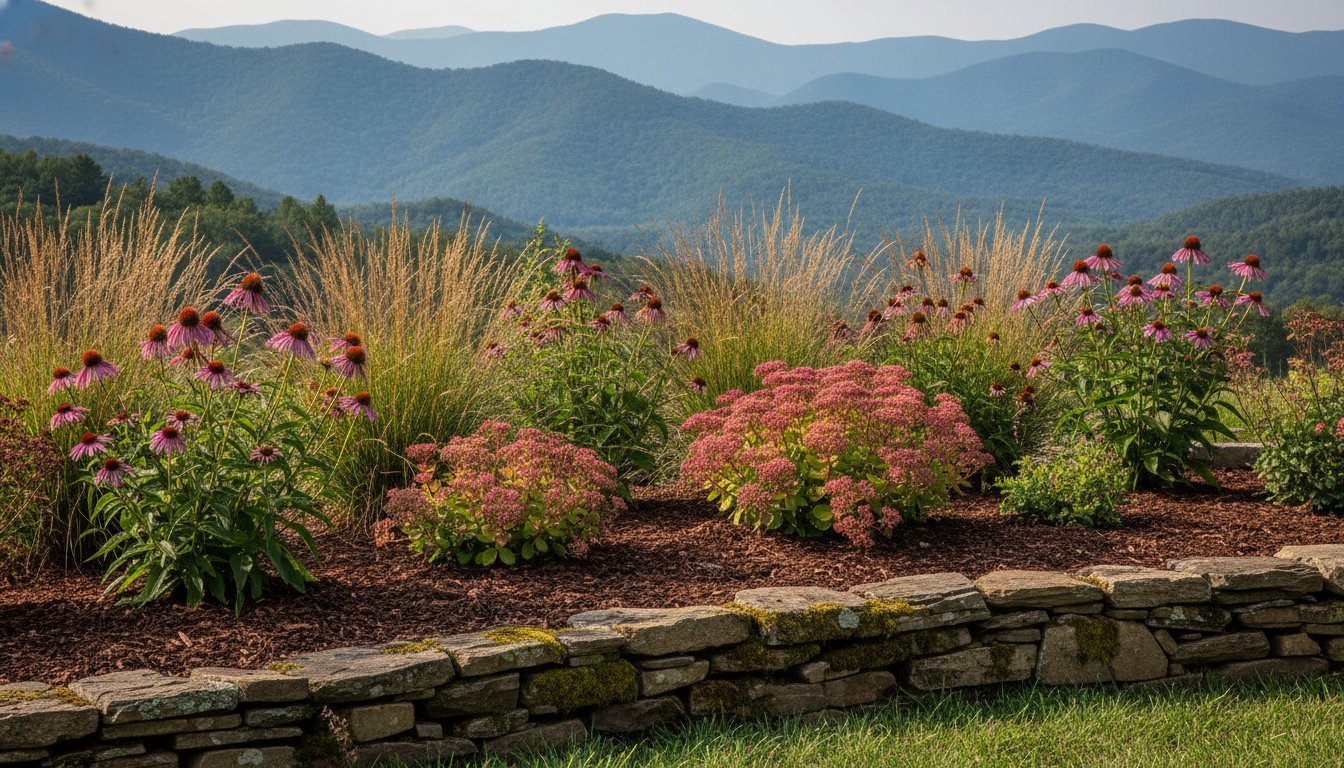
Did you know that as of June 2026, 100% of Avery County is experiencing drought, with precipitation levels falling more than eight inches below normal? Maintaining a professional landscape in the High Country is difficult enough with our thin, rocky soil and drying winds, but current conditions make it even harder. Selecting drought-tolerant plants for Avery County requires more than just reading a generic nursery tag. You need species that can withstand extreme water shortages without sacrificing their ability to survive a deep-mountain freeze. It's a specific balance that many general gardening guides simply don't account for.
We understand that your garden is an investment and watching new nursery stock fail is a frustrating setback. You want a lush, dependable landscape that requires minimal intervention and withstands the elements. This guide provides a comprehensive roadmap for choosing mountain-hardy plants and for using materials such as compost and mulch to build soil resilience. We'll examine the best perennials, shrubs, and trees for our elevation to ensure your property remains an asset even under strict water restrictions.
Key Takeaways
Understand how physiological drought and high-altitude winds pose unique challenges for mountain landscapes across Avery County's microclimates.
Identify the best drought-tolerant plants for Avery County that are rated to withstand both extreme water shortages and temperatures as low as -10°F.
Learn how to use organic soil amendments like compost and hardwood mulch to help thin, rocky mountain soil retain critical moisture.
Discover why fall is the strategic season for planting and how the "Deep Soak" method trains roots to survive long-term dry spells.
Ensure higher survival rates by selecting locally acclimated nursery trees and shrubs that are already adjusted to the High Country's specific environment.
The Unique Challenge of Drought in Avery County
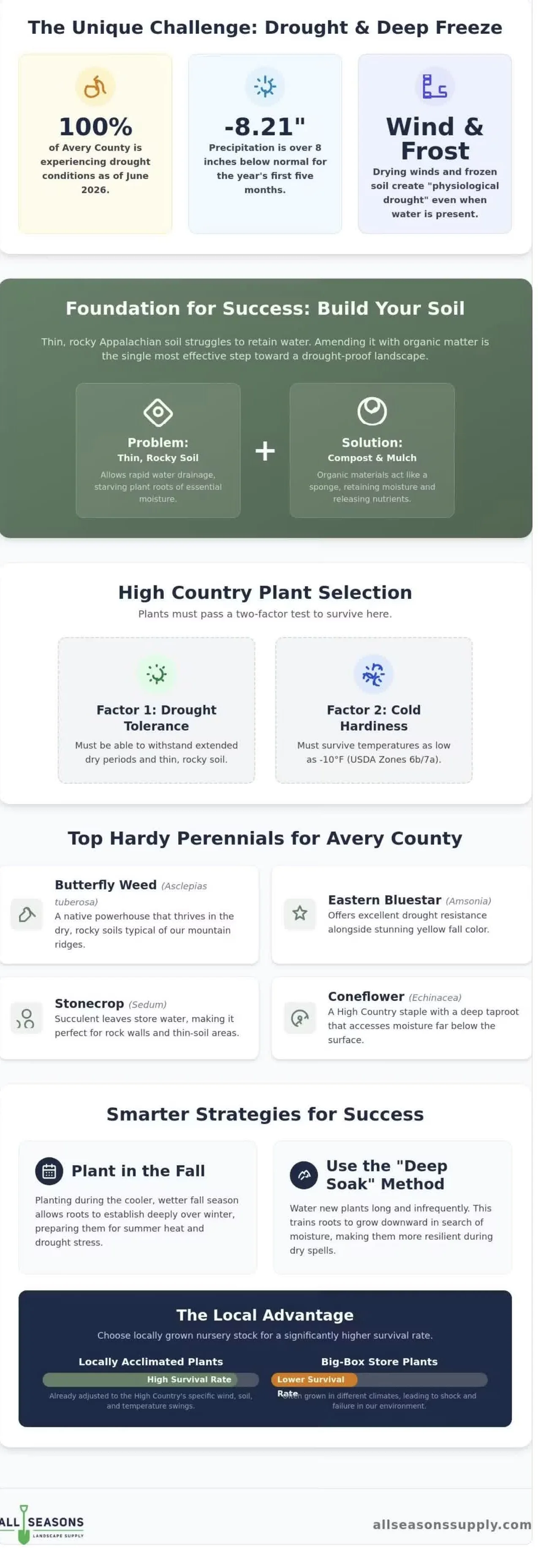
Managing a landscape in the High Country requires a specialized understanding of our local environment. As of June 2026, every acre of Avery County is officially in a state of drought. With precipitation levels measuring 8.21 inches below normal for the first five months of the year, the margin for error in plant selection has disappeared. Finding effective drought-tolerant plants for Avery County isn't just about heat resistance. It's about overcoming "physiological drought." This condition occurs when water is physically present but unavailable to the plant, often due to frozen soil or high-speed winds that strip moisture from foliage faster than roots can replenish it.
Our geography creates a complex patchwork of micro-climates that dictate survival. A garden in the sheltered valleys of Banner Elk faces different stressors than one on the exposed ridges of Beech Mountain. The thin, rocky Appalachian soil serves as a poor reservoir for moisture, allowing water to drain away before it reaches deep root systems. When implementing a water-wise landscape design, you must use USDA Zone 6b or 7a hardiness as your primary filter. A plant that thrives in the dry heat of the Piedmont will likely succumb to our sub-zero winter temperatures or late spring frosts.
Wind Desiccation vs. Heat Stress
High-altitude winds are often more damaging than high temperatures in our region. These constant breezes accelerate transpiration, pulling water from leaves and needles at an aggressive rate. Many homeowners mistake this for heat stress, but the cause is atmospheric. This is why "heat-tolerant" plants frequently fail in the High Country; they lack the structural resilience to withstand constant wind. Look for signs such as needle cast in evergreens or brittle, brown leaf margins on perennials. These symptoms indicate that the plant is losing water to the air faster than the rocky soil can provide it.
The Role of Elevation in Moisture Retention
Elevation influences everything from evaporation rates to the timing of the first frost. Higher elevations generally experience lower air pressure, which can increase the rate of moisture loss from both plants and soil. South-facing slopes in Avery County are particularly challenging. These areas receive the most direct solar radiation, leading to higher soil temperatures and rapid drying. Additionally, the "rain shadow" effect near the Blue Ridge Escarpment means some areas receive significantly less rainfall than others just a few miles away. This variability makes using drought-tolerant plants in Avery County a practical necessity for any property owner looking to maintain a professional, low-maintenance landscape.
Best Drought-Tolerant Plants for High Country Gardens
Success in our region depends on a strict two-factor authentication for foliage: it must survive extreme moisture deficits and temperatures dropping to -10°F. When selecting drought-tolerant plants for Avery County, avoid the common mistake of buying species acclimated to the Piedmont or coastal plains. These plants often lack the cellular structure to survive our harsh winters. We recommend grouping your selections through hydro-zoning, a method where you place high-water plants in naturally damp depressions and drought-hardy species on exposed slopes. This strategy streamlines maintenance and ensures your resources are used efficiently.
For the best results, source your stock from a nursery in Blowing Rock that understands our specific elevation challenges. Locally grown plants are already hardened off to our wind and soil conditions, providing a significantly higher survival rate than big-box store alternatives. This local acclimation is the difference between a garden that merely survives and one that truly thrives.
Hardy Perennials for Avery County
Perennials provide the foundation for a resilient garden. Butterfly Weed (Asclepias tuberosa) is a native powerhouse that thrives in the dry, rocky soils typical of our mountain ridges. Eastern Bluestar (Amsonia) offers excellent drought resistance alongside stunning yellow fall color. For homeowners in Banner Elk looking to fill rock walls or thin-soil areas, Stonecrop (Sedum) is an essential choice because its succulent leaves store water for weeks. Coneflower (Echinacea) remains a staple for High Country resilience because its deep taproot allows it to access moisture far below the surface. You can find detailed cultural requirements for these species in the NC Extension Gardener Plant Toolbox.
Drought-Resistant Shrubs and Trees
Woody plants provide the necessary structure and wind protection for mountain properties. Ninebark (Physocarpus) is a tough-as-nails native shrub that handles windy sites without losing its ornamental appeal. If you're managing steep Avery County grades where erosion is a concern, Fragrant Sumac is an ideal solution for stabilizing the soil. For a permanent windbreak, the Eastern Red Cedar is the ultimate drought-tolerant evergreen, capable of withstanding the most punishing conditions. Serviceberry (Amelanchier) is another versatile option, combining beautiful spring blooms with an innate ability to handle dry spells once established.
Native Grasses for Low-Maintenance Landscapes
Grasses are often overlooked but are vital for stabilizing slopes in Foscoe and Watauga County. Little Bluestem thrives in poor soil and provides exceptional winter interest with its copper-colored stems. Switchgrass (Panicum virgatum) features deep roots that find water in rocky crevices where other plants would wither. These grasses create a naturalized look that blends seamlessly with the surrounding Appalachian forest. If you're unsure which species will work best for your specific slope, visiting our nursery to see these perennials and grasses in person can help you visualize the final landscape.
Building the Foundation: Soil Health and Mulching
Avery County's native soil is often more rock than dirt. This geological reality means that even the most robust drought-tolerant plants for Avery County will struggle if their foundation is poor. Without organic matter, water simply drains through the substrate, leaving roots parched shortly after a rain event. We recommend treating your soil as a strategic operational asset. By incorporating organic "fuel," you increase the ground's water-holding capacity, turning a dry site into a moisture-retaining sponge.
Applying bulk hardwood mulch acts as a critical insulating blanket for these root systems. It serves two primary functions: preventing surface evaporation and regulating soil temperatures during the intense sun common at our higher elevations. This ensures moisture remains available for your nursery stock. This simple step is the most cost-effective way to protect your landscaping investment during a dry spell.
Amending Rocky Mountain Soil
Success starts before the first plant goes into the ground. Mixing high-quality topsoil with compost is the most effective way to prepare a site for long-term health. In rocky areas like Beech Mountain, digging a traditional planting hole is often impossible. Instead, we suggest creating "planting pockets" by filling large crevices with this nutrient-dense mixture. This method provides a concentrated area of moisture retention that supports the plant as it establishes itself. Adding organic matter offers several advantages:
Increased water-holding capacity in thin substrates.
Improved nutrient availability for deep root systems.
Better temperature regulation in exposed areas.
This approach is significantly more effective than daily light watering. Shallow watering only encourages roots to stay near the surface, making them more vulnerable to the next dry cycle.
Choosing the Right Mulch for Water Retention
On the steep grades typical of Banner Elk and Linville, mulch stability is a major concern. Hardwood mulch is preferred for these slopes because the fibers knit together and stay in place during heavy Appalachian rains, where pine bark might wash away. For your acid-loving mountain staples, such as Rhododendron or Mountain Laurel, Pine Straw is the superior choice. It provides the necessary acidity while allowing air and water to reach the roots easily. If you want to enhance curb appeal while protecting drought-tolerant plants for Avery County, Designer Brown or Black mulch can help regulate soil temperature by absorbing or reflecting heat as needed.
Using Stone for Moisture Management
In areas where high-altitude winds are too aggressive for wood products, stone becomes a functional tool for moisture management. River Rock and Pea Gravel can be used to create dry creek beds that manage runoff during heavy storms. These features act as a heavy mulch that won't blow away in a gale. Stone borders also serve as a dependable barrier against soil erosion. Using stone in high-traffic or high-wind areas helps ensure your soil and amendments stay exactly where you placed them, maintaining the integrity of your landscape design through all weather cycles.
Planting and Design Strategies for Low-Water Success
Strategic timing is the first step toward a resilient garden. While many homeowners plant in the spring, fall is actually the secret season for success in the High Country. Planting in the autumn allows root systems to establish in soil that remains warm even as air temperatures cool. This period of development occurs without the stress of summer heat or the immediate demand for foliage growth. When you install drought-tolerant plants for Avery County during this window, you give them several months to anchor into the mountain substrate before the first deep freeze arrives.
The "Deep Soak" method is essential for long-term survival. Instead of frequent, light applications that only dampen the surface, apply water slowly and deeply at the base of the plant. This practice trains roots to grow downward into the cooler, moister layers of the earth. Shallow roots are the first to succumb during a dry spell, while deep roots ensure survival. We also suggest reducing high-maintenance lawn areas in favor of perennial beds and stone paths. These features naturally require less water and provide better drainage on sloped lots.
The 5 Laps of Successful Planting
Following a consistent installation process protects your investment. Use these five steps for every new addition to your landscape:
Step 1: Dig a hole twice as wide as the root ball to loosen the surrounding rocky soil.
Step 2: Amend the area with a 50/50 mix of native soil and compost to improve water retention.
Step 3: Install the plant slightly high to allow for natural settling without drowning the crown.
Step 4: Apply a 3-inch layer of hardwood mulch, ensuring it stays away from the trunk to prevent rot.
Step 5: Water deeply at the base, not the foliage, to settle the soil and establish the roots.
Designing for Slope and Exposure
Avery County's topography requires creative solutions for moisture management. You can use terraces built from Flagstone or Fieldstone to slow water runoff on steep grades. These structures catch rainwater and allow it to percolate into the soil rather than washing away. Grouping plants into specific "Water Zones" also ensures you are only hand-watering the species that truly need it. Finally, consider creating windbreaks with hardy shrubs to protect your more delicate perennials from the drying effects of high-altitude gusts. If you are ready to enhance your landscape's resilience, browse our selection of hardscape materials and nursery stock to get started.
Partnering with All Seasons Supply for a Resilient Landscape
Success in the High Country isn't accidental. It's the result of pairing the right species with high-quality landscape materials. We bring decades of combined experience to every project, ensuring you select drought-tolerant plants for Avery County that are well-suited to our environment. Nursery stock is grown and maintained locally. This means the trees and shrubs you purchase from us have already survived the high-altitude winds and temperature swings mentioned throughout this guide. They aren't just "hardy" on a label; they're proven mountain survivors that are ready to thrive in your soil.
Logistics shouldn't be a barrier to a healthy garden. We provide efficient bulk mulch delivery in Boone, NC, and throughout Avery and Watauga Counties. Whether you're in the sheltered valleys of Banner Elk or the exposed heights of Beech Mountain, we ensure your materials arrive on schedule. This reliability allows you to focus on the technical aspects of planting while we handle the heavy lifting of resource procurement.
Comprehensive Materials for Every Project
Building a resilient landscape requires a comprehensive approach to procurement. We offer everything from bulk topsoil and compost to a variety of designer mulches. These materials provide the moisture-retention foundation necessary for long-term plant health. Our selection of nursery trees and shrubs is curated specifically for High Country performance. We prioritize species that offer both aesthetic value and physiological toughness. Our delivery fleet is equipped to reach challenging mountain locations, including:
Banner Elk and surrounding valley communities.
High-elevation properties on Beech Mountain.
Residential and commercial sites throughout Linville and Newland.
The Industrious Partner for High Country Landscapers
We act as a steady partner for both DIY homeowners and professional landscape contractors. Since 2019, we've focused on providing the dependable service and quality materials required to maintain operational continuity for your property. We don't just sell products; we provide the strategic tools you need to combat extreme weather cycles. Our team values long-term relationships and practical results over simple transactions. We understand the specific soil and climate challenges of the Appalachian range and are committed to your project's success.
Visit our garden center to discuss your specific site challenges with our knowledgeable staff. If you're ready to secure your landscape's future, you can order your bulk materials online today. Let's work together to build a landscape that remains lush and vibrant, regardless of the rainfall totals.
Build a Resilient Mountain Garden Today
Achieving a thriving landscape in our region requires moving beyond standard gardening advice. By focusing on soil health through composting and choosing drought-tolerant plants for Avery County that are rated for our specific elevation, you protect your property against worsening weather cycles. Remember that fall remains the strategic window for installation, allowing root systems to establish before the ground freezes. This proactive approach ensures your nursery stock survives the physiological drought caused by our high-altitude winds and rocky substrate.
As a locally owned family business with over 50 years of combined industry experience, All Seasons Supply is the premier landscape supplier for Watauga and Avery Counties. We provide the acclimated nursery stock and bulk materials necessary to ensure your garden remains a functional asset regardless of precipitation deficits. Browse Our High-Country Hardy Nursery Stock and Bulk Materials to secure the professional-grade supplies your project deserves. Your mountain landscape is a significant investment; we're here to help you ensure it lasts for years to come.
Frequently Asked Questions
What are the best drought-tolerant native plants for Avery County?
Native species like Butterfly Weed, Ninebark, and Serviceberry are excellent choices for our region. They evolved in the thin, rocky soils of the Appalachian range and handle moisture deficits well. When selecting drought-tolerant plants for Avery County, prioritize these natives for higher survival rates. They provide structural integrity and aesthetic value without requiring constant irrigation once established in the mountain substrate.
How often should I water new plants in the High Country?
New nursery stock requires deep watering daily for the first week after installation. After this initial period, transition to a deep soak twice a week to encourage roots to grow downward. Monitoring local rainfall is essential, especially since Avery County recorded a precipitation deficit of over 8 inches in early 2026. Avoid light surface watering as it only dampens the top layer of soil and leads to shallow root systems.
Can I use pine bark mulch on a steep slope in Boone?
Hardwood mulch is a more dependable choice for steep slopes in Boone and surrounding areas. Pine bark mulch is lightweight and tends to wash away during heavy Appalachian rains or blow away in high-altitude winds. Hardwood mulch fibers knit together to form a stable mat that stays in place. This ensures your soil stays protected and moisture remains locked in, even on the aggressive grades typical of our mountain terrain.
Is it better to plant in the spring or fall in the NC mountains?
Fall is the preferred season for planting in the High Country. The soil remains warm from the summer months while the air temperature drops, which encourages aggressive root growth without the stress of foliage production. Planting in the autumn gives your landscape a head start on establishment before the spring growth cycle begins. This strategy leads to much higher survival rates during subsequent dry summers and extreme weather cycles.
How do I protect my drought-tolerant plants from winter frost?
Applying a three-inch layer of hardwood mulch is the most effective way to protect root systems from deep freezes. You should also ensure every selection is rated for USDA Zone 6b or 7a to handle temperatures as low as -10°F. Using hardy shrubs as windbreaks helps shield more delicate perennials from the drying effect of high-altitude winter gusts. Proper placement and seasonal mulching are your best defenses against mountain frost damage.
Does All Seasons Supply deliver bulk mulch to Beech Mountain?
Yes, we provide reliable delivery of bulk mulch and hardscape materials to Beech Mountain. Our fleet is equipped to navigate the challenging grades and narrow roads typical of high-elevation properties. We also service Banner Elk, Boone, and the rest of the High Country. This service ensures your project stays on schedule and your materials arrive exactly where they are needed, regardless of your property's location.
What is the best soil amendment for rocky mountain ground?
A 50/50 blend of topsoil and compost is the most effective amendment for rocky mountain ground. This mixture provides the organic matter needed to hold moisture in thin, well-draining substrates. It turns poor soil into a sponge-like environment that supports deep root development. Creating these nutrient-dense planting pockets is a strategic way to ensure the long-term health of your drought-tolerant plants for Avery County.
Are there drought-tolerant evergreens that provide privacy in the High Country?
Eastern Red Cedar is the most dependable evergreen for privacy and drought tolerance in our region. It acts as a natural windbreak and thrives in poor, rocky soil where other evergreens might fail. Unlike wide heat-loving varieties from the Piedmont, the Red Cedar is fully acclimated to the harsh winters and drying winds of the High Country. It provides year-round screening and structural stability with minimal maintenance requirements.