
Best Plants for a Mountain Cabin Landscape in the High Country
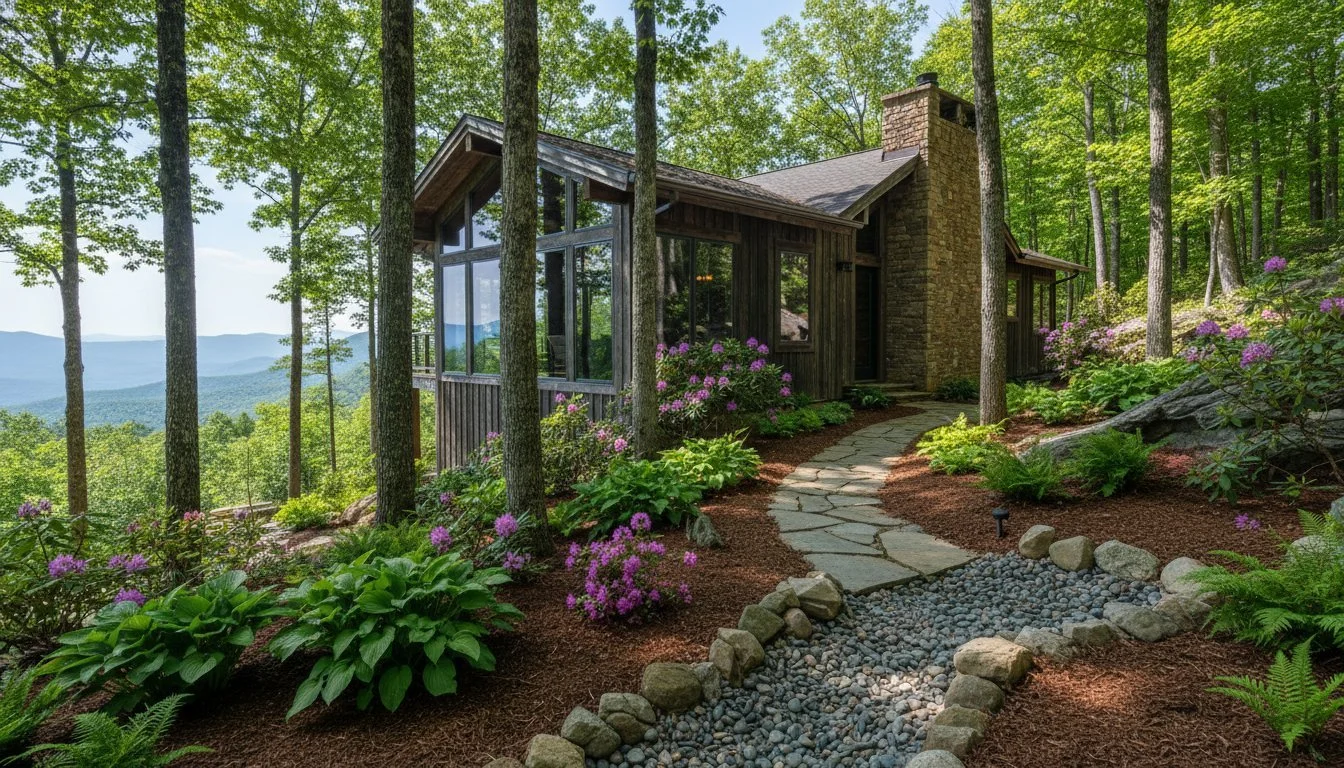
Why do the most expensive nursery trees often struggle to survive their first winter while the surrounding forest thrives without any help? It's a common frustration for property owners in the High Country who face the harsh reality of unexpected frosts, drying winds, and steep, rocky slopes. Finding the best plants for a mountain cabin landscape requires a shift in perspective, focusing on species naturally suited to high-altitude conditions rather than solely on visual appeal.
You want a property that looks established and natural without requiring a full-time maintenance schedule or a constant battle against local deer. We understand that your time is better spent enjoying the view than replanting nursery stock that couldn't withstand a late-spring cold snap. This guide provides a clear, value-driven look at the most resilient, low-maintenance plants and materials specifically chosen to thrive in the Blue Ridge Mountains. We will explore how to combine hardy perennials and shrubs with strategic elements such as river rock, fieldstone, and premium mulch to create a landscape that enhances property value and withstands the elements.
Key Takeaways
Identify the specific environmental stressors of the High Country microclimate to ensure your landscape survives heavy ice and high winds.
Learn how to select the best plants for a mountain cabin landscape by prioritizing native species that offer year-round privacy and wind protection.
Discover hardy perennials that naturalize and spread on their own, providing vibrant color throughout the short summer growing season.
Understand why hardwood mulch and strategically placed river rock are essential for managing erosion on steep slopes and creating fire-safe zones.
See how locally-acclimated nursery stock helps you avoid costly planting mistakes and ensures long-term operational success for your property.
The Challenges of High Country Cabin Landscaping
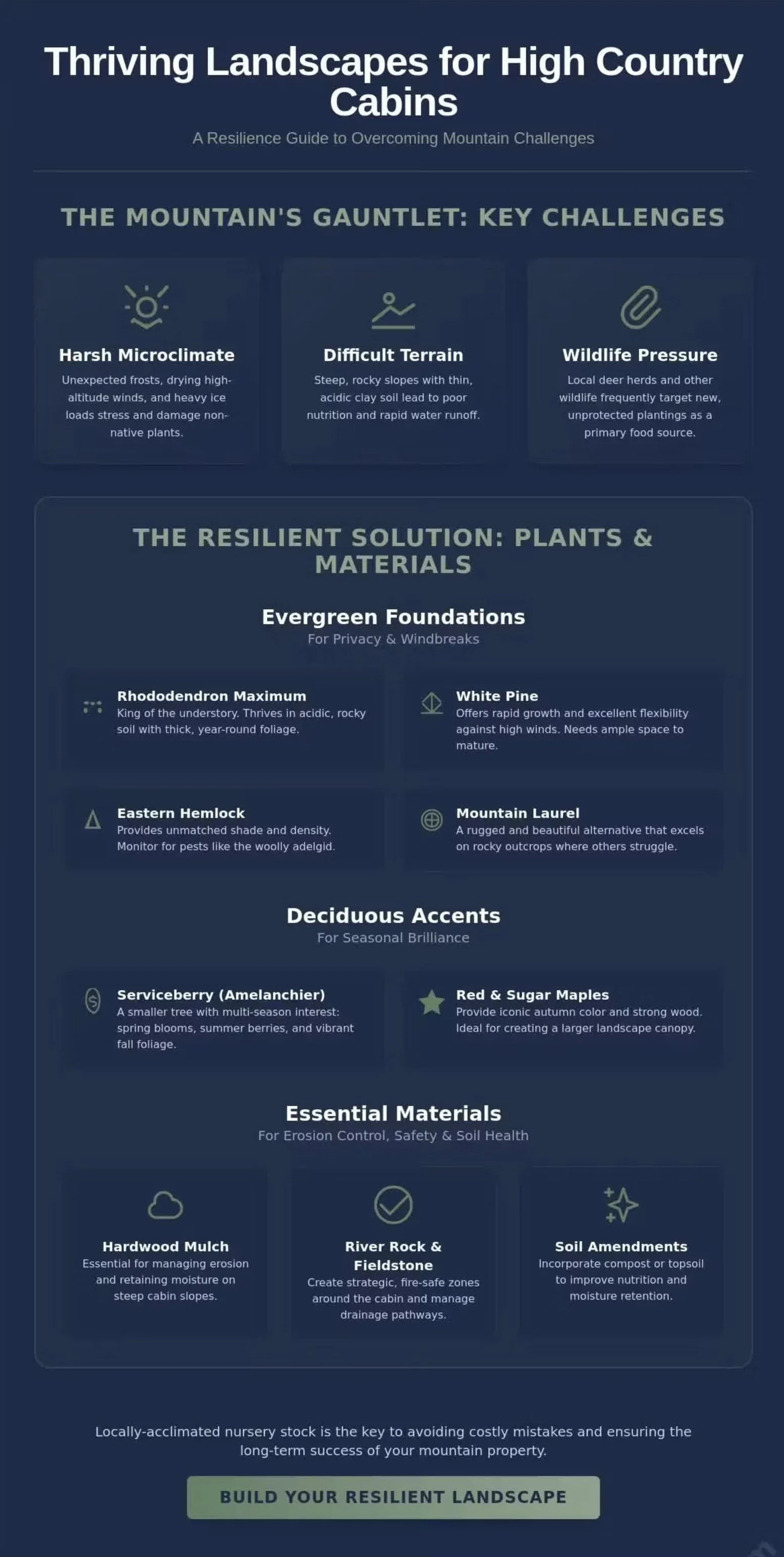
The Blue Ridge High Country exhibits environmental conditions that differ significantly from those of the surrounding Piedmont regions. When you move above 3,000 feet, the planting calendar shifts by several weeks. Early frosts and late spring freezes are common. They often catch unprepared gardeners off guard. Selecting the best plants for a mountain cabin landscape requires an understanding of these microclimates, where high winds, heavy ice loads, and variable rainfall patterns are the norm rather than the exception.
Designing for a cabin often means solving the "absentee gardener" dilemma. Many owners don't visit their properties every week. Consequently, the landscape must be resilient enough to thrive without constant oversight. The goal is a natural aesthetic that blends into the surrounding forest. This involves choosing species that mirror alpine plant characteristics, such as the ability to withstand intense UV rays and physical stress from heavy snow accumulation.
Soil Dynamics: Acidic Clay and Rocky Slopes
Mountain soil is rarely ready for planting straight out of the gate. Most sites consist of acidic clay or thin, rocky layers that provide poor nutrition. On steep cabin slopes, water runoff is a major concern. Rapid drainage can leave root systems dry even after a heavy storm. We recommend incorporating high-quality compost or topsoil during the initial planting phase to improve moisture retention and nutrient availability. Amending the soil ensures your nursery trees and shrubs have the foundation they need to establish deep, stable root systems on uneven terrain.
Navigating Local Wildlife and Deer Pressure
Local wildlife, particularly deer, represents the most consistent threat to a new landscape. In the High Country, food sources can become scarce. This makes your new perennials and shrubs an attractive target. It's vital to distinguish between deer-resistant and deer-proof options. No plant is 100% proof if a herd is hungry enough. A successful strategy involves protecting new nursery stock during the first year with physical barriers or repellents until they're established. Choosing the best plants for a mountain cabin landscape means selecting varieties that deer naturally avoid, such as those with leathery leaves, strong scents, or prickly textures.
The Best Trees and Shrubs for Mountain Cabin Bones
Establishing the "bones" of your landscape provides a permanent framework that defines the property's character year-round. In the High Country, these structural plants do more than just add visual appeal; they serve as critical windbreaks and privacy screens. Selecting the best plants for a mountain cabin landscape involves prioritizing native species that have already adapted to the local humidity and rapid temperature shifts of the Blue Ridge. Selecting healthy, established nursery trees is the first step toward a resilient property border.
Grouping trees in staggered clusters rather than straight lines increases their collective resistance to high-altitude winds. This approach mimics natural forest patterns and provides better protection for nearby smaller plants. While some resources suggest species like Quaking Aspen, these often fail in our specific climate due to higher humidity levels. Relying on local expertise and understanding the core principles of Mountain-hardy trees and shrubs ensures your investment lasts for decades.
Evergreen Privacy Screens and Windbreaks
Rhododendron Maximum is the undisputed king of the High Country understory. It maintains thick, leathery foliage year-round and thrives in the acidic, rocky soil common near cabin foundations. For larger borders, White Pine offers rapid growth and flexibility in high winds, though it requires space to mature. Eastern Hemlocks provide unmatched shade and density, but owners should monitor them for local pests like the woolly adelgid. Mountain Laurel serves as a rugged, beautiful alternative for rocky outcrops where other evergreens might struggle to take root.
Hardy Deciduous Trees for Fall Brilliance
Serviceberry (Amelanchier) is an excellent choice for cabin landscapes because it stays relatively small and offers multi-season interest. It produces white spring blooms followed by edible berries and vibrant orange-red fall foliage. For larger canopy needs, Red Maples and Sugar Maples provide the iconic autumn colors the Blue Ridge is known for while maintaining strong wood that resists ice damage. Sourwood is another local favorite. It features unique late-summer blooms that attract pollinators and turn a deep, brilliant red as temperatures begin to drop in early September.
Perennials and Groundcovers for Low-Maintenance Color
High Country summers are brief but intense. To maximize the visual impact of your property, you need species that can capitalize on a short growing season. Selecting the best plants for a mountain cabin landscape involves choosing perennials that naturalize, meaning they spread and return each year with minimal intervention. This approach is particularly effective for property owners who cannot provide daily care. By focusing on plants that thrive in the Blue Ridge's specific humidity and soil, you create a self-sustaining ecosystem that supports local pollinators and maintains its beauty throughout the season.
Groundcovers serve as a strategic operational tool on steep mountain slopes. Traditional lawns often fail on rocky inclines and require high-maintenance mowing that is both difficult and dangerous. Replacing turf with hardy groundcovers stabilizes the soil and reduces erosion. These plants act as a living carpet, suppressing weeds and retaining moisture. When paired with high-quality compost or potting soil during the initial transition, these species establish quickly and provide a permanent solution for difficult terrain.
Native Wildflowers for Sun-Drenched Ridges
For areas exposed to full sun and drying winds, reliability is the primary requirement. Purple Coneflower and Black-Eyed Susans are dependable choices that handle rocky, nutrient-poor soil without complaint. These species provide consistent color from mid-summer through the first frost. Bee Balm is another essential addition for cabin decks and patios. Its vibrant blooms attract hummingbirds and bees, fostering a healthy local ecology. If you have a larger meadow-style area, Joe Pye Weed offers a tall, structural presence. It stands up well to mountain breezes and provides a late-season nectar source for migrating butterflies.
Shade-Loving Plants for Wooded Cabin Sites
Many Blue Ridge cabins are nestled under a dense canopy of hardwoods. These sites require plants that handle damp shade and acidic soil. Bleeding Heart and Hellebores are excellent for early spring interest. They provide delicate color before the trees fully leaf out, and deer typically avoid them. For areas prone to moisture and erosion, Cinnamon and Christmas Ferns are the best plants for a mountain cabin landscape. They anchor the soil effectively on embankments. Creeping Phlox is another versatile tool. It functions as a "living mulch," blanketing rocky outcrops with a dense layer of flowers and foliage that prevents weed growth in shaded corners.
Essential Materials: Mulch, Stone, and Soil Prep
Selecting the best plants for a mountain cabin landscape is only half the battle; the other half is ensuring those plants stay exactly where you put them. High Country terrain is notoriously unforgiving, characterized by steep inclines and sudden, heavy downpours. Without the right structural materials, your investment in nursery stock can literally wash away during the first summer storm. We take an industrious partner approach to landscaping, prioritizing heavy, dependable materials that provide long-term stability and reduce the need for constant reapplications.
Bulk materials are more than just aesthetic choices; they're functional tools for property management. Utilizing river rock for drainage or hardwood mulch for erosion control saves both time and money over the life of your landscape. By preparing the "floor" of your garden with professional-grade topsoil and compost, you give your plants the nutrient-dense environment they need to establish deep root systems. This foundation is non-negotiable for anyone looking to build a resilient, low-maintenance cabin retreat.
Erosion Control with Stone and Mulch
Strategically using river rock in high-runoff areas is a primary defense against soil loss. Stone doesn't wash away, making it ideal for "dry creek beds" that direct water away from your cabin's foundation. When it comes to organic cover, hardwood mulch is the superior choice for mountain slopes. Its shredded fibers knit together to form a heavy, interlocking mat. While pine bark mulch works well in flat, sheltered garden beds, it's often too lightweight for wind-exposed ridges where it can easily blow away. For stable, natural-looking walkways, we recommend using flagstone and fieldstone to create paths that handle foot traffic without disturbing the surrounding soil.
Amending Mountain Soil for Planting Success
Success on rocky ground requires the "Double-Wide" hole technique. Digging a hole twice as wide as the root ball and backfilling it with a mixture of native soil and bulk compost allows roots to spread horizontally before they have to fight through heavy clay. This process breaks up compaction and improves oxygen levels around the root zone. High-quality topsoil near me provides the vital nutrient base for nursery trees, giving them the head start they need to survive harsh winters. Mixing these amendments into your site ensures that even the most difficult slopes become productive ground for your new landscape. To secure the materials needed for a resilient foundation, order bulk mulch and stone today to keep your cabin project on schedule.
Partnering with All Seasons Supply for Your Cabin Landscape
Selecting the best plants for a mountain cabin landscape is a strategic investment in your property's long-term value and operational ease. Planning a successful project in the High Country requires more than just a list of species; it demands a partner who understands the local environmental cycles. We position ourselves as an industrious partner for property owners, providing high-quality materials and professional insight to ensure your landscape thrives regardless of weather shifts. Our goal is to move your project logically from a recognized environmental challenge to a concrete, beautiful resolution.
Expert consultations are a core part of our service model. We help you avoid the costly planting mistakes that often occur when using materials or species not suited for high-altitude sites. By focusing on dependability and efficiency, we ensure your resources are managed effectively. Whether you're reinforcing a steep slope or establishing a new privacy screen, our team provides the steady guidance you need to maintain operational continuity in your outdoor space.
Locally Grown Nursery Plants in Blowing Rock
The primary advantage of sourcing nursery plants from Blowing Rock is their inherent resilience. Unlike big-box store alternatives that are often grown in warmer, lower-elevation climates, our stock is pre-acclimated to the specific temperature swings and humidity of the Blue Ridge. This local acclimation significantly increases survival rates for new nursery trees, shrubs, and perennials. We maintain a comprehensive selection of species tailored for every mountain elevation, and our staff provides expert advice on the best planting times to capitalize on the local growing season.
Reliable Bulk Delivery Across the High Country
Logistics can be the most challenging aspect of mountain landscaping. Navigating the narrow, winding roads of Beech Mountain or the steep access points of Banner Elk requires specialized equipment and experienced drivers. Our fleet can deliver bulk quantities of hardwood mulch, river rock, and topsoil to even the most remote cabin sites. When planning your delivery, we work with you to identify clear drop points that ensure your materials are placed exactly where they're needed. This organized approach minimizes site disruption and keeps your project on a predictable timeline. Contact All Seasons Supply today for a material quote or plant consultation.
Establish a Durable Mountain Landscape
Designing a resilient property in the High Country is a systematic process that begins with understanding your specific microclimate. You've seen how structural trees and self-sustaining perennials form the backbone of a low-maintenance yard, while heavy organic and stone materials prevent erosion on steep slopes. Selecting the best plants for a mountain cabin landscape ensures your investment thrives despite the unpredictable frosts and high winds of the Blue Ridge. By focusing on acclimated species and proper soil preparation, you create an environment that grows stronger with each season.
All Seasons Supply is here to support your success with over 50 years of combined industry experience. We offer locally grown nursery stock acclimated to Zone 6 and 7, along with specialized delivery services for remote mountain properties. Our team provides the dependable resources you need for a landscape that increases curb appeal and withstands the elements. We're committed to being the industrious partner that helps your mountain retreat reach its full potential.
Order Your High Country Landscape Materials Today and take the first step toward a more durable outdoor space. Your mountain retreat deserves a foundation built on reliability and local expertise.
Frequently Asked Questions
What are the best deer-resistant plants for the NC mountains?
Rhododendrons, Hellebores, Bleeding Hearts, and most native ferns are reliable choices that deer typically avoid. These species have textures, tastes, or scents that make them less appealing to local wildlife. While no plant is entirely deer-proof during a harsh winter, these are the best plants for a mountain cabin landscape to minimize browsing damage. Using physical barriers during the first year of establishment provides an extra layer of operational security for your new nursery stock.
When is the best time to plant trees and shrubs in Boone, NC?
Early spring and early fall are the most effective planting windows in the High Country. Planting in late April or May allows root systems to establish before the summer heat arrives. Alternatively, September planting gives nursery trees time to settle before the ground freezes in late autumn. Avoid planting in mid-summer to reduce water stress and ensure the long-term survival of your investment in our variable mountain climate.
Do I need an irrigation system for my cabin landscape?
Most established mountain landscapes don't require permanent irrigation if you select drought-tolerant native species. New plantings need consistent moisture during their first two growing seasons to establish deep roots. Instead of a complex system, focusing on soil quality with bulk compost and topsoil improves moisture retention naturally. This approach ensures your landscape remains resilient and reduces the need for constant manual watering or mechanical upkeep.
Which mulch stays best on steep mountain slopes?
Shredded hardwood mulch is the superior choice for steep inclines because its long fibers interlock to form a stable, heavy mat. Unlike pine bark mulch, which is lightweight and prone to washing away during heavy rain, hardwood mulch resists both wind and water runoff. This durability makes it a practical tool for erosion control on difficult terrain. For high-runoff areas, combining this mulch with strategically placed river rock provides a more comprehensive drainage solution.
Can I grow grass at my cabin, or should I use groundcovers?
Traditional grass is difficult to maintain on rocky, shaded mountain slopes and often requires high-maintenance mowing. Groundcovers like Creeping Phlox, Christmas Ferns, or stonecrop are more dependable alternatives that stabilize soil without the need for regular trimming. These species thrive in the acidic, nutrient-poor conditions where turf often fails. Transitioning to groundcovers reduces your long-term workload and aligns your property with the natural Blue Ridge aesthetic.
What plants provide the best fall color in the High Country?
Serviceberry, Sourwood, and Sugar Maples are the primary contributors to the region's iconic autumn display. Serviceberry offers vibrant orange-red tones, while Sourwood turns a deep, brilliant crimson early in the season. These deciduous nursery trees are hardy enough to withstand high-altitude winds and heavy ice loads. Integrating these species into your landscape ensures your property remains a visual asset throughout the entire seasonal cycle.
How do I protect my plants from heavy snow and ice loads?
Selecting plants with flexible wood or a conical growth habit is the most effective defense against ice damage. Species like White Pine and many native shrubs are naturally adapted to shed heavy snow without limb breakage. For younger nursery stock, placing structural supports can prevent physical stress during extreme weather events. Using the best plants for a mountain cabin landscape means choosing varieties that have evolved to handle the weight of a typical High Country winter.
Is it better to use native plants for my cabin landscape?
Native plants are the most reliable choice because they're pre-acclimated to the High Country's unique soil chemistry and humidity levels. These species generally require fewer soil amendments and provide essential support for local pollinators and birds. Using native trees and perennials is a key strategy for creating a low-maintenance, hardy environment. This practice ensures your cabin landscape remains a stable, self-sustaining part of the mountain ecosystem for years to come.