
Winterizing Garden Beds in the High Country: The 2026 Essential Guide
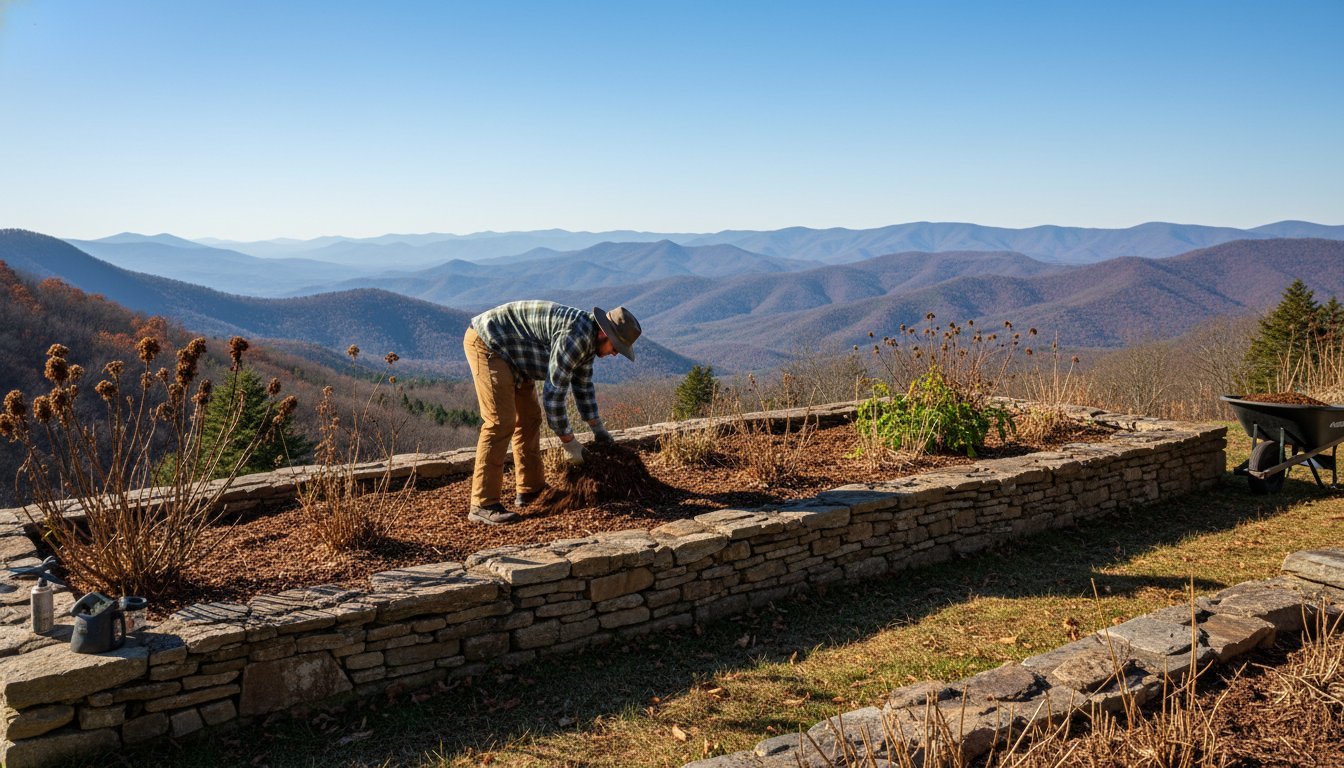
A High Country garden doesn't usually die from the cold; it's often lost during the first unpredictable freeze-thaw cycle of late autumn. If you live in Ashe County or the surrounding Blue Ridge area, you understand that the October 1st frost date is only the beginning of a demanding season. Successfully winterizing garden beds in the High Country requires more than just a quick cleanup. It demands a strategic approach to insulation and soil health. High winds can strip moisture from unprotected ground in hours, while heavy snow loads threaten to break young shrubs before they've even established deep roots.
You've worked hard to create a landscape that reflects the beauty of the mountains, and you deserve a garden that thrives through spring with minimal effort. This essential guide outlines professional methods for protecting your property through high-quality mulching and soil preparation. We'll examine how a 2 to 3-inch layer of compost and specific mulch applications create a stable environment for your plants. By following these dependable steps, you'll reduce your maintenance workload in April and ensure your soil remains healthy and productive for the 2026 growing season.
Key Takeaways
Understand why the Blue Ridge freeze-thaw cycle is more damaging than consistent cold and how elevation affects your specific winterization timeline.
Conduct a selective garden cleanup, removing diseased foliage while preserving beneficial organic matter for soil health.
Identify the most effective materials for winterizing garden beds in the High Country by selecting mulches that resist displacement from high mountain winds.
Implement physical protection strategies for young nursery trees and shrubs to prevent structural damage from heavy snow loads and ice accumulation.
Streamline your spring operational efficiency by coordinating bulk material deliveries and planning stone projects during the dormant late-fall season.
Understanding the High Country Winter Challenge
The High Country presents a unique set of meteorological obstacles that standard gardening guides often overlook. While many regions focus on simple temperature drops, winterizing garden beds in the High Country requires a nuanced understanding of how elevation and wind interact with soil biology. Professional property management in Watauga and Avery Counties depends on recognizing that a "one size fits all" approach leads to significant plant loss. Understanding what winterization is involves preparing for the physiological stress plants face when temperatures fluctuate within a single 24-hour period. In this environment, the cold is only one part of a larger logistical challenge.
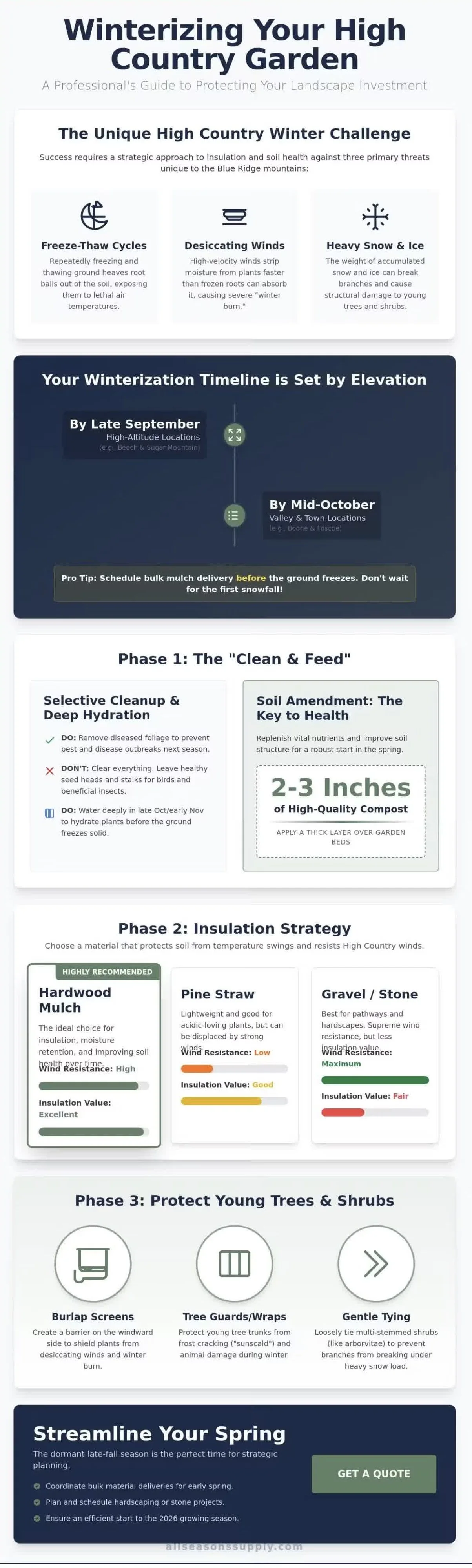
The Blue Ridge freeze-thaw cycle is particularly destructive. When the ground freezes and thaws repeatedly, it creates a heaving effect that can push root balls out of the soil. This exposes delicate systems to lethal air temperatures. Additionally, 2026 weather patterns have shown an increase in high-velocity wind events across the mountains. These winds act as a desiccant, stripping moisture from dormant plants' stems faster than frozen roots can replace it. Effective preparation now prevents winter burn, which often necessitates costly replacements in the spring. Earlier preparation is essential this year to ensure your landscape remains a strategic asset rather than a liability.
Elevation and Timing: When to Start
Elevation is the primary factor in your maintenance timeline. For high-altitude locations like Beech Mountain and Sugar Mountain, winterization activities should be completed by late September. These areas often experience their first killing frost weeks before the valley floors. In contrast, gardens in Boone and Foscoe typically have until mid-October. Don't wait for the first snowfall to act. The goal is to have your bulk mulch delivery in Boone, NC, scheduled and applied before the ground remains consistently frozen. Monitoring local soil temperatures is more effective than following general state-wide calendars.
Microclimates in the Blue Ridge
Individual property features create distinct microclimates that require localized strategies. Wind tunnels between structures or along ridgelines can significantly increase desiccation rates. Conversely, southern-facing slopes may experience premature warming during sunny January days. This trickles plants into breaking dormancy too early, only to be hit by the next cold snap. Protecting young nursery plants in Blowing Rock involves identifying these zones and using strategic barriers or heavier mulch layers to regulate soil temperature. Heavy snow loads also remain a concern; structural integrity must be supported before the weight of ice and snow causes limb failure.
The Clean and Feed Phase: Preparing Soil and Perennials
Successful winterizing garden beds in the High Country starts with a methodical transition from active growth to dormancy. This phase is not merely about clearing debris; it is a strategic effort to manage resources and sanitize the environment. Removing diseased foliage from your garden is a non-negotiable task for Boone residents looking to prevent pest outbreaks in the 2026 season. While a complete clearing might seem efficient, a selective approach is more effective. Following a comprehensive High Country winter garden checklist helps maintain this balance between cleanliness and ecological support. You should leave healthy seed heads and non-diseased stalks to provide habitat for beneficial insects and food for local birds.
Hydration remains a critical component of late-season preparation. Deep watering in late October and early November prevents winter root death. When the ground freezes, it becomes a physical barrier that prevents moisture from reaching the root zone. Ensuring your perennials and shrubs are fully hydrated before this occurs provides the internal resilience they need to survive the drying mountain winds. This is also the ideal time to divide spring-blooming perennials. Splitting crowded clumps now allows them to establish new roots in the cooling soil, leading to more robust growth when the spring thaw arrives.
Soil Amendments for Mountain Gardens
High Country soil often requires replenishment after the intensive summer growing season. Applying a 2- to 3-inch layer of compost replenishes vital nutrients and improves soil structure during the dormant months. This organic matter slowly breaks down, providing a steady supply of nutrients for the next cycle. Using topsoil near me as a base for these amendments ensures a stable, nutrient-dense environment for your plant roots. Securing high-quality topsoil now ensures your beds are ready for the final insulation layer before the first hard freeze. It is also a practical time to test your soil pH. Identifying acidity levels now allows you to plan necessary adjustments before the spring planting rush begins.
Perennial Management Steps
Timing is everything when managing perennials in the Blue Ridge. You must wait for total dormancy before cutting back plants like hostas and daylilies. Removing foliage while it is still green deprives the plant of the energy it needs to store for winter. Ornamental grasses require a different strategy. Many professionals recommend leaving them standing until late winter. T
They provide structural interest in the snow, and the dense foliage protects the plant's crown from extreme temperature swings. By following these disciplined steps for winterizing garden beds in the High Country, you protect your long-term landscape investment and simplify your spring workload.
Insulation Strategy: Mulch vs. Pine Straw vs. Stone
The primary objective of insulation is temperature regulation, not heat generation. When winterizing garden beds in the High Country, your goal is to keep the soil at a consistent temperature to prevent the destructive heaving caused by freeze-thaw cycles. Think of mulch as a strategic buffer that maintains the ground's dormancy. After completing the initial tasks found in a fall garden cleanup guide, applying the correct insulation layer ensures your soil health remains intact through the harshest months of 2026.
Material selection depends heavily on your property's specific topography and wind exposure. Hardwood mulch is the preferred "heavy" option for exposed Blowing Rock ridges. Its interlocking fibers resist the high-velocity winds that often strip away lighter materials. In contrast, Pine Bark Mulch excels in sheltered Foscoe valleys where moisture retention is the priority. For acid-loving mountain staples like Rhododendrons and Azaleas, Pine Straw provides a naturalistic cover that slightly acidifies the soil as it decomposes. On steep slopes where winter runoff causes erosion, using River Rock or ABC stone creates a permanent barrier that protects your landscape's structural integrity.
Choosing Your Protective Layer
Selecting the right product is a matter of operational efficiency. Triple-shredded Hardwood Mulch offers maximum stability on sloped terrain. If aesthetic continuity is a priority, Designer Brown or Black Mulch maintains a professional appearance throughout the winter while providing the same level of root protection. For high-traffic areas or playgrounds, specialized Playground Mulch offers the necessary impact absorption even when temperatures drop. Each material serves as a strategic tool to ensure your operational continuity into the spring season.
Application Techniques for Maximum Protection
Proper application is as critical as the material itself. You should aim for a uniform 3-inch depth across your garden beds to ensure adequate insulation. When applying mulch around trees and shrubs, always use the "donut" method. This involves keeping the material several inches away from the trunk to prevent moisture rot and rodent damage. Avoid the "volcano" method, which piles mulch against the bark and compromises plant health. To plan your procurement, calculate the required volume by determining how much mulch you need for your specific square footage. As a standard metric, one cubic yard of mulch covers approximately 100 square feet at a 3-inch depth. For steep banks, applying Pine Straw in a thick, woven layer provides a stable cover that stays put better than loose wood chips during heavy mountain snowfalls.
Protecting Trees and Shrubs from Winter Damage
Woody plants represent a long-term capital investment in your landscape. While perennials can retreat underground, trees and shrubs remain exposed to the full force of mountain weather throughout the season. An integrated approach to winterizing garden beds in the High Country must include specific protections for these larger specimens. Winter burn is a primary concern for evergreens. This occurs when frozen soil prevents roots from replacing moisture lost through leaves during sunny or windy days. Anti-desiccant sprays can provide a protective coating to reduce this moisture loss, though they aren't a substitute for proper hydration before the first hard freeze. Staking new trees is also a practical necessity to prevent structural failure under the weight of heavy mountain ice and snow.
Wildlife management is another critical operational challenge. When food becomes scarce in mid-winter, deer and rabbits often target the bark and lower branches of ornamental plants. Installing physical barriers, such as hardware cloth or specialized fencing, around the bases of vulnerable plants prevents girdling. This protection ensures that your landscape remains intact and avoids the need for extensive replanting in the spring. You can secure your property's long-term value by investing in high-quality Nursery Trees and Shrubs that are acclimated to our specific mountain environment.
Winterizing Evergreens and Broadleaf Shrubs
Boxwoods and Azaleas require focused attention in the High Country. These species are particularly susceptible to the drying winds common in Ashe and Watauga Counties. Creating burlap windbreaks for sensitive species provides a necessary shield without trapping excessive heat. You should also focus on mulching the "drip line" of larger shrubs. This keeps the root zone insulated and maintains soil moisture levels, which is a critical final step in winterizing garden beds in the High Country. Use hardwood mulch or pine straw to create a stable, protective ring that mimics a forest floor.
Shielding Young Nursery Stock
Recent plantings require the most intensive care during their first two winters. Using trunk wraps on young nursery plants, Blowing Rock protects the thin bark from "sunscald," which happens when bark temperatures fluctuate rapidly on winter days. Proper drainage is equally important. You must ensure that water doesn't pool around the bases of new trees, as this can lead to root rot during late-season thaws. Regularly check your plants for "heaving" after significant freeze-thaw events. If a root ball has been pushed upward by the ice, gently firm the soil back into place and add another layer of topsoil or mulch to protect the exposed roots.
Preparing for Spring: Bulk Logistics and Planning
The winterization process for garden beds in the High Country concludes with a forward-looking logistics plan. While the immediate goal is protection from harsh mountain elements, strategic managers recognize that late fall is the most efficient time to prepare for the spring thaw. By securing your materials now, you avoid the seasonal bottlenecks that often delay early-season projects. This phase is about transitioning from active maintenance to resource procurement, ensuring that your property remains on schedule regardless of when the ground finally warms. Proper planning in November ensures that you aren't competing for limited resources in April.
Inventory management is a critical component of this transition. You should assess your current supplies of hardwood mulch, topsoil, and compost before the first heavy snowfall makes staging areas inaccessible. High Country winters are unpredictable; having your materials on-site or scheduled for early delivery provides a significant operational advantage. All Seasons Supply serves as a dependable partner in this cycle, providing the physical goods and technical expertise required to maintain landscape continuity through the dormant months.
The Benefits of Fall Bulk Delivery
Coordinating a bulk mulch delivery in Boone, NC, during the late fall offers several strategic advantages. First, you avoid the "spring rush" when demand for high-quality materials often outstrips local supply. Securing bulk products like Designer Brown Mulch or River Rock now ensures you have the specific aesthetic and functional tools needed for immediate spring application. Additionally, preparing staging areas in Watauga County is much simpler while the ground is firm and dry. Bulk materials also offer superior cost-efficiency compared to bagged products, which is a vital consideration for managers overseeing large garden beds or extensive commercial properties.
Consulting with Local Experts
Reliability in the High Country is built on experience. Leveraging over 50 years of combined industry knowledge allows you to receive site-specific advice that accounts for the unique soil chemistry of our region. Every property has different needs, from custom soil mixes for vegetable beds to specific stone requirements for drainage projects. We provide professional-grade Topsoil, Potting Soil, and Certified Compost designed to perform in mountain climates. Planning your spring stone projects or nursery additions now allows for a seamless transition into the 2026 growing season. To discuss your specific material requirements and schedule your delivery, contact us today. We remain committed to supporting your operational success through every seasonal cycle.
Secure Your Landscape for the 2026 Season
Successful landscaping in the Blue Ridge is the result of proactive planning rather than reactive maintenance. By aligning your cleanup with elevation-specific frost dates and choosing heavy, interlocking mulches to combat mountain winds, you ensure your property remains a resilient asset. Winterizing garden beds in the High Country is a strategic investment that preserves soil health and protects vulnerable nursery stock during the most demanding months of the year. These disciplined steps don't just save time in the spring; they ensure the long-term viability of your outdoor spaces.
All Seasons Supply has served as local High Country experts since 2019, providing the dependable resources required for mountain property management. We maintain a consistent inventory of bulk Hardwood Mulch, Topsoil, and Compost to support your specific project requirements. With delivery available across Watauga, Avery, and Ashe Counties, we're ready to act as your industrious partner in landscape preservation. Order Your Bulk Winterizing Materials from All Seasons Supply today to lock in your supplies before the deep freeze arrives. Your garden is a valuable investment, and we're here to help you protect it.
Frequently Asked Questions
When is the best time to start winterizing garden beds in Boone, NC?
The optimal time to begin winterizing garden beds in the High Country for Boone residents is typically mid-October. This timing precedes the consistent hard freezes that lock soil moisture away from plant roots. While higher elevations like Beech Mountain require earlier action, valley floors have more flexibility. Completing your preparations before the first significant snowfall ensures that your landscape remains stable and manageable throughout the dormant period.
How much mulch should I apply to my garden beds for winter protection?
You should apply a uniform 3-inch layer of mulch to achieve the necessary thermal insulation for your root zones. One cubic yard of material generally covers 100 square feet at this specific depth. This volume creates a stable barrier against temperature fluctuations without suffocating the soil. Maintaining this standard depth across all beds ensures operational consistency and prevents frost heaving, which often damages perennials during the spring transition.
Should I cut back my perennials before the first snow?
You should wait until your perennials are fully dormant before performing any cleanup. Healthy foliage can often be left until spring to provide habitat for beneficial insects and food for local wildlife. However, you must remove any diseased leaves or stalks immediately to prevent pathogens from overwintering in your soil. This selective approach maintains ecological health while reducing the risk of pest outbreaks in the next growing season.
Will hardwood mulch blow away in High Country winter winds?
Triple-shredded hardwood mulch is specifically designed to interlock and resist displacement from high mountain winds. Unlike lighter wood chips or pine bark nuggets, the fibrous texture of shredded hardwood creates a dense mat that stays in place on ridgelines and slopes. This material is a dependable choice for exposed properties in Watauga and Ashe Counties, where wind desiccation is a primary concern for winterizing garden beds in the High Country.
Do I need to water my garden in the winter?
You should provide supplemental water during extended dry periods if the ground is not currently frozen. Dormant plants, especially evergreens, continue to lose moisture through their leaves and stems throughout the winter. If the soil remains dry for several weeks, roots can suffer from desiccation. Monitoring your landscape for moisture levels during thaw periods prevents root death and ensures your plants have the internal resources to break dormancy in the spring.
How can I protect my young shrubs from being crushed by heavy snow?
Installing physical supports, such as wooden teepees or A-frames, is the most effective way to protect young shrubs from heavy snow loads. These structures deflect the weight of ice and snow away from delicate branches. For smaller specimens, wrapping the plant in burlap provides an additional layer of structural integrity. These methods prevent limb breakage and ensure that your investment in nursery stock remains intact despite the intensity of mountain winters.
What is the best material for winterizing raised garden beds?
The best materials for raised beds include a combination of high-quality compost for nutrient replenishment and a top layer of hardwood mulch for insulation. Raised beds freeze more quickly than in-ground beds because they are exposed to air on all sides. Applying a 2 to 3-inch layer of certified compost provides a slow-release nutrient source, while a thick mulch cap regulates soil temperature and prevents the soil from drying out during winter.
Can I have bulk mulch delivered in the late fall or winter?
Bulk delivery of mulch, topsoil, and stone is available throughout the late fall and early winter months, provided that staging areas remain accessible. Scheduling your delivery before the first heavy snow ensures that materials are on-site and ready for application. This proactive approach avoids the logistical challenges of the spring rush and allows you to complete your winterization tasks on a predictable timeline. We provide delivery services throughout Watauga, Avery, and Ashe Counties.