
Best Soil for Raised Garden Beds in Boone, NC: The 2026 High Country Guide
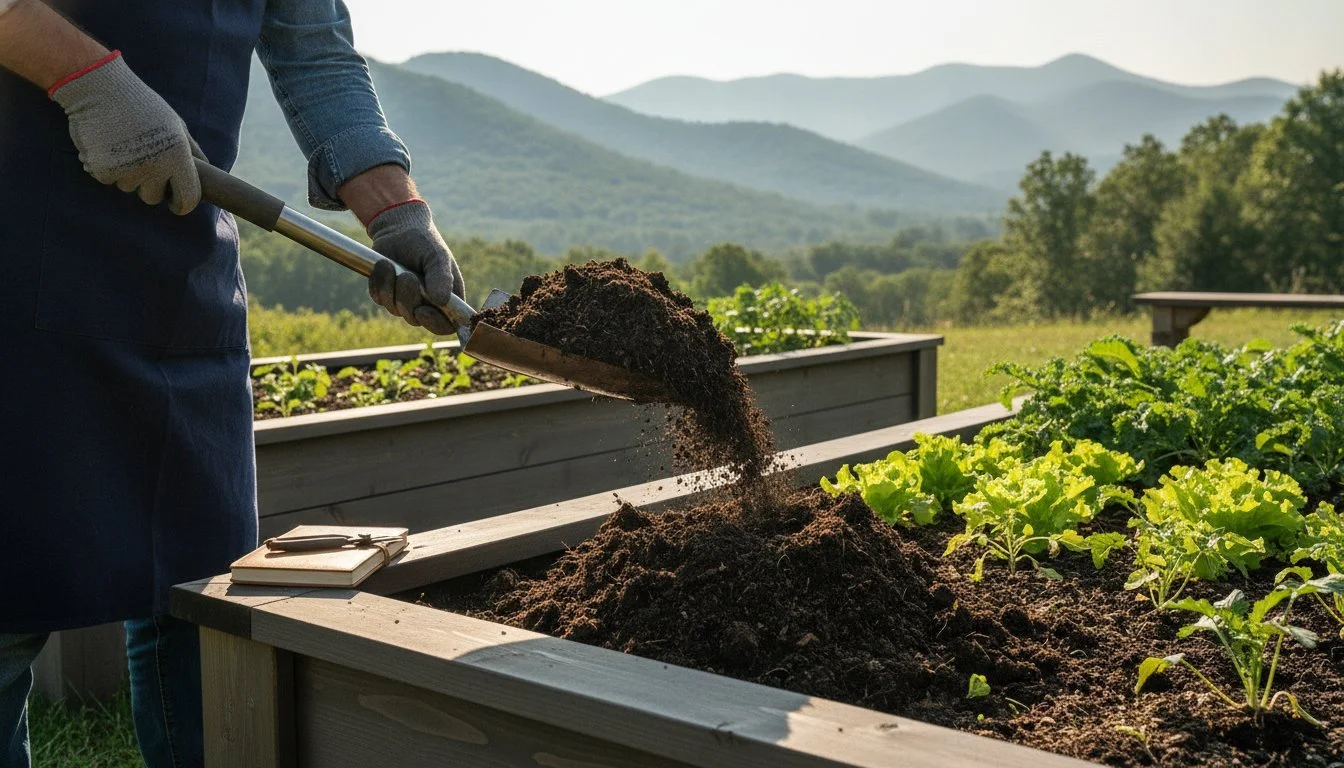
Most gardeners in the High Country are fighting a losing battle against the very ground they stand on. You already know that Boone's native landscape is often a frustrating mix of heavy clay and stubborn rocks, making traditional in-ground planting a physical chore. For residents in Boone, NC, finding the right soil for raised garden beds is the most effective way to bypass these mountain obstacles. By elevating your growing space, you gain complete control over the environment, allowing your vegetables to thrive despite our unpredictable weather.
It's a practical solution that addresses the realities of our short growing season and the frequent threat of late-spring frosts. This 2026 guide shares the exact 40/40/20 ratio of topsoil, compost, and drainage agents required to build a nutrient-dense foundation for your plants. We'll examine the specific amendments needed for our local climate, which spans USDA Zones 6a through 9a, and discuss how bulk delivery options provide a cost-effective alternative to endless bags of retail mix. You'll learn how to establish a professional-grade garden that ensures operational continuity and high-yield results year after year.
Key Takeaways
Bypass the challenges of native clay and rocky terrain by utilizing raised beds that warm faster and allow for total nutrient control.
Utilize a precise ratio of topsoil and compost to create the most productive soil for raised garden beds, Boone, NC, gardens require for high yields.
Protect your investment by applying specific drainage and leveling techniques designed for the High Country’s heavy rainfall and steep slopes.
Calculate your bulk soil needs with precision and account for the 10-15% settling factor to avoid operational delays during installation.
Ensure long-term success by sourcing screened, weed-free materials locally to match the specific environmental demands of the North Carolina mountains.
Why Raised Beds are Essential for Boone, NC Gardeners
Gardening in the High Country requires a strategic response to the local geography. Boone's native landscape is defined by its beauty, but for those attempting to grow vegetables or delicate perennials, the earth itself presents a series of operational hurdles. The "Boone Soil Challenge" is a combination of heavy red clay, an abundance of fieldstone, and naturally acidic pH levels. These factors often discourage growers, making the selection of quality soil for raised garden beds in Boone, NC, a critical first step for any successful project.
The Limitations of Native High Country Soil
Watauga County is known for its heavy clay content. This material compacts easily, which stifles root growth and prevents oxygen from reaching the plant's root zone. When you add the prevalence of native fieldstone into the mix, traditional tilling becomes a logistical nightmare. Attempting to turn over a garden plot in this region often results in damaged equipment and unnecessary physical strain. Additionally, the legacy of our dense mountain forests leaves the ground with an acidic profile. This environment is typically unsuitable for high-yield vegetable varieties without years of intensive soil amendments.
Raised Beds as a Solution for Short Growing Seasons
Success in our climate is a race against the calendar. By adopting Raised-bed gardening principles, you bypass the limitations of the native ground. Elevated structures allow the soil to warm significantly faster than the earth below, which often permits planting to begin in late April or early May. This head start is vital in a region where the growing season is compressed by late-spring and early-autumn frosts.
Properly constructed beds also offer superior drainage. During the intense rainstorms common in the Blue Ridge Mountains, raised containers prevent water from pooling around sensitive root systems. This controlled environment provides a "clean slate" for gardening. It ensures that your harvest isn't compromised by drainage failures or poor soil structure. For most mountain projects, starting with bulk materials such as topsoil and compost is the most efficient approach. It's more cost-effective than purchasing individual retail bags and ensures you have enough volume to fill large beds without multiple trips to the store. This approach provides the consistency and reliability required for a productive garden in the High Country.
The Science of the Perfect Raised Bed Soil Mix
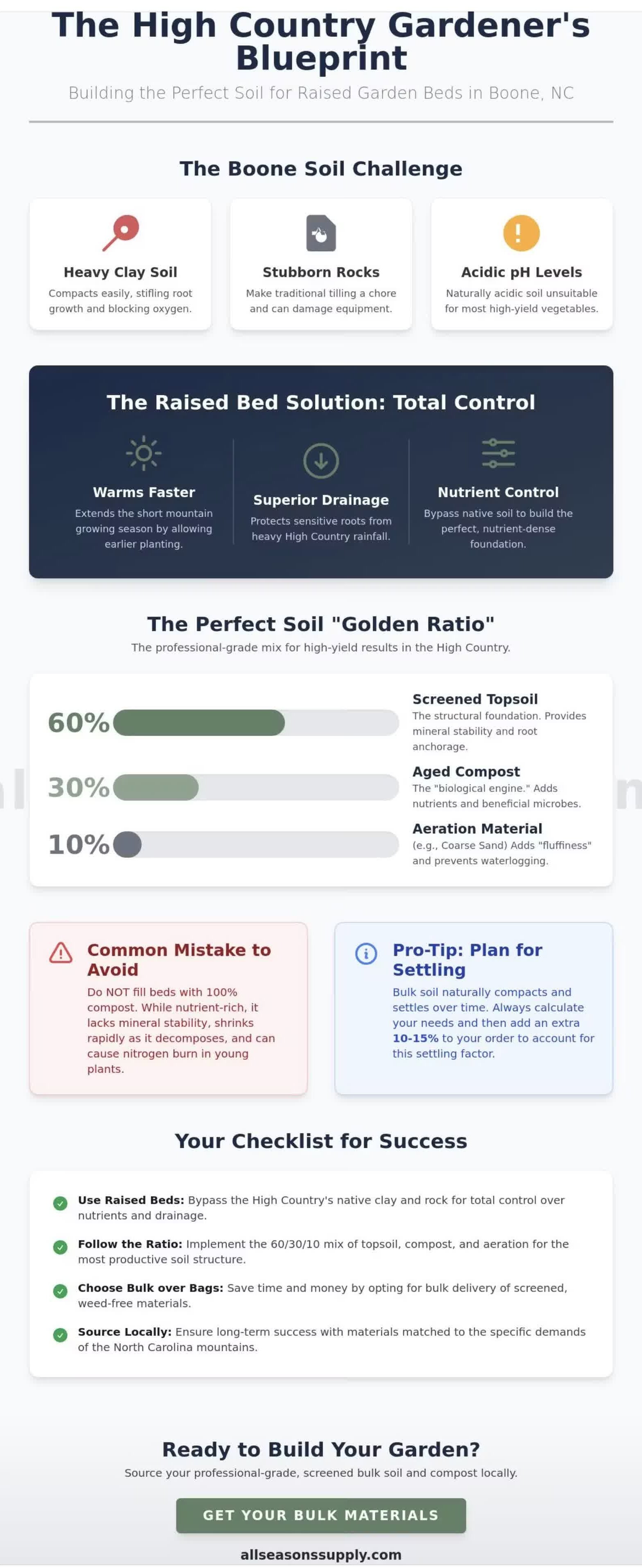
Creating a productive environment requires more than just filling a box with dirt. In our region, the most effective soil for raised garden beds, Boone, NC, gardeners utilize a specific "Golden Ratio." This formula typically consists of 60% screened topsoil, 30% aged compost, and 10% aeration materials. This balance ensures that your beds maintain their structure over several seasons while providing the biological activity necessary for high-yield vegetable production. Using this specific blend creates a superior soil for raised garden beds in Boone, NC, projects that must withstand our heavy seasonal rains.
Don't make the common error of filling beds with 100% compost. While compost is nutrient-rich, it lacks the mineral stability needed for long-term root support. Pure compost often undergoes rapid shrinkage as the organic matter breaks down, leaving your plant roots exposed. It can also harbor high salt concentrations or cause nitrogen burn in young seedlings. Screened topsoil serves as the essential structural foundation, preventing these issues and keeping your garden beds viable for years.
Understanding Your Components: Topsoil vs. Compost
Quality screened topsoil is a loam-based mineral layer that provides the physical weight and anchorage for plant roots. When you're searching for top soil near me, prioritize materials that have been processed to remove large debris and native clay clumps. This mineral base works in tandem with aged compost, which acts as the "biological engine" of the mix. Compost introduces beneficial microbes and essential nutrients that fuel plant growth. Professional-grade compost for High Country projects should be dark, earthy, and fully decomposed to ensure it's ready for immediate planting.
Aeration and Drainage Additives
The final 10% of your mix should focus on "fluffiness." This quality is the primary indicator of a healthy raised bed. In Boone, where rainfall is frequent and heavy, adding coarse sand or screenings prevents the soil from becoming waterlogged. Some growers also incorporate a thin layer of Pine Bark Mulch at the very bottom of deep beds to aid drainage. This layered approach ensures that excess moisture quickly moves away from the root zone, preventing rot and disease.
Before you begin your project, refer to the NC State Extension guidelines for calculating soil volume for raised beds to ensure you order the correct quantities. Reliable performance starts with sourcing high-quality bulk materials that are specifically prepared for our local mountain environment. This methodical approach to soil science removes the guesswork and ensures operational continuity for your growing season.
Navigating High Country Drainage and Climate Challenges
Boone’s weather is notoriously unpredictable. While raised beds solve many native-soil issues, they must be engineered to meet the High Country's specific hydrological and thermal demands. High annual rainfall can quickly turn a poorly designed bed into a "bathtub" where water sits against the roots, causing rot. Ensuring the right soil for raised garden beds in Boone, NC, requires a focus on vertical drainage and thermal stability to protect your agricultural investment.
For those gardening on the steep slopes typical of Watauga County, leveling is a requirement, not an option. If the bed isn't level, water will migrate to one side, causing uneven growth and potential erosion of the downslope wall. Sturdy construction with fieldstone or heavy timber, paired with a well-drained soil mix, helps keep your infrastructure secure against the elements. This stability is the cornerstone of operational continuity for your seasonal harvests.
Managing Heavy Mountain Rainfall
The "bathtub effect" occurs when water enters the raised bed but then hits the impermeable native clay beneath. To prevent this, consider a base layer of Pea Gravel or River Rock for deep beds. This provides a clear exit path for excess moisture. During a heavy Blowing Rock thunderstorm, avoid walking near or pressing on the soil surface, as this increases compaction and reduces the air pockets plants need to breathe. The percolation rate is the rate at which water moves downward through the soil profile, a critical metric for preventing root rot during Boone’s intense summer storms.
Frost Protection and Soil Density
Thermal mass is your best defense against the sudden temperature swings of the Appalachian mountains. A bed depth of 12 to 18 inches provides enough volume to insulate the root systems of perennials and early-season vegetables. This density prevents the rapid freezing and thawing cycles that can heave plants out of the ground. Using Pine Straw as a seasonal mulch further regulates these temperatures by providing a protective blanket over the soil surface.
Low-lying areas in valleys often become "frost pockets" where cold air settles. If your property is in a hollow, focus on high-density soil mixes that retain heat longer into the night. Maintaining soil health through the harsh winter months involves keeping the biological activity alive. Avoid leaving the soil bare; a layer of Hardwood Mulch or Compost applied in late autumn ensures that the microbial engine is ready to restart as soon as the spring thaw arrives. This proactive management maintains the integrity of your soil for raised garden beds in Boone, NC, keeping them productive year after year.
How to Calculate and Install Your Raised Bed Soil
Precision in procurement prevents project delays and unnecessary costs. When establishing a garden, the most common error is underestimating the volume of material required to fill the space. To determine the exact amount of soil for raised garden beds Boone, NC projects require, use the standard cubic yard formula: multiply the length, width, and depth of your beds in feet, then divide that total by 27. This calculation provides your base volume in cubic yards, which is the industry standard for bulk ordering.
You must also account for natural settling. Organic matter is not static; as the soil is watered and gravity takes hold, the initial volume will compress. Professional growers in the High Country typically order a 10% to 15% buffer beyond their calculated volume. This extra material ensures that your planting surface remains at the desired height throughout the season, preventing the need for a second delivery later when you're ready to plant.
There are two primary methods for filling your structures: the uniform mix approach and the Hugelkultur approach. The uniform mix involves thoroughly blending your topsoil and compost before or during the fill to ensure immediate consistency. The Hugelkultur method involves placing rotting logs or woody debris at the very bottom of deep beds to act as a long-term moisture sponge. While the latter is excellent for water retention, it requires a higher concentration of nitrogen-rich compost in the upper layers to balance the wood's decomposition.
A Step-by-Step Filling Guide
Step 1: Install hardware cloth. Watauga County has a significant population of voles and moles that can tunnel through the bottom of a raised bed. Securing a layer of galvanized hardware cloth at the base is a vital step for protecting your root systems.
Step 2: Layering. If you're filling deep beds, start with a base of Hardwood Mulch or Pine Bark Mulch. This encourages drainage and reduces the total volume of premium soil mix needed for the top 12 inches.
Step 3: Mixing. Blend your Topsoil and Compost as you fill the top half of the bed. This ensures that the biological engine is distributed evenly, where the young roots will need it most.
Bulk Delivery Logistics in Boone
Bulk delivery is the most efficient way to handle the large volumes required for multiple beds. Before the truck arrives, clear any vehicles or obstacles from your driveway to provide a safe drop site. If your project requires different materials, ask about a "split load" to maximize the efficiency of a single delivery. When moving the soil for raised garden beds Boone NC needs into your backyard, use a sturdy wheelbarrow and move in consistent loads to maintain safety on our local sloped terrain.
Ensure your project stays on schedule by ordering your bulk soil and compost for timely delivery to your job site.
Sourcing Bulk Soil and Compost in Boone: The All Seasons Advantage
Selecting the right partner for material procurement is just as important as the soil ratio itself. While many national retailers suggest purchasing individual bags, this approach is often three to four times more expensive than bulk options. Bagged soil also frequently lacks the mineral density found in local materials, which is vital for mountain gardening. Sourcing your soil for raised garden beds in Boone, NC, from a local provider ensures the mix is adapted to our specific Appalachian environment. All Seasons Supply maintains strict quality control over every load, providing screened, weed-free materials that prevent the introduction of invasive species or residual herbicides into your growing space.
Local sourcing provides a distinct operational advantage. Soil processed in the High Country is inherently better suited to the region's thermal and mineral demands. We leverage over 50 years of combined High Country landscaping experience to help you select the precise volume and blend for your project. Once your beds are filled, the convenience of bulk mulch delivery in Boone, NC, lets you finish your project with a professional appearance and improved moisture retention. This comprehensive service model ensures your garden is established efficiently and with long-term viability in mind.
Our Tested Soil and Compost Offerings
We provide screened topsoil that offers a consistent texture for easy planting and root development. This mineral foundation is paired with our nutrient-rich compost, which is essential for successful organic vegetable production in the Blue Ridge. For the final stage of planting, using potting soil for the top 2 inches of your bed provides the ideal environment for delicate seed starting. This layered approach ensures that your plants have the right texture for germination and the right structure for deep root growth.
Dependable Delivery Across the High Country
Logistics in the mountains require specialized equipment and experienced personnel. Our service area includes Boone, Blowing Rock, Banner Elk, and Beech Mountain. Our professional drivers are trained to handle difficult mountain driveways and tight spaces, ensuring your material is placed exactly where you need it to minimize manual labor. This reliability allows you to focus on the planting process rather than the logistics of procurement. We understand the cyclical nature of the gardening season and work to ensure your materials arrive on schedule, regardless of market demands.
Contact All Seasons Supply for a bulk soil quote today to begin your High Country gardening project with confidence.
Establish Your High Country Garden Foundation Today
Transitioning from the heavy clay and rocky terrain of Watauga County to a productive garden requires a methodical approach. By using a precise blend of screened topsoil and aged compost, you create a stable environment that bypasses the limitations of native soil. This controlled foundation provides the thermal insulation and drainage necessary to manage Boone’s specific climate cycles and heavy rainfall. Selecting the correct soil for raised garden beds in Boone, NC, projects ensures your vegetables have the nutrients and structure they need for a high-yield season.
All Seasons Supply has served Boone and the High Country as a locally owned family business since 2019. Our team leverages over 50 years of combined experience to provide expert advice on material selection and logistics. We act as your industrious partner, working in the background to ensure your operations run smoothly from delivery to harvest. Order Your Bulk Garden Soil for Delivery in Boone to secure the high-quality materials your project deserves. Your success in the garden starts with the ground beneath your plants, and we're ready to help you build a foundation that lasts for years.
Frequently Asked Questions
How much soil do I need for a 4x8 raised garden bed?
A standard 4x8 bed with a 12-inch depth requires approximately 1.2 cubic yards of material. Because organic matter naturally compresses, you should order at least 1.4 cubic yards to account for the 10% to 15% settling factor discussed in our calculation guide. This ensures your bed remains full and functional through the entire growing season without requiring a mid-season refill.
Can I use 100% compost in my raised beds?
You should avoid using pure compost as it lacks the mineral stability required for long-term root support. While compost is an excellent nutrient source, a 100% organic mix will shrink rapidly and may cause nitrogen burn in young seedlings. Stick to the "Golden Ratio" of 60% topsoil and 30% compost to provide a dependable structural foundation for your plants.
Should I put a liner at the bottom of my raised garden bed?
Liners are generally unnecessary and can actually impede the drainage required for the soil for raised garden beds in Boone, NC, projects that need to succeed. Instead of plastic liners that trap moisture, use galvanized hardware cloth to deter voles and moles. This approach maintains a clear path for water to exit the bed, preventing the root rot associated with the "bathtub effect" common in our high-rainfall environment.
Is the bulk soil in Boone safe from persistent herbicides?
Bulk materials sourced from reputable local suppliers are monitored for quality and safety. We prioritize screened, weed-free materials to ensure that your garden remains a clean environment for organic vegetable production. Sourcing locally allows for better oversight of the material's origin compared to generic bagged products found at national retailers.
When is the best time to fill my raised beds in the High Country?
The ideal time to fill your beds is in late autumn or very early spring, typically by late March or April. Filling in the autumn allows the soil to settle naturally over the winter months, making it ready for immediate planting once the ground warms. Early spring installation ensures your soil for raised garden beds in Boone, NC, is in place before the primary planting window begins in May.
What is the difference between topsoil and garden soil for raised beds?
Topsoil is a mineral-based material, screened to remove large rocks and debris, that serves as a structural base. Garden soil is typically a pre-mixed blend that includes organic amendments like compost. For the best results in the High Country, we recommend starting with a bulk load of screened topsoil and mixing in aged compost to create a custom blend tailored to your specific crop needs.
How do I stop my soil from washing away on a sloped Boone property?
Preventing erosion on a slope starts with ensuring your bed frame is perfectly level and anchored with fieldstone or heavy timber. Once the bed is filled, apply a layer of hardwood mulch or pine straw to the surface. This protective layer breaks the impact of heavy mountain rain and keeps your soil in place even during intense summer thunderstorms.
Do I need to replace the soil in my raised bed every year?
You do not need to replace the entire soil volume annually. Instead, you should "top off" the bed with one to two inches of fresh compost every spring to replenish nutrients and replace organic matter that has decomposed. This simple maintenance routine keeps the biological engine of your garden running smoothly without the labor and cost of a full soil replacement.