
Best Stone for a Fire Pit in Boone, NC: What to Use & What to Avoid
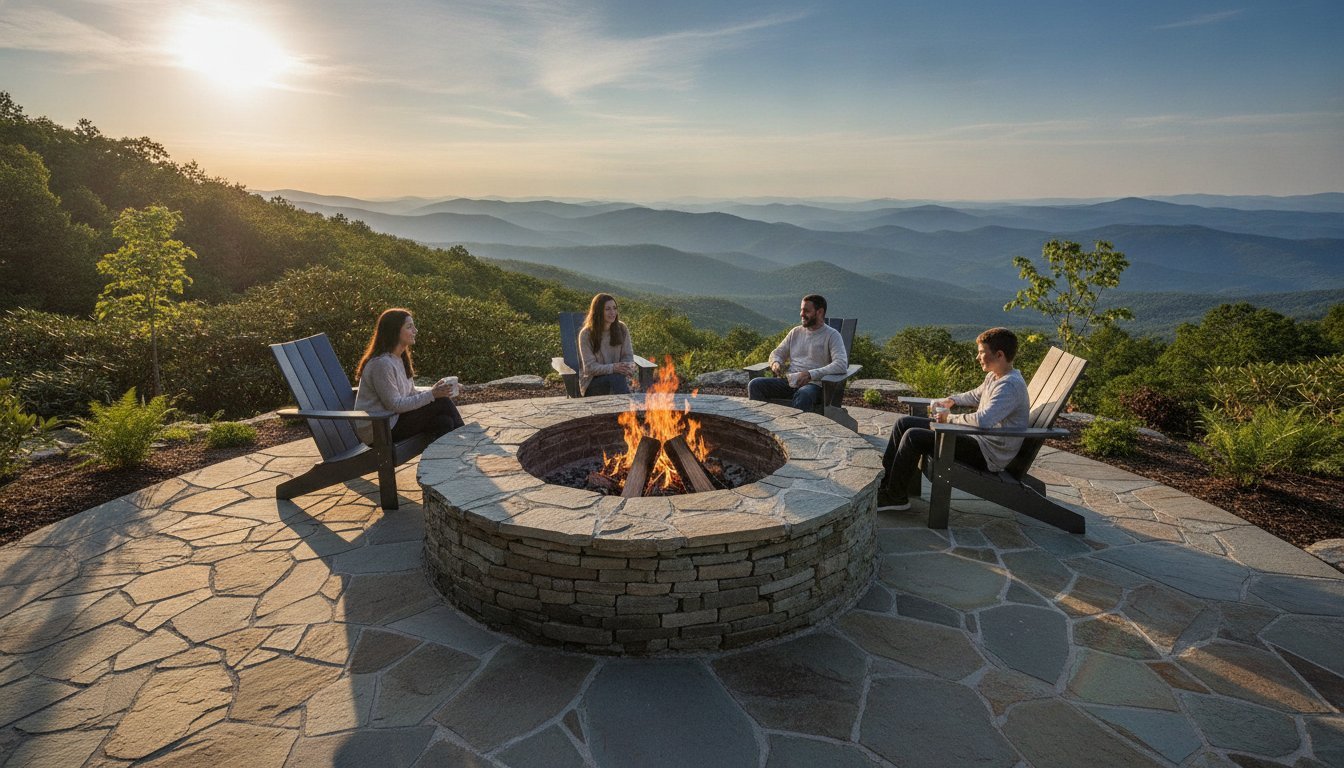
Choosing the wrong material for your High Country backyard isn't just an aesthetic mistake; it can be a safety hazard that turns a relaxing evening into a dangerous situation. You likely want a fire feature that complements the rugged beauty of the Blue Ridge Mountains without worrying about structural failure or thermal shock. It's common to feel uncertain about which materials can withstand our local climate, especially when the fear of stones cracking or exploding due to trapped moisture is a very real concern for homeowners across the High Country, from Boone to Beech Mountain and Banner Elk. Selecting the best stone for fire pit construction involves balancing density and porosity to ensure your installation survives both intense heat and our freezing mountain winters.
We understand that logistics are often the hardest part of any mountain project, particularly when moving tons of heavy bulk material to remote properties. This guide provides a clear path forward by identifying the safest natural stone options, such as durable flagstone and fieldstone, while explaining why porous river rocks can be unpredictable when heated. You will also learn about the essential role of ABC stone in providing a stable foundation and how to navigate the current 2026 fire regulations in Watauga County. By the end of this article, you'll have a practical plan for building a fire pit that offers lasting durability and peace of mind.
Key Takeaways
Learn why choosing the best stone for fire pit construction requires understanding thermal expansion to prevent dangerous cracking or explosions.
Compare the rugged, natural aesthetic of fieldstone with the stackable, clean edges of flagstone to find the right look for your mountain property.
Discover why river rock and pea gravel are better suited for fire pit surrounds and seating areas rather than the high-heat interior of the pit itself.
Master the technical requirements of a long-lasting fire feature by using ABC stone for a stable, compacted foundation that prevents sinking.
Streamline your project logistics by opting for professional bulk delivery to ensure heavy materials reach remote High Country sites safely and efficiently.
Safety First: Understanding Thermal Expansion and Explosion Risks
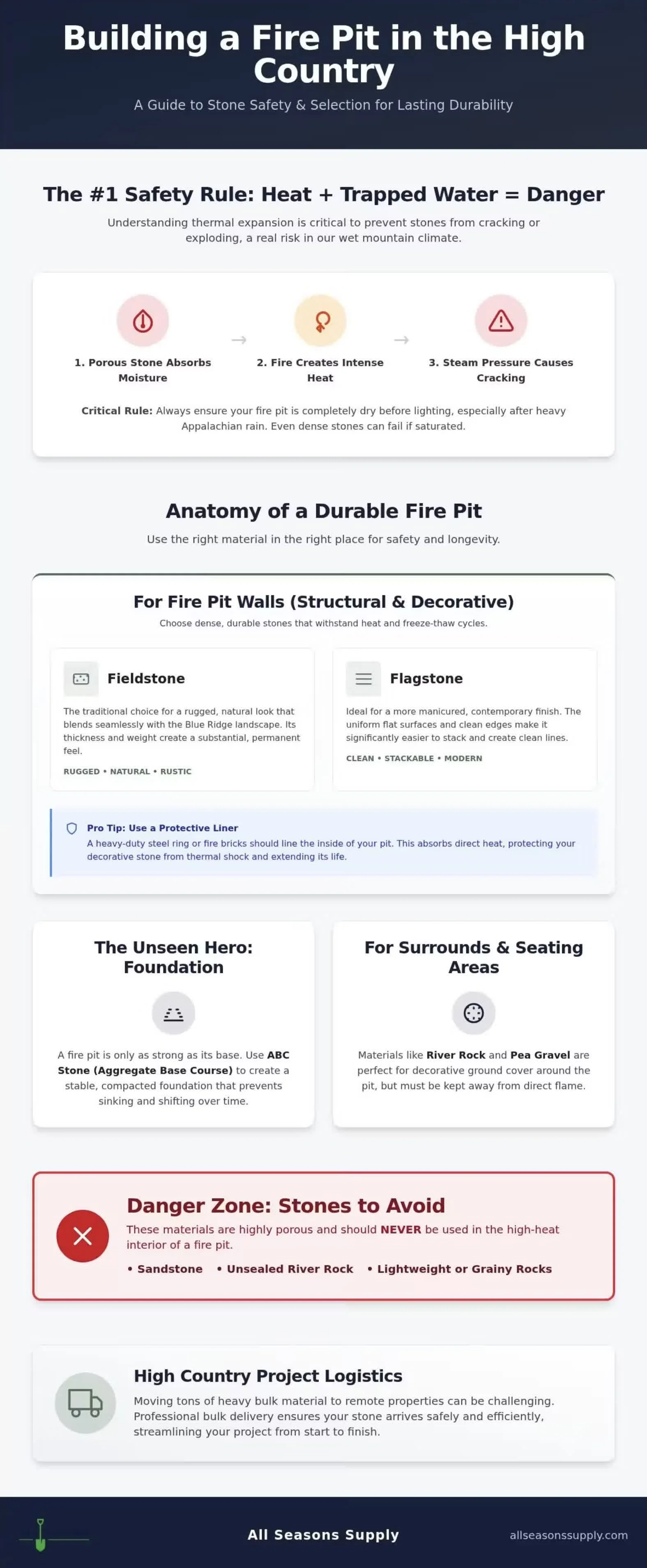
Building a fire pit in the High Country requires more than just picking a rock that looks good. Safety is the priority. Thermal expansion occurs when moisture trapped inside a stone heats up and turns into steam. Because the steam has nowhere to go, it creates internal pressure that can cause the stone to crack or, in extreme cases, explode. When searching for the best stone for fire pit projects, you must prioritize materials with low water absorption rates to mitigate this risk.
Certain materials are notorious for this behavior. Sandstone and unsealed river rock are often considered "danger zone" stones because their porous structure acts like a sponge. In our local climate, these stones soak up rainwater and ground moisture. When exposed to direct flame, the rapid temperature change forces the moisture to expand faster than the stone's structure can handle. This results in dangerous popping or shattering that can ruin an evening and cause injury.
Denser stones, typically igneous or metamorphic varieties like granite or slate, are generally much safer choices. Their tightly packed mineral structures leave little room for water to settle. However, even the most durable materials aren't immune to the laws of physics. A critical safety rule for any mountain homeowner: always ensure your stones are completely dry before lighting a fire. Lighting a pit that's been soaked by a week of heavy Appalachian rain is a recipe for structural failure, regardless of the stone type. Selecting the best stone for fire pit longevity means understanding these physical limits.
The Science of Porosity
Sedimentary rocks often contain microscopic air pockets and layers. When heat is applied, these pockets expand rapidly. This is particularly problematic in the High Country, where high humidity levels mean stones rarely stay bone-dry on their own. To identify porous rocks, look for visible layers, grainy textures, or stones that feel surprisingly light for their size. These materials should never be used for the inner ring where heat is most intense. Instead, save them for decorative borders well away from the heat source.
Best Practices for Fire Pit Liners
Professional fire pit construction and safety often involves a multi-layer approach. Using a heavy-duty steel ring or specialized fire bricks as a primary heat barrier is the most effective way to protect your investment. These liners absorb the brunt of the thermal energy, preventing direct flame contact with your decorative exterior stone. This setup is especially valuable in our cold mountain climate. It reduces the temperature gradient across the stone and extends the structure's lifespan over many winter seasons.
Fieldstone vs. Flagstone: Choosing the Best Stone for Fire Pit Walls
Selecting the best stone for fire pit walls in the High Country often comes down to two local favorites: fieldstone and flagstone. Both materials provide the structural density required to survive North Carolina's intense seasonal shifts. While they differ in appearance, their performance under our region's freeze-thaw cycles makes them both top contenders as the best stone for fire pit projects in cold climates. The decision usually rests on whether you prefer a rugged, organic structure or a more manicured, contemporary finish.
Fieldstone and flagstone both offer excellent longevity, but they require different installation approaches. Fieldstone is prized for its thickness and weight, which creates a substantial, permanent feel. Flagstone, conversely, is easier to stack due to its uniform flat surfaces. Regardless of your choice, ensuring the stone is sourced locally helps guarantee it's acclimated to the regional climate and aesthetic.
Fieldstone: The Rugged Mountain Aesthetic
Fieldstone is the traditional choice for homeowners who want their outdoor living space to feel like an extension of the Blue Ridge landscape. These stones are typically gathered from the surface of the earth, giving them a weathered, mossy appearance that looks native to the mountains. As a Landscape stone supplier in Vilas, NC, we find that fieldstone is ideal for creating a handcrafted, dry-stack look that complements rustic architecture in Boone and Blowing Rock.
Stacking irregular fieldstone requires a patient approach to ensure structural stability. You should place the largest, heaviest stones at the base of the wall to create a solid anchor. By staggering the joints and slightly tilting the stones toward the center of the pit, you create a gravity-fed bond that remains secure without excessive mortar. This method allows for natural drainage, which is vital for preventing ice expansion from pushing the stones out of alignment during winter.
Flagstone: Precision and Style
Flagstone is the preferred material for projects that require clean lines and level surfaces. Because it's naturally cleft into flat sheets, it provides a predictable stacking experience. This makes it the industry standard for the top cap or coping of a fire pit. A flat flagstone cap offers a functional ledge where guests can safely rest a mug or pull up a chair. For these applications, we recommend selecting stones with a thickness of at least 1.5 to 2 inches to prevent cracking under weight.
The color variations available in the High Country range from deep Tennessee browns to cool Pennsylvania blues and local grays. This variety allows you to coordinate your fire pit with existing patios or walkways. If you are planning a large-scale installation, consider having your materials delivered in bulk to save time and effort on the job site. This ensures you have a consistent supply of matching stone to complete your project without interruption.
River Rock and Pea Gravel: Ideal Stones for Fire Pit Surrounds
While selecting the best stone for fire pit walls is essential for safety, the material you choose for the surrounding area dictates the comfort and longevity of your outdoor space. River rock and pea gravel serve as high-performance solutions for fire pit surrounds in the High Country. These materials provide a stable, permeable surface that manages the heavy rainfall common in the Appalachian region. By allowing water to drain directly into the soil, stone surrounds prevent the muddy puddling that often plagues lawn-based fire pits during the wet spring and autumn months. This drainage capability ensures your seating area remains functional and accessible shortly after a storm.
Maintaining a clean and level surround is straightforward with these bulk materials. Over time, heavy foot traffic or shifting soil may cause minor depressions in the stone. You can easily resolve this by raking the surface to redistribute the material or adding a few fresh bags of stone to low spots. Because these stones don't decompose like wood mulch, they represent a one-time investment that provides years of operational reliability for your property. When you consider the best stone for fire pit environments, the floor of the space is just as critical as the pit itself.
River Rock for Decorative Borders
River rock is a superior choice for defining the perimeter of your project. Because these stones are naturally rounded and smooth, they create a clear visual transition between the manicured fire area and the surrounding landscape. It's important to remember from our earlier discussion on porosity that river rock should remain on the exterior of the structure. Using it as a border ensures safety while providing an exceptionally easy-to-maintain surface. Unlike mulch or grass, smooth river rocks can be cleared of fallen leaves and debris with a leaf blower without displacing the stones. For more inspiration on integrating these materials, explore River Rock & Pea Gravel Ideas for Boone Patios.
Pea Gravel for Comfortable Seating
For the seating area itself, pea gravel offers an unmatched balance of affordability and comfort. Many homeowners prefer the "crunch" of gravel underfoot, which adds a distinct sensory element to the mountain experience. To ensure a stable base for Adirondack chairs or benches, we recommend an installation depth of at least 3 to 4 inches. This depth prevents furniture legs from sinking into the ground and provides enough weight to keep the stones in place during high winds. Always install a professional-grade landscape fabric beneath the gravel to suppress weed growth. The fertile soil in our region will quickly reclaim any unprotected stone surface, making this barrier a mandatory step for a low-maintenance installation.
Building for Longevity: Foundation and Drainage with ABC Stone
A high-quality fire pit is only as stable as the ground beneath it. While some generic guides suggest using sand or dirt as a base, these materials are insufficient for the heavy stone structures required in the High Country. Sand holds moisture and shifts during seasonal temperature swings, which eventually causes stone walls to lean or crack. Selecting the best stone for fire pit construction starts from the ground up. For a professional-grade installation, ABC Stone, also known as "crush and run," is the industry standard. It provides the necessary structural support to ensure your investment remains level for decades.
Compaction is the most critical factor in this process. North Carolina soil can be soft and prone to settling under the weight of several tons of rock. By using a compacted aggregate base, you create a solid platform that distributes the load evenly. This foundation also facilitates proper drainage. Without a permeable base, rainwater collects inside the pit, turning ash into a thick, messy sludge that is difficult to clean and prevents efficient burning. Selecting the best stone for fire pit foundations means choosing a material that balances structural strength with drainage capacity.
What is ABC Stone and Why Use It?
ABC Stone consists of a precise mixture of crushed stone and fine particles. When you tamp this material down, the fines fill the voids between the larger rocks, creating a "locking" effect that resists movement. This stability is vital in high-elevation areas like Beech Mountain and Banner Elk, where the frost heave cycle is particularly aggressive. Unlike solid concrete, which can crack when the ground freezes, a compacted ABC base has enough flexibility to handle soil expansion without compromising the fire pit's integrity. For a standard 4-foot diameter pit, we generally recommend ordering at least half a ton of bulk aggregate to ensure a sufficient 6-inch depth.
The Base Preparation Process
Structural integrity begins with proper excavation. Follow these steps to prepare your site:
Step 1: Dig a circular trench roughly 6 to 12 inches deep. This depth helps get the foundation below the immediate frost line and provides a stable pocket for the aggregate.
Step 2: Add the ABC Stone in 2-inch layers. Use a hand tamper or a plate compactor after each layer to ensure the base is rock-hard and free of air pockets.
Step 3: Use a level to ensure the final layer is perfectly flat. This makes the placement of your first course of fieldstone or flagstone much easier and prevents lopsided walls.
Starting with a professional foundation saves you from costly repairs later. If you are ready to begin your project, you can order ABC Stone for bulk delivery to your property today.
Sourcing and Delivery: Your Fire Pit Stone Partner in Boone
Logistics are often the most underestimated part of a landscape project. When you've identified the best stone for fire pit construction, the next challenge is getting several tons of heavy material to your property. A single ton of fieldstone or flagstone can easily exceed the payload capacity of a standard SUV or light-duty pickup. Attempting to haul these loads yourself often leads to multiple trips, wasted fuel, and unnecessary wear on your vehicle. Professional bulk delivery is the most efficient way to ensure your project stays on schedule and your vehicle remains undamaged.
At All Seasons Supply, we specialize in navigating the unique logistical challenges of the High Country. Our team understands that mountain properties from Foscoe to Blowing Rock often have steep grades and narrow access points. We maintain a fleet designed to handle these conditions, ensuring your materials arrive exactly where you need them. Planning your delivery drop-off is a key part of build efficiency. We recommend choosing a flat, accessible location near your project site to minimize the distance you'll need to move the stone by hand or wheelbarrow during construction.
Bulk Stone Delivery in Watauga and Avery Counties
Our delivery services extend across the region, providing a reliable source for Bulk Landscape Supply Delivery in Watauga County. Choosing bulk stone from All Seasons Supply is the most economical approach for your fire pit, offering superior value and consistent material quality. For a standard fire pit project, you'll likely need a combination of ABC stone for the base, wall stone for the structure, and decorative gravel for the surround. Purchasing these in bulk reduces your total cost per ton and ensures material consistency throughout your installation. Our local family-owned operation is built on the principle of providing dependable service regardless of the complexity of the mountain terrain.
Consult with the High Country Professionals
With over 50 years of combined industry experience, our team acts as a steady partner in your procurement process. We encourage homeowners and contractors to visit our Vilas location to view our fieldstone and flagstone options in person. Seeing the textures and colors firsthand helps you determine which stone is best for the aesthetics of your fire pit on your specific property. Seeing the stone in natural light is the only way to ensure it matches the existing rock formations or architectural features of your home.
We also provide technical support for volume estimation. Calculating the exact amount of stone needed for a circular structure can be difficult for DIYers. We help you translate your design dimensions into accurate bulk orders, preventing material shortages or costly overages. This individualized attention ensures your project runs smoothly from the first delivery to the final stone placement. Contact All Seasons Supply for a quote on bulk stone delivery today.
Building Your High Country Retreat
Creating a permanent fire feature in the Blue Ridge Mountains requires a technical approach to material selection and site preparation. You now understand that selecting the best stone for fire pit construction involves prioritizing low-porosity materials, such as fieldstone or flagstone, to ensure safety and longevity. A stable foundation with compacted ABC stone is equally vital for preventing shifting during our aggressive local freeze-thaw cycles. By focusing on these structural fundamentals, you protect your investment and ensure your outdoor space remains a safe gathering point for years to come.
All Seasons Supply is here to simplify the logistical challenges of mountain landscaping. As a local, family-owned and operated business with over 50 years of combined industry experience, we provide the dependable support you need to complete your project. We offer reliable bulk delivery to difficult sites in Boone, Blowing Rock, and Banner Elk; this ensures your heavy materials arrive exactly where you'll need them most. Schedule Your Bulk Stone Delivery for Your Next Fire Pit Project and start building your ideal mountain getaway. You're just one delivery away from a lifetime of fireside memories.
Frequently Asked Questions
Can I use River Rock inside my fire pit?
No, you should not use river rock inside a fire pit. These stones are naturally porous and often trap water within their mineral structure. When exposed to high temperatures, that moisture turns to steam and expands rapidly, which can cause the stones to crack or explode dangerously. It is much safer to use river rock as a decorative border or surround well away from the direct heat of the flames.
What is the safest stone to use for a fire pit?
The safest options are dense, non-porous stones like granite, slate, or structural flagstone. These materials have low water absorption rates, which significantly reduces the risk of thermal expansion and cracking. When selecting the best stone for fire pit safety, prioritize igneous or metamorphic rocks over sedimentary types. Always ensure your stone is completely dry before lighting a fire to maintain structural integrity throughout the season.
Do I need a fire pit liner if I use natural stone?
Using a fire pit liner is a critical best practice for any natural stone installation. A heavy-duty steel ring or fire-brick liner serves as a primary heat barrier, protecting your exterior stone from direct flame contact. This separation prevents the stone from reaching the extreme temperatures that cause thermal shock. A liner not only increases safety but also extends the life of your stone structure in our cold mountain climate.
How do I prevent my fire pit stones from cracking in the winter?
Preventing winter damage starts with professional drainage and moisture management. Use a compacted base of ABC stone to prevent rainwater from pooling at the bottom of your pit. Additionally, avoid lighting a fire when the stones are saturated from heavy rain or covered in ice. Rapidly heating a frozen or soaked stone creates extreme internal pressure; keeping the structure covered when not in use is a dependable way to prevent cracks.
Is Flagstone or Fieldstone better for a DIY fire pit?
Flagstone is generally better for DIY projects because its flat, uniform surfaces make it much easier to stack and level. It provides a clean, stable look with minimal effort. Fieldstone is an excellent choice for a rugged, mountain-native aesthetic, but its irregular shapes require more patience and skill to fit together securely. Both options represent the best stone for fire pit durability in the High Country when installed on a proper foundation.
What is the best base material for a heavy stone fire pit?
ABC Stone, also known as crush-and-run, is the industry standard for fire pit foundations. Unlike sand or dirt, which shift and hold moisture, ABC stone compacts into a rock-hard surface that provides a stable, level platform. This aggregate mix locks together to support the significant weight of natural stone walls. It also facilitates essential drainage, ensuring your fire pit doesn't sink into the soft North Carolina soil over time.
How much stone do I need for a standard 4-foot fire pit?
For a standard 4-foot diameter fire pit standing about 18 inches high, you will typically need 1.5 to 2 tons of wall stone. You should also plan for approximately half a ton of ABC stone to create a 6-inch deep compacted foundation. These estimates can vary depending on the stone's thickness and the desired wall height. Consulting with a professional can help you calculate the exact volume for your specific site.
Does All Seasons Supply deliver stone to Beech Mountain?
Yes, we provide reliable bulk stone delivery to Beech Mountain and throughout the surrounding High Country. Our fleet is specifically equipped to navigate the steep grades and difficult terrain common in Watauga and Avery counties. We deliver fieldstone, flagstone, and foundation materials directly to your property, saving you the logistical challenge of hauling heavy loads. We take pride in ensuring your materials arrive safely and efficiently regardless of the location.