
Garden Compost: The High Country Guide to Soil Health and Plant Vitality
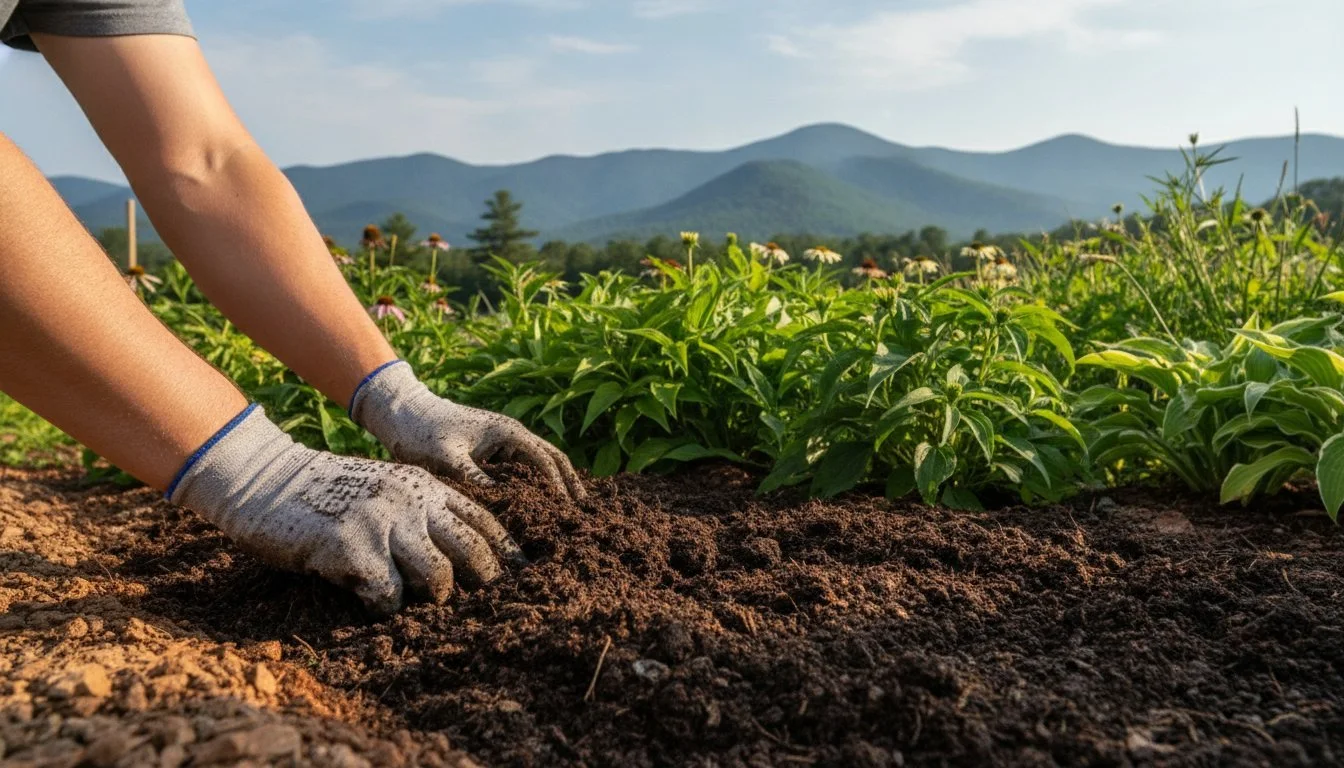
High Country soil is often more of a geological obstacle than a functional growing medium. If you've spent a weekend struggling with heavy clay or digging through endless rock, you know that mountain gardening requires a strategic approach. It's a common frustration for property owners who want vibrant landscapes but find their plants stunted by poor drainage and nutrient deficiencies. Integrating high-quality garden compost into your landscape is the most effective way to bridge the gap between rocky terrain and a flourishing garden.
We recognize that your time is a finite resource and managing a DIY compost pile isn't always a practical option for busy professionals or those managing large mountain estates. This guide provides a clear roadmap for seasonal soil amendments that ensure long-term plant health. You'll discover how to improve soil structure for better moisture retention and learn the essential differences between topsoil and compost. By the end of this article, you will have a dependable plan to transform your mountain soil into a nutrient-rich foundation for your perennials and shrubs.
Key Takeaways
Understand how microorganisms transform organic matter into a biological fuel that supports plant growth in rocky terrain.
Learn the functional differences between topsoil and garden compost to ensure you select the correct material for grading or nutrient enrichment.
Evaluate why bulk delivery is often more practical than DIY methods, especially when you're managing the impact of High Country winters.
Follow a systematic process to assess soil health and apply amendments at the proper depth for maximum root absorption.
Leverage over 50 years of combined industry experience to simplify your seasonal landscape maintenance and procurement.
Understanding Garden Compost: More Than Just Organic Waste
Garden compost is far more than a simple collection of decomposed yard scraps. It is a humus-rich soil amendment developed through the controlled aerobic decomposition of organic matter. When you ask, "What is compost?" the answer lies in the biological transformation of raw materials into a stable, nutrient-dense resource. This process relies on a complex network of microorganisms, including fungi and bacteria, that work to break down organic waste into "plant gold." These organisms don't just recycle waste; they create a living ecosystem within the soil that supports healthy root development.
Unlike synthetic fertilizers that provide a temporary chemical surge, garden compost acts as a comprehensive "multi-vitamin" for your landscape. Synthetic products often bypass the soil's natural biology, whereas compost feeds the soil itself. This creates a sustainable cycle of health that supports long-term plant vitality. Beyond the physical benefits to your garden, composting has a measurable environmental impact. Food waste accounts for approximately 24% of material sent to municipal landfills, according to 2026 data. By redirecting these materials into soil amendments, you help reduce landfill volume and sequester carbon within your own property.
The Components of High-Quality Compost
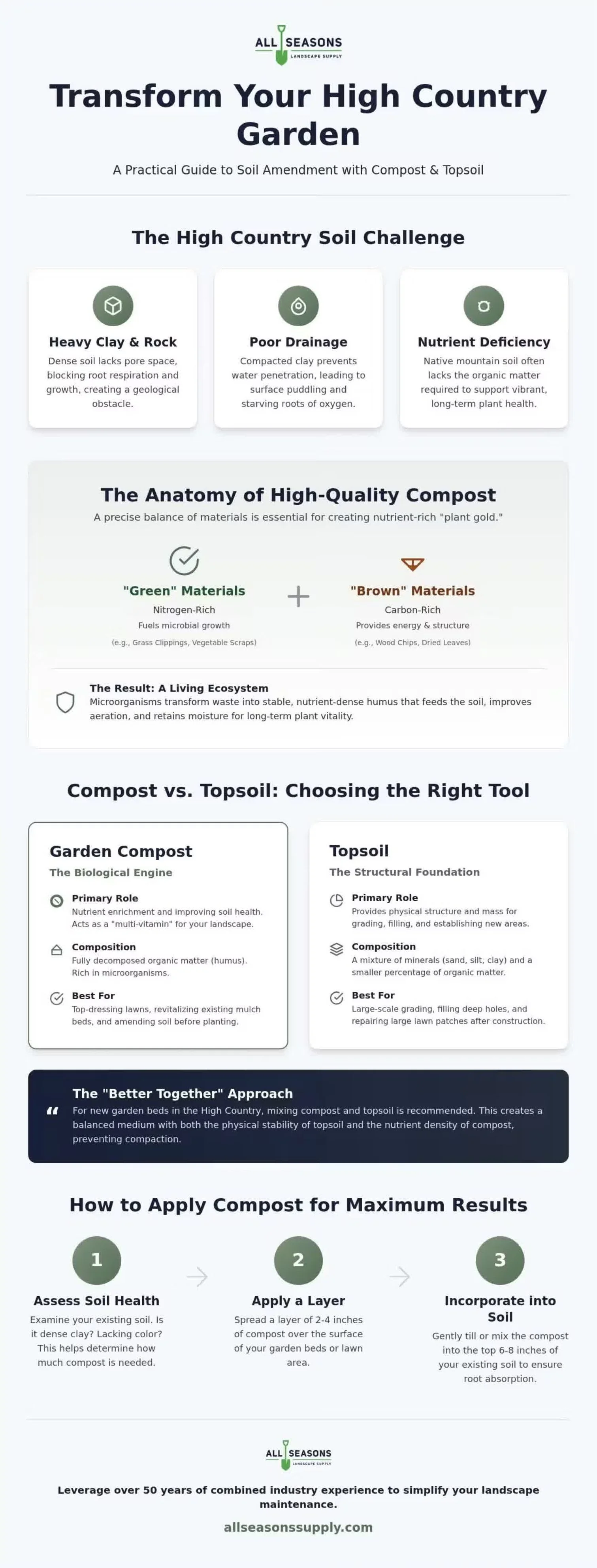
Professional-grade compost depends on a precise balance of "green" and "brown" materials. Green materials are nitrogen-rich, such as grass clippings or vegetable scraps, providing the fuel for microbial growth. Brown materials, such as wood chips or dried leaves, provide the carbon necessary for energy and structure. If this balance is off, the final product won't reach its full nutrient potential. Proper "finishing" is also essential. Raw organic matter that hasn't fully decomposed can actually harm your plants by competing for nitrogen or introducing pathogens into the root zone.
Compost in the High Country Ecosystem
High Country landscapes present specific challenges, particularly the heavy red clay found throughout Watauga County. This dense soil often lacks the pore space required for root respiration and drainage. High-quality garden compost helps break down these clay particles, improving aeration and allowing roots to penetrate deeper. On the steep slopes common in our region, organic matter is critical for moisture retention, preventing water from simply running off the surface. Humus is the stable, long-lasting component of compost that improves soil structure for years. This stability ensures your landscape remains resilient despite the mountains' cyclical weather patterns.
Compost vs. Topsoil: Choosing the Right Tool for the Job
Distinguishing between topsoil and garden compost is essential for any successful landscape project. While they may look similar, their functions are distinct. Topsoil serves as the structural foundation of your yard, while compost acts as the biological engine. Using the wrong material for a specific task can lead to poor drainage or stunted plant growth, especially in the challenging terrain of the High Country. Understanding these differences ensures your investment in materials translates into long-term plant health.
Relying solely on topsoil often leads to severe compaction in Boone gardens. Because our local earth is naturally heavy with clay, adding more mineral-based soil without organic matter creates a surface that resists water penetration. This results in "puddling" and prevents oxygen from reaching plant roots. To avoid this, a "better together" approach is recommended for new garden beds. Mixing these materials creates a balanced medium that offers both the physical stability of topsoil and the nutrient density of compost.
When to Use Bulk Topsoil
Bulk topsoil is the go-to material for structural needs. It is ideal for large-scale grading, filling deep holes, or repairing significant lawn patches after construction. Because it contains minerals like sand, silt, and clay, it provides the weight and structure that pure compost lacks. If you are starting a project from scratch, look for Top Soil Near Me: A Guide to High Country Garden Success in Boone, NC to find a reliable source for these foundational materials. It provides the necessary mass to hold roots in place and maintain your landscape's shape over time.
When to Choose Garden Compost
Choose garden compost when your primary goal is soil health and nutrient delivery. It is the perfect tool for top-dressing existing lawns to improve color without harsh synthetic chemicals. It also excels at revitalizing old mulch beds that have lost their biological value over several seasons. Before spring planting, tilling a few inches of compost into your vegetable gardens or flower beds provides an immediate boost of organic matter. Learning how to use compost as a targeted amendment allows you to solve specific soil deficiencies without overhauling your entire landscape.
If you're managing a large mountain property, the logistics of soil health can become complex. Our team at All Seasons Supply can help you determine the right material ratio for your specific site conditions. Whether you need a structural fill or a biological boost, we offer dependable bulk delivery services to keep your project moving forward efficiently.
DIY Composting vs. Bulk Compost Delivery
Backyard composting is often presented as a simple weekend hobby, but the logistical reality for High Country property owners is far more complex. Mountain climates present unique hurdles that small-scale piles struggle to overcome. For those managing substantial landscapes, the primary challenge is volume. Producing enough material to cover even a standard flower bed requires a massive amount of organic input that household kitchen scraps cannot provide. Most homeowners find that they need cubic yards of material, not just a few buckets, to make a measurable impact on soil health.
Professionally managed garden compost offers a level of consistency that's difficult to achieve at home. Commercial processes maintain the high temperatures necessary to kill weed seeds and harmful pathogens. In a backyard setting, piles often fail to reach the sustained heat required for sterilization. This means you might inadvertently introduce invasive weeds into your garden beds. When you choose bulk delivery, you're investing in a product that's been monitored for quality and maturity, ensuring it's ready for immediate application.
The Challenges of Backyard Composting in Boone
High Country winters are a significant factor in composting success. In Boone and surrounding areas, freezing temperatures cause DIY piles to go dormant for five to six months. Microbial activity halts entirely, effectively doubling the time required to produce finished material. Additionally, managing moisture at high altitudes is a constant struggle. Piles are often either too dry from mountain winds or too saturated from heavy snowmelt. There's also the safety concern of local wildlife. Open food scrap piles frequently attract bears and raccoons, creating unnecessary risks for your family and pets. While resources like Making and Using Compost in the Garden provide excellent scientific foundations, the environmental variables in Watauga County often make the process frustrating for beginners.
The Efficiency of Bulk Delivery
Time is a finite asset for property owners and contractors alike. Waiting two years for a backyard pile to mature isn't a viable strategy for an active landscaping project. Bulk delivery provides a predictable timeline and a dependable volume. You can calculate your exact needs, whether you require a half-yard for a small patch or multiple truckloads for a major renovation. All Seasons Supply streamlines this process by dropping the material exactly where your project begins. This eliminates the labor-intensive task of hauling dozens of heavy bags from a retail store. Integrating bulk garden compost into your seasonal plan ensures your landscape receives the nutrients it needs exactly when the growing season starts, rather than waiting on a slow-moving pile.
How to Apply Compost for Maximum Results
Applying garden compost effectively requires a systematic approach tailored to the mountain environment. Begin by assessing your current soil health and drainage patterns. Because Watauga County terrain often features heavy clay and steep inclines, understanding how water moves across your property is vital. If your soil is severely compacted, simple surface application might not suffice. You must determine the correct depth for your specific needs, choosing between top-dressing existing beds or deep tilling for new installations.
Timing your application with the High Country’s distinct seasonal cycles ensures the biology in the compost has time to integrate. Spring applications provide an immediate nutrient boost as plants break dormancy. Fall applications act as a long-term investment, allowing organic matter to break down further during the winter months. Finally, integrate your compost application with your broader plant health program. This includes coordinating with mulch delivery to protect the newly amended soil from erosion and temperature fluctuations.
Amending Vegetable and Flower Beds
For established vegetable and flower beds, the "2-inch rule" is a reliable standard. Spread a 2-inch layer of garden compost over the surface and work it into the top 6 inches of soil. This depth ensures that nutrients reach the primary root zone where they are most needed. In areas like Blowing Rock, perennials benefit significantly from a fall compost "blanket." This layer provides insulation against freeze-thaw cycles while slowly releasing nutrients. For specific advice on plant selection, consult The Complete Guide to Nursery Plants in Blowing Rock to match your soil amendments with the right species.
Lawns and Erosion Control
Garden compost is an excellent seed starter for new High Country lawns. Its ability to retain moisture creates the ideal environment for germination on the thin, rocky soils common in our region. On the steep grades of Beech Mountain and Banner Elk, organic matter plays a critical role in stabilization. The fibrous structure of high-quality compost helps anchor the soil, reducing the risk of runoff during heavy mountain rains. Some managers also use "compost tea," a liquid extract of nutrients and microbes, for a quick-acting foliar boost or a soil drench. If you are ready to stabilize your slopes or refresh your beds, you can schedule a bulk delivery to get the exact volume required for your acreage.
The All Seasons Supply Advantage: Local Expertise and Delivery
All Seasons Supply has been a cornerstone of the local landscaping community since 2019, bringing over 50 years of combined industry experience to every project. We understand the specific logistical and geological challenges of mountain gardening because we live and work here. Our service extends across the High Country, providing comprehensive delivery coverage from our home base in Vilas to Boone, Blowing Rock, Beech Mountain, and into Ashe County. We operate as a strategic partner for our clients, ensuring that your property maintenance runs smoothly by providing the exact materials needed for seasonal success.
Our inventory goes far beyond high-quality garden compost. We maintain a full selection of hardwood mulch, river rock, and pea gravel to complete your landscape's aesthetic and functional requirements. Additionally, our nursery features locally grown trees, shrubs, and perennials that are already acclimated to our specific climate. This comprehensive model simplifies procurement for both homeowners and professional contractors, saving time and reducing the complexity of coordinating with multiple vendors. We prioritize individualized attention, ensuring you receive expert advice tailored to your property's unique needs.
Bulk Delivery You Can Depend On
Reliability is the foundation of our service model. We prioritize timely deliveries so your project remains on schedule, regardless of the season. To ensure a successful drop-off of your topsoil or garden compost, we recommend preparing your site in advance. Clear any overhead obstructions, such as low-hanging branches, and mark the desired dump location with a tarp or stakes. Our delivery fees are structured logically, utilizing a combination of flat-rate and distance-based calculations to remain transparent and fair. This methodical process ensures you receive professional-grade materials without logistical delays.
Start Your High Country Garden Success Today
We invite you to visit our Vilas location to inspect our materials firsthand. Seeing the texture of our compost or the variety of our designer mulches helps you make informed decisions for your property's health. Our staff provides expert consultation, acting as a supportive guide through the complexities of soil amendment and plant selection. We value long-term relationships and take pride in being the industrious partner that supports your landscape’s vitality year after year. Let us help you build a foundation that lasts.
Contact All Seasons Supply for Bulk Compost Delivery in Boone
Invest in the Long-Term Health of Your Mountain Landscape
Building a thriving garden in the High Country requires more than just seasonal effort; it demands a strategic investment in soil biology. By understanding the functional differences between topsoil and garden compost, you can effectively overcome the challenges of heavy clay and rocky terrain. Transitioning from the slow, inconsistent results of small-scale DIY piles to professionally managed bulk amendments ensures your perennials and shrubs have the nutrient-rich foundation they need to survive our harsh winters and steep slopes.
All Seasons Supply is a family-owned and operated business dedicated to your operational success. We bring over 50 years of combined experience to every consultation and delivery, ensuring you receive the highest quality materials for your specific property. Whether you're amending a flower bed in Blowing Rock or stabilizing a slope on Beech Mountain, our local High Country delivery service provides the dependable support you need to maintain a vibrant landscape.
Order Your Bulk Garden Compost Delivery Today and begin transforming your mountain soil. We look forward to being your industrious partner in creating a resilient and beautiful outdoor space.
Frequently Asked Questions
How much garden compost do I need for my project?
You can determine your requirements by calculating the square footage of your area and your desired application depth. One cubic yard of material covers approximately 324 square feet at a depth of one inch. For most mountain garden beds, a two-inch layer of garden compost is the standard recommendation for annual soil amending. Our team provides expert consultation to help you finalize these volume requirements based on your specific property dimensions.
Can I use compost as a replacement for mulch?
No, these materials serve distinct functional purposes in your landscape. Compost is a soil amendment designed to add nutrients and biology, while mulch is a top dressing used for weed suppression and moisture retention. While compost provides significant biological benefits, it doesn't suppress weeds as effectively as hardwood mulch or pine bark mulch. For the best results, apply your compost first to feed the soil and then layer mulch on top to protect the surface.
Will garden compost attract bears or other wildlife to my yard in Boone?
Professionally finished bulk compost is significantly less attractive to bears and raccoons than active backyard food scrap piles. Because the decomposition process is already complete, the strong odors associated with rotting kitchen waste are absent. Using a stabilized, professional product ensures you can improve your soil health without creating unnecessary risks for local wildlife. This is a dependable solution for property owners in the Boone area who prioritize safety and aesthetics.
What is the best time of year to apply compost in the High Country?
Early spring and late fall are the optimal windows for soil application in our region. Applying in the spring gives plants a necessary nutrient boost exactly as the growing season begins. A fall application allows the organic matter to integrate into the clay soil over the winter months, improving structure before the next year. This timing aligns with the natural moisture cycles and temperature shifts of the High Country landscape.
Is your bulk compost safe for vegetable gardens?
Our bulk garden compost is a professional-grade amendment that is safe and highly beneficial for food production. It provides the essential organic matter and microbial activity necessary for high-yield vegetable gardens. Because the material has been properly screened and finished at high temperatures, it's free from the pathogens and weed seeds often found in immature or DIY piles. This ensures a clean, nutrient-dense environment for your edible crops.
Do I need to mix compost with my existing soil or just lay it on top?
The application method depends on whether you're working with a new bed or an established landscape. For new garden beds, you should till the material into the top 6 inches of soil to immediately improve the root zone. For established landscapes or lawns, "top-dressing" by laying it on top is a functional alternative. The nutrients and microorganisms will naturally migrate downward through rain and biological activity over time.
How does compost help with the heavy clay soil in North Carolina?
Compost physically alters soil structure by introducing organic matter that creates essential pore space between clay particles. This improved structure allows for better water infiltration and oxygen movement to the plant roots. In the heavy red clay common across North Carolina, this amendment prevents the soil from becoming a solid, impenetrable mass during dry mountain summers. It ensures your landscape remains resilient despite the region's geological challenges.
What is the difference between compost and potting soil?
Potting soil is a specialized, lightweight blend designed as a standalone growing medium for pots and containers. Garden compost is a concentrated organic amendment intended to be mixed with native soil. While potting soil provides the specific drainage needed for containers, compost provides the long-lasting biological fuel required for large-scale landscaping and garden beds. They're both valuable tools but shouldn't be used interchangeably in professional applications.