Erosion Control Stone in Avery County: Protecting High Country Slopes
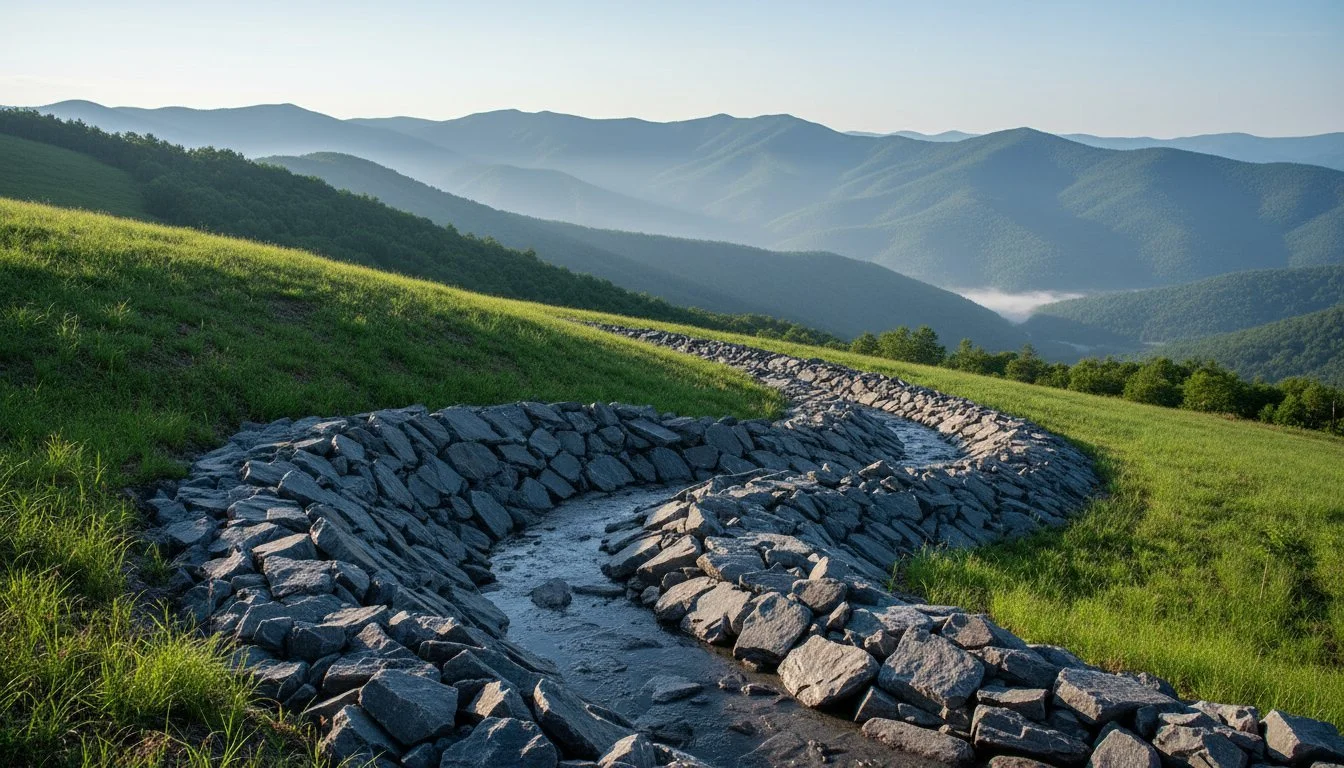
With some areas of the High Country receiving over 70 inches of rain annually, your mountain slope isn't just a landscape feature; it's a moving target. You've likely seen how quickly a heavy storm can turn a stable hillside into a costly drainage problem. It's a common frustration for property owners who want to protect their investment but feel uncertain about which materials will actually stay put. Finding the right erosion control stone for Avery County terrain demands involves more than just covering dirt. It requires a strategic approach to stone density and drainage.
We understand that mountain runoff doesn't wait for a convenient time to cause damage. This article provides the practical knowledge you need to select the best stone types and strategies to stabilize your land effectively. You'll learn how to match specific aggregate sizes to your slope's grade and discover the most reliable ways to manage bulk material delivery to remote mountain locations. From using riprap in culverts to choosing the right ABC stone for steep drives, we'll help you move from immediate property concerns to long-term operational peace of mind.
Key Takeaways
Identify how Avery County’s unique terrain and high rainfall necessitate specific aggregate densities to prevent rapid soil loss.
Learn how to select the right erosion control stone for Avery County projects, comparing heavy riprap for culverts with interlocking ABC stone for stable bases.
Match the aggregate size to your specific slope grade and water runoff volume to ensure permanent stabilization and prevent damage from mountain runoff.
Prepare for the logistical challenges of the High Country by understanding how heavy tandem trucks navigate narrow access points for bulk delivery.
Discover how strategic material choices like fieldstone can enhance your property’s aesthetics while serving as a functional tool for erosion management.
Understanding Erosion Challenges in Avery County’s High Country
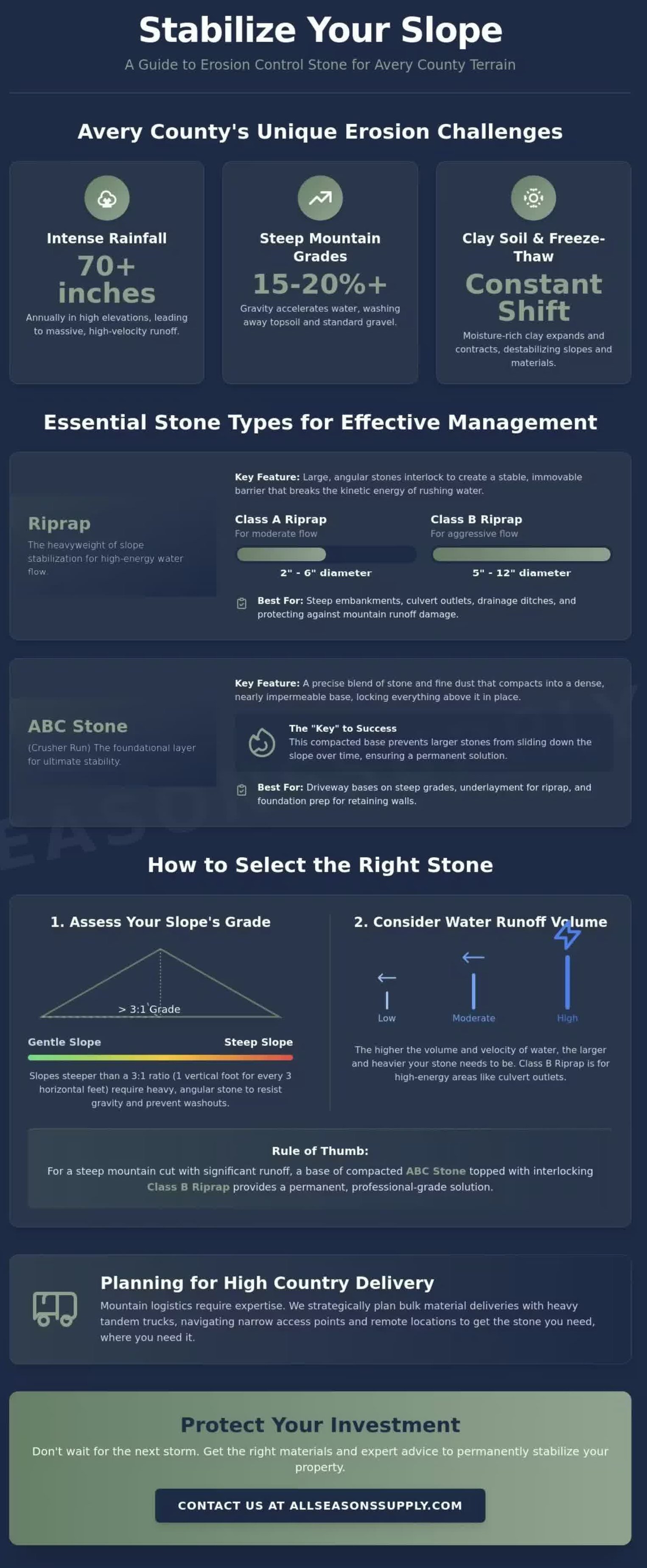
The erosion control stone that Avery County property owners rely on is more than just a decorative addition. It's a strategic tool used to stabilize soil and manage water movement across challenging terrain. In the High Country, the geography itself creates a constant battle against the elements. With mountain slopes often exceeding grades of 15 to 20 percent, gravity significantly accelerates the speed of surface runoff. Without professional-grade Erosion control measures, a single heavy storm can strip away years of topsoil and undermine critical infrastructure like driveways and foundations.
The local geology adds another layer of complexity. Avery County sits in the Blue Ridge geological province, where soils are primarily derived from granite, gneiss, and schist. These soils have a high clay content. They hold moisture and expand when wet. During the winter, the region's intense freeze-thaw cycles cause the ground to heave as water in the clay freezes and expands. This constant movement can loosen soil and cause standard landscaping materials to shift or fail. Proactive management with dense, heavy aggregates is the only way to protect property values and ensure long-term slope stability.
Why Mountain Slopes Require Specialized Solutions
Standard gravel often fails on steep mountain grades. Once a slope exceeds a 3:1 ratio, the velocity of rainwater increases enough to wash away rounded or lightweight stones. Specialized erosion control stone is typically angular. This allows the individual pieces to interlock and form a stable mat that stays in place under pressure. These stones serve a dual purpose. They provide physical weight to hold the soil down, and they break the kinetic energy of rushing water before it reaches the softer ground underneath. By slowing the water's descent, you prevent the deep ruts and gullies that typically form on unprotected mountain cuts.
Local Climate Factors: Rain, Snow, and Runoff
Weather patterns in the High Country are remarkably intense. Newland averages about 55 inches of rain annually, while higher elevations frequently see over 70 inches. This volume of water creates a massive amount of runoff that must be directed away from buildings and roads. Spring brings its own challenges as snowmelt saturates the clay-rich soil. This hidden saturation often leads to sliding, in which the weight of waterlogged earth causes entire sections of a slope to drop. Utilizing non-porous, weather-resistant stone is essential here. You need materials that won't crumble under the pressure of winter moisture or the weight of spring runoff.
Essential Stone Types for Effective Erosion Management
Selecting the right erosion control stone for Avery County projects requires consideration of water velocity and slope angle. Not all aggregates are equal. Using the wrong size or shape can lead to material displacement during the first major storm. To ensure a permanent solution, you must match the stone's physical properties to the specific demands of your site. Strategic selection prevents recurring costs and protects the structural integrity of your land.
Riprap: The Heavyweight of Slope Stabilization
Riprap is the industry standard for managing high-energy water flow and stabilizing steep inclines. It's categorized into classes based on size. Class A Rip Rap typically includes rocks between 2 and 6 inches, making it suitable for moderate drainage ditches and culvert linings. For more aggressive stabilization, Class B Rip Rap uses larger rocks ranging from 5 to 12 inches in diameter. These heavier stones are necessary for embankments where standard gravel would simply wash away. Angular, blasted rock is superior to rounded stone in these scenarios. The sharp edges allow the rocks to interlock, creating a cohesive barrier that resists the force of gravity and moving water on vertical mountain cuts.
ABC Stone and Screenings for Foundation Work
ABC Stone, often called crusher run, serves as the functional foundation for high-performance erosion management. It's a precise blend of various stone sizes mixed with fine dust. When compacted, it creates a dense, interlocking base layer that's nearly impermeable. For many professionals, this is the most critical step in applying the erosion control stone Avery County properties need for long-term durability. This base layer acts as a "key" that prevents larger stones from sliding down the slope over time.
Washed screenings are used to complement these larger aggregates. By filling the small gaps between stones, screenings prevent "under-washing." This is a process where water finds a path beneath the stone and carves out the soil, eventually causing the entire structure to collapse. Screenings also help suppress weed growth in stone beds, which maintains the aesthetic and functional clarity of your drainage paths. Proper compaction of these smaller materials is essential to prevent migration during heavy rainfall.
In areas with lower water velocity, such as dry creek beds or garden borders, River Rock offers an aesthetic alternative. While it doesn't offer the same interlocking strength as Rip Rap or ABC stone, its smooth surface handles occasional runoff without looking like an industrial site. Choosing the right material ensures your property remains stable while maintaining its visual appeal. Successful slope management starts with these strategic material choices and a clear understanding of local topography.
Selecting the Right Stone Based on Slope and Water Flow
Choosing the correct erosion control stone for Avery County projects requires a matter of physics rather than preference. You must evaluate the steepness of your terrain before placing an order. A gentle incline might only require a layer of ABC stone or decorative river rock. However, vertical mountain cuts or slopes exceeding a 15 percent grade demand heavier, interlocking aggregates. Gravity works against you on these sites. If the stone is too light, the first significant rain event will carry your investment down the hill, leaving your soil exposed.
Assess whether the water flow is a constant stream or occasional storm runoff. This distinction dictates your material strategy. Constant flow requires larger riprap that can withstand continuous hydraulic pressure and prevent the underlying soil from saturating. Occasional runoff often permits a combination of smaller stone and screenings, provided they are properly compacted. Balancing functionality with aesthetics is possible, but you shouldn't prioritize 'the look' over structural stability in high-velocity zones. High Country weather is unpredictable; your stone choice must account for the worst-case scenario.
The 'Rule of Thumb' for Stone Sizing
The fundamental rule of stone sizing is that the diameter of the aggregate must increase in direct proportion to the expected water velocity. In the High Country, over-sizing your stone is almost always the safer choice. Intense, localized flooding occurs frequently during Blue Ridge storm events. If your stone is sized only for average rainfall, it won't survive a peak storm. Matching the stone's weight to the maximum expected force ensures your stabilization efforts remain permanent and your property remains secure.
Function vs. Aesthetics: Choosing Your Look
For many property owners, the goal is a natural Appalachian aesthetic. Fieldstone and river rock are excellent choices for visible drainage paths and dry creek beds. They blend into the landscape while providing moderate protection. In contrast, pea gravel offers a very clean, modern look but provides minimal erosion resistance on anything steeper than a flat grade. To achieve a 'naturalized' drainage look that actually works, consider using a functional base of ABC stone or riprap, then top it with a layer of decorative fieldstone. This approach gives you the structural integrity of industrial stone with the visual appeal of a mountain stream.
Consider the long-term maintenance requirements of different stone sizes. Smaller stones, such as screenings or pea gravel, require more frequent replenishment as they settle or shift. Larger riprap is essentially a one-time solution, provided it was installed correctly to prevent soil piping. By selecting the right material from the start, you reduce the need for future repairs and ensure your property remains protected throughout the seasons.
Planning Your Delivery: Logistics for Avery County’s Mountain Terrain
Securing the right materials is only half the battle. The logistics of transporting the erosion control stone to Avery County sites can be as complex as the stabilization project itself. Narrow, winding roads through Avery and Watauga counties present significant obstacles for standard freight. Effective planning ensures that your stone arrives safely and is placed in a location that maximizes efficiency. Without a clear logistical strategy, you risk double-handling materials or, worse, damaging your property during offloading.
Site access is the most critical factor for a successful bulk delivery. A fully loaded tandem or dump truck requires ample room to maneuver and a stable surface to support its weight. You should also coordinate your delivery timing with local weather windows. Delivering heavy stone during a period of intense rainfall can lead to muddy site damage and deep ruts that are difficult to repair. By aligning your delivery with dry conditions, you maintain the integrity of your access roads and ensure the truck can reach the designated drop-off zone without issue.
Preparing Your Site for Bulk Delivery
Before the truck arrives, you must check for overhead clearance. Power lines and low-hanging tree branches are common hazards in the High Country, especially when a truck bed is fully extended to tip a load. It's also helpful to mark the dump area clearly with stakes or tarps. This protects your existing turf and provides the driver with a specific target, reducing the need for you to move the stone later. Finally, verify the ground's firmness. Mountain soils can become spongy quickly, and you don't want a heavy vehicle sinking into your driveway or lawn.
Navigating High Country Access Challenges
Specific areas like Beech Mountain and Banner Elk are known for tight switchbacks and steep inclines that can challenge even the most experienced drivers. This is why local knowledge is essential for safe delivery. Drivers who understand mountain terrain know how to manage weight distribution on grades that often exceed 15 percent. When you schedule your order, ask your supplier about truck sizes and weight limits. Some remote sites may require multiple smaller loads rather than one large delivery to navigate sharp turns safely. If you are ready to stabilize your slope, we provide reliable bulk delivery of erosion control stone and aggregates throughout the region.
Reliable delivery is a cornerstone of operational continuity. By addressing these logistical hurdles upfront, you ensure your project stays on schedule and your property remains protected. A steady partner who understands the nuances of Avery County’s geography can make the difference between a smooth installation and a logistical headache.
Why All Seasons Supply is Avery County’s Trusted Erosion Partner
Managing mountain terrain requires more than just material; it requires a partner who understands the specific geological pressures of the Blue Ridge. With over 50 years of combined experience in High Country landscaping logistics, we've developed a deep understanding of what it takes to stabilize property in this region. We prioritize reliability and operational efficiency to ensure your project stays on track. Our inventory includes a wide variety of aggregates, ensuring you can find the exact erosion control stone Avery County projects demand for both structural integrity and visual appeal.
We're a locally owned business committed to providing dependable service to homeowners and contractors. We believe in providing expert guidance so you buy the right material the first time. Our team is here to help you navigate the complexities of stone sizing and volume calculations, avoiding the common pitfalls of mountain site management. This solution-oriented approach positions us as a steady partner in your property's long-term maintenance. We focus on our clients' practical needs to ensure their operations run smoothly, regardless of the season.
More Than Just a Stone Supplier
While stabilization is the primary goal, we also provide resources for those looking to balance function with beauty. You can explore The Essential Guide to Landscape Stone in Vilas, NC, to see how different materials impact your property's overall look. We also stock complementary products, such as topsoil and compost. These are essential for re-vegetating slopes once the stone is in place, as healthy root systems work alongside aggregates to anchor the soil. We encourage you to visit our garden center to compare materials in person and see the differences between ABC stone, fieldstone, and decorative river rock firsthand.
Dependable Delivery Across the High Country
Our logistical expertise extends across the entire region. We provide consistent service to Boone, Banner Elk, Blowing Rock, and all of Avery County. We approach every delivery as an industrious partner, working in the background to solve access challenges and ensure your materials arrive exactly where they're needed. We understand the cyclical nature of mountain weather and plan our routes to minimize delays and site damage. Our drivers have the experience necessary to handle the steep grades and tight turns characteristic of the High Country. If you're ready to protect your hillside from the next major storm, contact All Seasons Supply for an erosion control stone quote today. We're ready to help you secure your property with the right materials and reliable logistical support.
Securing Your High Country Property for the Long Term
Protecting your land from the unpredictable forces of mountain weather requires a proactive approach. Matching the correct stone density to your specific slope grade ensures your stabilization efforts remain permanent. Proper logistical planning is equally vital, particularly when navigating the narrow access points of the Blue Ridge. By selecting the right erosion control stone for Avery County's terrain and coordinating with a reliable delivery partner, you can prevent soil loss before it becomes a structural liability.
As a locally owned and operated family business with over 50 years of combined High Country experience, we understand the nuances of this landscape. We specialize in full-service delivery to even the most remote mountain locations, ensuring your project moves forward without delay. Our team serves as a steady partner, providing the materials and logistical support you need for total peace of mind. Request a Bulk Stone Delivery Quote for Your Avery County Project today and take the first step toward a more stable and resilient mountain property.
Frequently Asked Questions
What is the best stone for a steep mountain slope in Avery County?
Angular riprap is the most effective choice for steep slopes because the sharp edges allow the rocks to interlock. This interlocking action creates a stable barrier that resists gravity on grades exceeding 15 percent. Unlike rounded stones, these blasted aggregates won't roll or shift during the heavy rain events common in the High Country.
How much erosion control stone do I need for my project?
You should plan for a depth of 6 to 8 inches for most mountain stabilization projects. This is deeper than the standard 4 inches used in flatter regions to account for the intensity of local runoff and frost heaving. To find your total volume, multiply the square footage of the target area by the decimal equivalent of your desired depth in feet.
Can I use river rock for erosion control on a hillside?
River rock is best used for low-velocity drainage areas or decorative creek beds where the slope is minimal. Because these stones are smooth and rounded, they lack the structural grip needed to stay put on a steep hillside. If you use them on a significant grade, they'll likely migrate to the bottom of the slope during the first major storm.
What is Riprap and why is it used for drainage?
Riprap consists of large, heavy, angular stones designed to protect soil from high-velocity water flow. It's used in drainage outlets, culverts, and on steep embankments to break the kinetic energy of rushing water. Slowing the water down prevents the scouring and deep ruts that typically lead to slope failure and property damage.
How do I prevent my erosion stone from sinking into the mud?
Applying a dense base layer of ABC stone or screenings is the most effective way to prevent the heavier erosion control stone from settling into soft soil at Avery County sites. This foundation layer creates a stable "key" that distributes the weight of larger rocks. It also seals the soil surface, preventing water from carving hidden paths beneath your stone beds.
Is it better to use large boulders or smaller crushed stone for stabilization?
The choice depends on the volume and velocity of water moving across your land. Large boulders or riprap are necessary for primary drainage paths where water force is highest. Smaller crushed stone is ideal for secondary stabilization and filling gaps. Often, a combination of both provides the most comprehensive and aesthetically pleasing solution for mountain properties.