
How to Protect Plants from Frost in Boone & The High Country
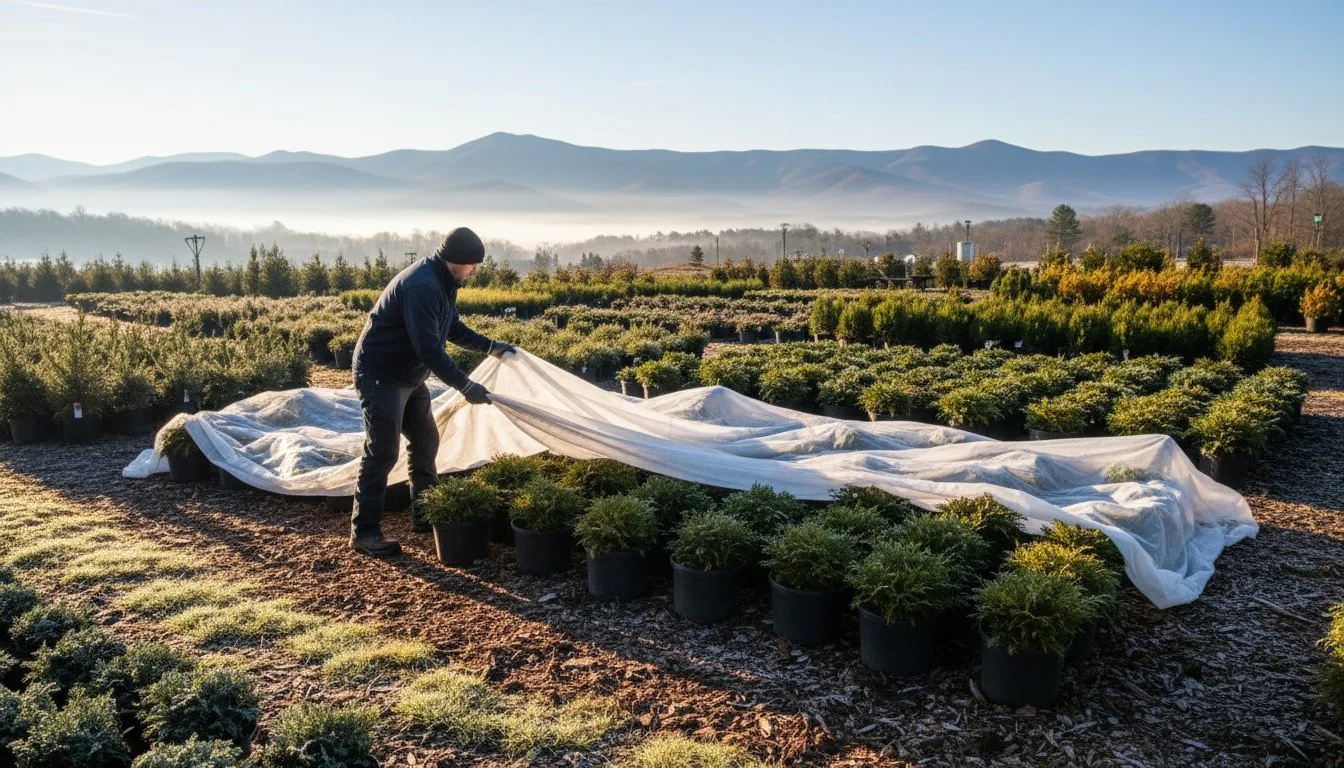
In Watauga County, a single night in late September can drop 15 degrees in under two hours, potentially turning a thriving landscape into a total loss of nursery stock before the sun rises. You've likely experienced the frustration of watching a sudden mountain cold snap damage expensive installations that took months to establish. The unpredictable weather in Boone means that standard gardening advice often fails to account for our high-altitude environment. You understand that maintaining a professional appearance requires constant vigilance and a reliable strategy to protect plants from frost when temperatures shift without warning.
We've developed this guide to provide you with the professional techniques and local expertise needed to effectively shield your High Country landscape. You'll gain a clear understanding of how to use professional-grade materials to keep your operations uninterrupted through the changing seasons. We'll examine the specific frost cycles unique to our region, the essential inventory you should maintain for emergency response, and the actionable steps required to secure your facility's curb appeal through the harshest nights.
Key Takeaways
Recognize that varying elevations create microclimates that require different frost protection timing.
Use hardwood mulch and pre-frost irrigation to keep soil warm and protect roots.
Apply covers using the drape-to-ground method with breathable fabrics for optimal heat retention.
After frost, delay pruning to support plant recovery and long-term health.
Choose hardy plants and use heat sinks for a resilient landscape.
Understanding High Country Frost: When to Worry in Boone
Managing a Blue Ridge Mountains facility or landscape requires a precise understanding of microclimates. Temperature swings aren't minor inconveniences—they're serious risks for your exterior assets. To protect plants from frost, recognize the environmental triggers across Watauga and Avery Counties. High-elevation gardening is about timing and preparation. Neglecting a single night can mean losing your seasonal inventory.
Frost vs. Freeze: The 32-Degree Threshold
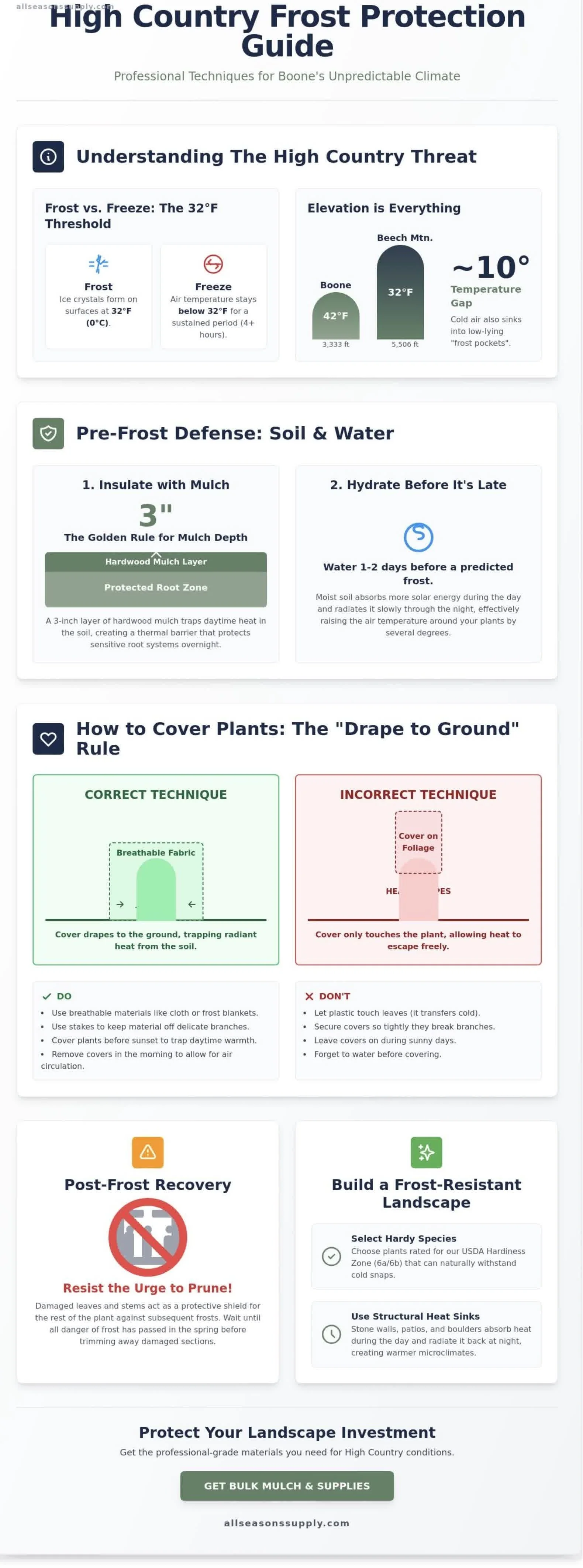
Frost occurs when water vapor transitions into ice crystals on surfaces that have cooled to 32°F. You can review a technical explanation of what frost is to understand the physical transition and its impact on cellular structures. A freeze is more severe, occurring when air temperatures remain below 32°F for a sustained period, typically four hours or more. An advection freeze is a cold air mass moving in, often accompanied by wind, making it difficult to maintain soil warmth with traditional covering methods alone.
Elevation is the primary driver of temperature variance in the High Country. While Boone sits at approximately 3,333 feet, locations like Beech Mountain reach 5,506 feet. This 2,000-foot difference can result in a 10-degree temperature gap between the two locations. Additionally, cold air is denser than warm air and naturally settles into low-lying areas, forming frost pockets. If your facility is located at the bottom of a slope or in a valley, your plants may sustain damage even when ridge-top temperatures remain above freezing.
Specific varieties are particularly vulnerable to these sudden shifts. Identifying these susceptible plants early allows you to prioritize your protection efforts:
Annuals like Impatiens, Marigolds, and Zinnias often perish at the first sign of 32°F.
New growth on Hydrangeas and Azaleas is highly sensitive to spring cold snaps.
Warm-season vegetables, including tomatoes and peppers, require immediate intervention when temperatures dip below 40°F.
High Country Frost Dates for 2026
Planning your maintenance schedule depends on historical data and real-time monitoring. For 2026, the estimated last spring frost for Boone is May 12, while Banner Elk may see frost as late as May 25. Fall frost warnings typically begin around October 5 for high-elevation gardens in Blowing Rock. Reliable solutions involve monitoring local mountain weather stations rather than relying on regional forecasts from lower elevations. Consistent oversight is the only way to protect plants from frost during these volatile transition periods. This proactive approach ensures operational continuity and preserves the aesthetic value of your property year-round.
Thermal Insulation: The Role of Mulch and Soil Moisture
Managing ground temperature is the best way to protect plants from frost in Western North Carolina. While the air can drop 20 degrees in an evening, insulated soil keeps roots warm. Maintaining soil warmth is essential for anyone wanting to protect landscape investment through unpredictable seasons.
Mulching for Root Protection
Applying a 3-inch layer of hardwood mulch creates a functional barrier that traps ground heat. This depth is specific; anything less allows frost to penetrate the soil surface, while anything more can lead to moisture issues or oxygen deprivation for the roots. For large-scale landscape prep, our Bulk Mulch Delivery in Boone, NC, provides a reliable solution to cover expansive beds before the first freeze hits.
Different plants need different materials. Hardwood is best for shrubs and trees. Pine straw works better for strawberries and low perennials as it allows more air and keeps a protective loft. Before mulching, check the USDA Plant Hardiness Zone Map to see if your species are at risk in the High Country.
Hydration as a Defense Mechanism
It's a myth that dry soil is safer during a freeze. Moist soil absorbs more solar energy by day and slowly releases it at night, creating warmth around the plant. A well-watered garden can stay up to 5 degrees warmer during frost.
Preventing Cellular Collapse: Hydrated plant cells are more resilient. When a plant is thirsty, its cell walls are weak and prone to rupturing when water inside the plant freezes.
Water on time for best results. Finish watering by 4 PM. This gives enough time for water to soak in and for leaves to dry before sunset, reducing the chances of ice on foliage.
Microbial Heat: Healthy soil microbes contribute to plant resilience. (Microbial heat is the small amount of warmth produced by soil organisms as they break down organic matter.) Active microbial colonies produce a small amount of metabolic heat and help plants synthesize natural sugars that act as a biological antifreeze.
Consistent moisture and proper mulching are the most reliable ways to protect plants from frost without relying solely on temporary covers. If you're managing a large facility or multiple properties, having these supplies on hand is essential for operational continuity. You can find all the necessary materials in our comprehensive landscape inventory to ensure your grounds remain protected, regardless of the weather forecast.
How to Cover Your Plants Properly: A Step-by-Step Guide
You need more than just a tarp to guard plants from sudden temperature drops. In the High Country, where overnight lows can drop 20 degrees in three hours, technique is everything. Trap soil heat to create a stable microclimate for your plants.
Selecting Effective Cover Materials
Choosing the right material is the first step to effectively protecting plants from frost. Breathable fabrics like old bedsheets, heavy burlap, or woven quilts are superior options because they allow moisture to escape while retaining trapped heat. Avoid plastic sheeting whenever possible. If plastic comes into contact with the foliage, it transfers the freezing temperature directly to the plant cells, causing immediate tissue death. For facility managers looking for a long-term solution, dedicated frost blankets are a reliable investment. These specialized fabrics are often rated by weight. A standard 1.5-ounce frost cloth can provide up to 8 degrees of thermal protection for tender annuals during a standard mountain freeze.
Step-by-Step Covering Technique
Apply covers with care to withstand Watauga County's high winds. Follow these steps to keep your plants insulated:
Use structural supports: Drive wooden stakes or PVC pipes into the ground around delicate mountain shrubs. This prevents heavy, moisture-laden covers from crushing the branches under their own weight.
Follow the drape rule: Extend the fabric completely to the ground. The goal is to capture radiant heat from the earth. Don't wrap the plant like a lollipop; this leaves the most vulnerable part of the root system exposed to cold air.
Secure the perimeter: Use landscape stones or ABC stone to seal the fabric edges against the soil. A tight seal prevents cold gusts from entering the tented area.
Manage the morning transition: Remove all covers once temperatures rise above 35 degrees Fahrenheit the next morning. If you leave covers on during a sunny day, you risk creating a greenhouse effect that can overheat and dehydrate the plant.
Maintaining this routine is essential to protect plants from frost during the volatile transition weeks of early spring and late autumn. It's a practical way to ensure your facility's curb appeal remains consistent, regardless of the weather. By treating your landscape maintenance as a series of logical steps, you protect your financial investment in your property's exterior.
Post-Frost Recovery: Managing Cold Damage
When you work to protect plants from frost, the effort doesn't end when the temperature rises. The immediate aftermath of a High Country freeze often leaves landscapes looking bleak, but hasty reactions frequently cause more harm than the cold itself. The most common mistake gardeners and facility managers make is pruning damaged wood or foliage as soon as it turns brown. While dead leaves are unsightly, they serve a functional purpose during the volatile spring months in Boone.
The Waiting Game: Why Patience Saves Plants
Maintaining a professional landscape requires discipline, especially when plants look distressed. Those brown, shriveled leaves act as a natural insulation layer, shielding the vulnerable inner nodes and dormant buds from the next inevitable cold snap. If you prune immediately, you expose tender tissue that hasn't hardened off, making the plant more susceptible to secondary damage. Wait for definitive signs of new growth to appear in the spring before you reach for the shears. In the High Country, the weather remains unpredictable well into the second quarter of the year. We advise local property owners to wait until late May for final assessments of woody shrubs and perennials. By May 25, the risk of a killing frost typically diminishes, and the plant's natural recovery path becomes clear. Use the scratch test on stems to check for green tissue; if the layer beneath the bark is green, the limb is alive and should be left alone.
Feeding and Watering Recovering Plants
Recovery depends on consistent, gentle hydration. Frost often mimics drought conditions because frozen soil prevents roots from absorbing moisture. Once the ground thaws, provide deep, slow watering to help the plant's vascular system recover. Avoid heavy synthetic fertilizers during the early recovery phase, as forcing rapid new growth can stress a weakened plant. Focus on soil health to support long-term resilience. Reapply a layer of high-quality compost or fresh topsoil to provide a steady release of nutrients. This method strengthens the root zone without the risk of chemical burn. For a structured approach to seasonal maintenance, check our 2026 Spring Landscape Checklist for Boone for recovery tips and inventory schedules. If a plant shows no signs of life by June, consult a local expert to determine whether it can be saved or a replacement is necessary. Our team provides the reliable solutions and inventory needed to restore your facility's curb appeal after a harsh winter. Contact All Seasons Supply today for professional-grade landscaping solutions and recovery tools.
Building a Frost-Resistant Landscape in the High Country
Long-term success in High Country gardening requires more than reactive measures. Building a landscape that inherently protects plants from frost requires intentional design and material selection. This proactive approach reduces labor during sudden temperature drops and ensures your perennials remain healthy year after year. It's about creating a stable environment where your plants don't just survive but thrive despite the volatile mountain weather.
Choosing High Country Hardy Species
Selecting the right inventory starts at the nursery level. Big-box stores often stock varieties suited for lower elevations that fail in Watauga County. Prioritize species rated for USDA Hardiness Zones 6 and 7. These trees and shrubs handle the short growing seasons and heavy snow loads of our region. Browse our guide on Nursery Plants in Blowing Rock for hardy options. Locally-grown stock is acclimated to the 40-inch average annual rainfall, meaning fewer losses during the first hard freeze in October.
Strategic Landscape Planning
Thermal mass is a reliable tool for temperature regulation. Placing river rock or fieldstone in garden beds creates a natural heat sink. These materials absorb solar radiation and release it slowly at night, maintaining a microclimate 3 to 5 degrees warmer than the surrounding air. Strategic placement near stone walls or house foundations provides a similar buffer for sensitive roots. Establishing windbreaks with evergreen shrubs also creates a physical barrier against drying gusts to prevent desiccation.
Hardening off new nursery plants is a critical step before permanent installation. Don't move a plant directly from a greenhouse to an exposed ridge. Gradually introduce it to outdoor temperatures over a 10-day period. This transition allows the plant to build the cellular strength needed to naturally protect itself from frost. It's a simple process that prevents transplant shock and ensures long-term reliability.
All Seasons Supply provides the integrated solutions needed for a resilient property. We offer a complete range of professional-grade mulches and soils designed for high-elevation drainage and insulation. Call us for a consultation on the best materials for your specific elevation. We act as your industrious partner to ensure your facility maintenance remains efficient and effective throughout the changing seasons. Our goal is to provide the expert advice and quality inventory you need to maintain a beautiful, frost-resistant landscape.
Prepare Your Mountain Landscape for Lasting Success
Managing a garden in the High Country requires a proactive strategy to handle unpredictable mountain weather. Prioritize thermal insulation by maintaining consistent soil moisture and applying a thick layer of mulch to retain ground heat. Utilize breathable covers during temperature drops to effectively protect plants from frost without causing moisture buildup or physical damage. These steps provide the stability your landscape needs to survive sudden shifts in the Watauga County climate.
All Seasons Supply operates as a family-owned partner with over 50 years of combined industry experience. We provide the dependable solutions required to maintain a healthy property, from bulk materials to locally grown nursery plants specifically bred for mountain elevations. Our team ensures your outdoor operations run smoothly regardless of the forecast. Get your bulk mulch and nursery supplies delivered in the High Country!
Your landscape represents a significant investment in your property's value. We're ready to help you safeguard that investment with the right tools and local expertise. You've got this, and we're here to support your success through every season.
Frequently Asked Questions
Is it better to water plants before or after a frost?
It's better to water your plants 24 hours before a predicted freeze to effectively protect plants from frost. Moist soil absorbs more solar radiation during the day and releases that heat at night, keeping the root zone 2 to 3 degrees warmer than dry ground. This simple step provides a critical thermal buffer for sensitive root systems in the High Country during the cold months.
What is the best material to cover plants with during a freeze?
Use breathable fabrics like burlap, old bedsheets, or 1.5-ounce specialized frost blankets for the most effective protection. These materials trap heat while allowing moisture to escape, which prevents ice crystals from forming on the foliage. Avoid using plastic covers that touch the leaves, as they'll conduct cold directly to the plant tissue, causing immediate damage. This approach ensures your facility maintenance remains efficient and successful.
Can I use mulch to protect my plants from frost?
You should apply a layer of mulch 3 to 4 inches thick to protect plants from frost by insulating the root system. This layer acts as a thermal barrier, preventing rapid freezing and thawing that can heave plants out of the soil. Maintaining a consistent soil temperature is a reliable way to protect perennials during Boone's unpredictable spring transitions and sudden temperature drops.
At what temperature should I start covering my outdoor plants in Boone?
You should start covering sensitive outdoor plants when local forecasts predict temperatures will reach 32 degrees Fahrenheit. In Boone, temperatures often drop 5 to 10 degrees in valley pockets than on ridges due to the 3,333-foot elevation. It's essential to have your covers in place by 4:00 PM to trap the existing ground heat before the sun sets and the temperature plunges.
Should I cut off frost-damaged leaves right away?
Don't prune frost-damaged leaves until the threat of freezing weather has passed, typically after May 10th in the High Country. The dead foliage acts as a protective layer for the healthy tissue underneath during subsequent cold snaps. Removing damaged sections too early can stimulate new growth that's highly susceptible to the next freeze, compromising the plant's long-term health and the overall landscape's stability.
Does pine straw provide better frost protection than hardwood mulch?
Pine straw provides superior insulation because its interlocking needles create air pockets that offer better thermal protection than dense hardwood mulch. These air gaps trap heat near the soil surface more effectively, providing a consistent solution for your landscape. Hardwood mulch remains a dependable choice for moisture retention, but pine straw is the more efficient tool for winter temperature regulation in the High Country.
What happens if I leave the frost covers on during the day?
Leaving frost covers on during a sunny day can cause heat to build up and damage your plants. If daytime temperatures rise above 50 degrees Fahrenheit, the trapped heat can trigger premature budding or cause the plant to respire too quickly. Remove the covers by 10:00 AM once the frost has melted to ensure proper ventilation and prevent fungal issues that can arise from excess humidity.
How do I know if my plant is dead or just frost-damaged?
Perform a scratch test on a small section of the stem to determine if a plant is dead or merely damaged. Use your fingernail to peel back a tiny bit of bark; if the layer underneath is green and moist, the plant is still alive. Wait 14 to 21 days after the last frost to see if new buds emerge from the base or stems before deciding to remove the plant.