
2026 Spring Landscape Checklist for Boone & The High Country
In the High Country, following a standard gardening calendar is often a recipe for expensive failure. Watauga County homeowners understand that a single 28-degree night after the traditional May 15th frost date can easily undo weeks of hard work and significant financial investment. You've likely felt the frustration of watching spring rains that often exceed 4 inches per month carve gullies into slopes steeper than 15 percent, or of struggling to plant in the dense clay and rock that define our mountain terrain.
Managing these environmental variables requires a strategy grounded in local experience, not general advice. Our 2026 spring landscape checklist offers a professional framework to help you meet these unique challenges with confidence. We have consolidated years of regional expertise into a plan. It ensures your outdoor spaces remain functional and resilient for the growing season.
This guide outlines a clear monthly timeline for essential maintenance tasks and identifies the hardy materials needed to withstand unpredictable frosts and prevent erosion. We'll show you how to transform your property into a low-maintenance landscape that withstands the rigors of the Appalachian climate.
Key Takeaways
Navigate the complexities of the High Country’s Zone 6b and 7a climate by identifying the specific timing needed to avoid the risks of a mountain "False Spring."
Learn how to revitalize nutrient-depleted soil and rocky terrain using high-quality topsoil and compost solutions tailored for Watauga County.
Use our checklist to prioritize key maintenance tasks, from debris removal to dormant pruning.
Compare mulch and hardscape options to determine which materials provide the best stability for steep slopes and durability against high-UV mountain exposure.
Simplify your project logistics with reliable bulk delivery services designed to overcome the challenges of accessing remote or difficult mountain sites.
Timing Your Spring Startup in the High Country
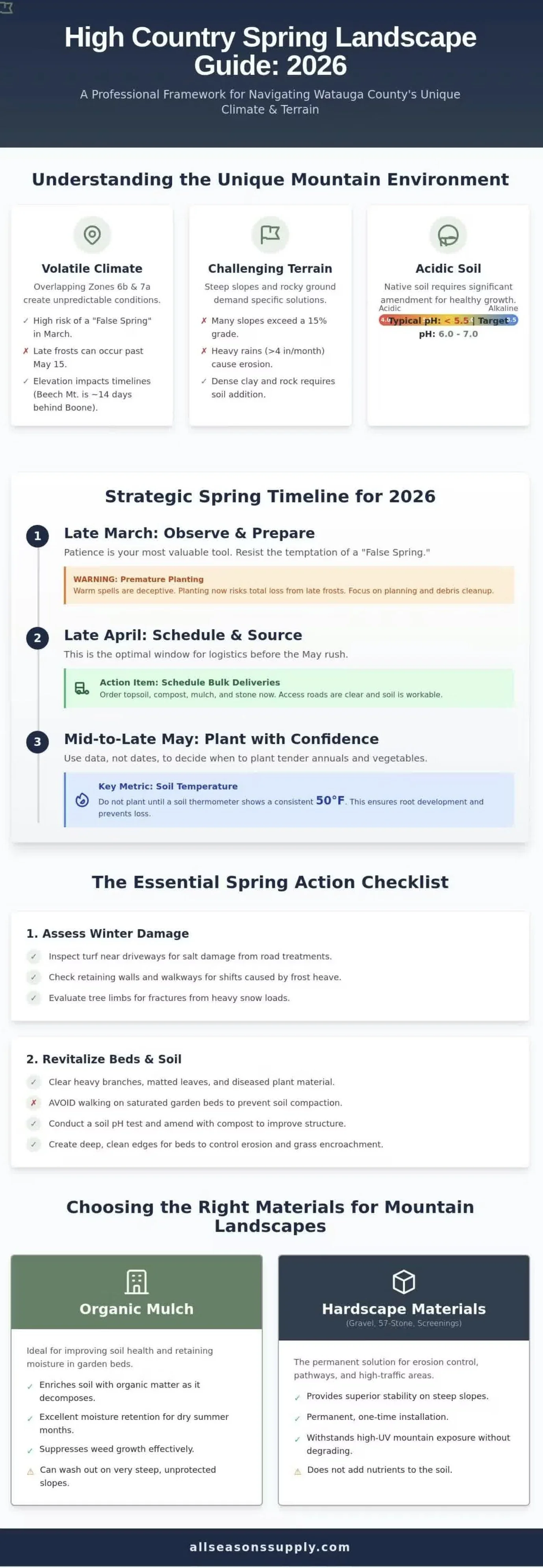
Managing a mountain property needs careful planning for each season. Watauga County has a complex environment. USDA hardiness zones 6b and 7a overlap here, creating a challenge for local homeowners. Start with recognizing the High Country False Spring. Warm spells in late March often tempt residents to start planting. Patience is the best strategy to prevent total plant loss. This patience is a core part of a professional spring landscape checklist.
Elevation decides your exact timeline. Early blooms appear in Blowing Rock, but properties on Beech Mountain usually lag by 14 days due to a 2,000-foot elevation gain. For Boone and Vilas, schedule bulk material delivery during the last two weeks of April. This window helps align gardening principles with practical logistics before the peak May rush. We help you schedule deliveries when access roads are clear and the soil is workable. This increases reliability.
The Last Frost Date Reality Check
The average last frost date in Boone is between May 10 and May 15. In 2026, meteorological models indicate a volatile spring with a high chance of freezing temperatures into late May. Don’t rely only on air temperature. Use a soil thermometer to check that the ground temperature is steady at 50 degrees Fahrenheit. This number reliably indicates when roots can develop and when seeds will germinate. It’s a data-driven method that saves you from spending extra money on replacing frozen annuals.
Assessing Winter Damage on Mountain Properties
Winter maintenance leaves a physical footprint on your property. Inspect turf areas adjacent to driveways for salt damage caused by NCDOT or private road treatments. High concentrations of sodium dehydrate soil and kill root systems. You should also check retaining walls and stone walkways for frost heave. This occurs when freezing groundwater expands and shifts structural elements. Finally, evaluate the stability of tree limbs. Heavy Appalachian snow loads often cause hairline fractures that aren't visible until spring winds arrive. Identifying these hazards early ensures operational continuity for your outdoor spaces. Including these inspections in your spring landscape checklist protects your long-term investment.
Revitalizing Mountain Soil and Garden Beds
Boone landscapes face specific challenges due to Watauga County's rocky terrain. Successful spring growth depends on creating a stable foundation. Start your spring landscape checklist by clearing winter debris. Use a light rake to remove fallen limbs and dead leaves. Avoid walking directly on garden beds while the ground remains saturated from snowmelt. Compaction restricts oxygen flow to root systems and can take years to reverse. High-quality topsoil provides the necessary depth for root development in areas where the mountain stone sits just inches below the surface.
Key debris removal steps include:
Remove heavy branches that fell during winter ice storms.
Clear matted leaves from the crowns of perennial plants.
Dispose of diseased plant material to prevent fungal spread in the warming weather.
Soil Testing and Amending for Success
The North Carolina mountains typically have highly acidic soil, often with a pH below 5.5. Most ornamental plants and local shrubs prefer a pH range of 6.0 to 7.0. Conduct a simple pH test using a home kit or a sample from the local extension office before applying amendments. Adding soil amendments is a critical step on any spring landscape checklist for High Country residents. Mixing bulk compost into your native soil introduces organic matter that mountain beds lose through winter leaching. This process improves soil structure and supports sustainable watering practices by increasing the ground's ability to hold moisture during the drier months of July and August. It's a practical way to turn poor-quality dirt into a productive growing medium.
Edging and Defining Your Landscape Borders
Mountain slopes pose a constant threat of erosion to garden integrity. Establishing a clean, deep edge prevents grass from encroaching and keeps your soil in place. Use screenings or small 57-stone gravel to create permanent boundaries that withstand heavy spring rains. Before your bulk mulch delivery arrives, remove old, matted material that has turned gray or brittle. This ensures the new layer provides maximum insulation and moisture retention for the roots. A well-defined border simplifies maintenance and creates a professional finish for your property. Reviewing your inventory of landscape supplies now ensures you have the materials ready for the first warm weekend of the season.
Selecting Mulch and Hardscape Materials for Watauga County
Choosing the right materials for your spring landscape checklist requires an understanding of Boone’s unique topography and climate. Watauga County homeowners face specific challenges, including steep grades and intense UV exposure, that demand durable solutions. Hardwood mulch is the preferred choice for steep mountain slopes because its shredded fibers interlock to create a stable mat. This physical bond prevents the material from washing away during heavy spring rains. Pine bark nuggets offer a beautiful, acidic profile for garden beds, but they lack the weight to stay in place on steep inclines.
High-elevation properties in the High Country experience higher UV intensity than the Piedmont. This increased radiation causes natural wood products to turn gray and decompose rapidly. Designer-colored mulches offer a functional advantage here; they use carbon-based dyes that bond to the wood fibers. These products maintain their deep brown or black color for up to 18 months, ensuring your property looks well-maintained throughout the entire growing season. For driveway maintenance, the post-thaw period is the critical time to apply ABC stone and screenings. This combination creates a dense, interlocking base that stabilizes gravel surfaces after the winter frost has left the ground.
Choosing the Right Mulch for Your Aesthetic
Designer brown and black mulches are engineered to withstand the harsh sun in Boone, providing a consistent backdrop for vibrant spring perennials. In wooded areas like Blowing Rock, many homeowners prefer the natural, textured look of pine bark to complement the surrounding forest floor. It’s a reliable way to maintain a rustic mountain feel while protecting plant roots. A consistent layer of mulch, three inches deep, provides the physical barrier needed to prevent weed germination across the High Country.
Hardscaping for Erosion and Drainage
Effective water management is a core component of any spring landscape checklist in Watauga County. Fieldstone and flagstone are the gold standard for constructing natural-looking retaining walls that manage mountain erosion. These heavy materials provide the structural integrity needed to hold back soil on tiered lots while blending seamlessly with the local environment. River rock is the most effective solution for managing heavy runoff, as its weight and varied sizes slow rushing water, preventing soil loss.
Once your stone structures are in place, finishing the surrounding beds is the final step. Scheduling a bulk mulch delivery in Boone, NC, ensures you have the necessary volume to cover large areas efficiently. This integrated approach to stone and mulch creates a landscape that is both visually appealing and operationally sound for the year ahead.
The Essential 2026 Spring Landscape Checklist
Maintaining a high-altitude property requires a methodical strategy. Executing a comprehensive spring landscape checklist ensures your property remains resilient against Boone's volatile weather patterns. Start by clearing the debris that accumulated during the winter months. Fallen limbs and thick leaf litter trap moisture against the soil. This creates a breeding ground for snow mold and other fungal pathogens that can damage up to 30 percent of your turf by mid-April. Once the ground is clear, focus on these critical steps:
Prune dormant species: Remove growth before buds break to direct the plant's energy toward healthy new shoots.
Apply pre-emergent weed control: Create a chemical barrier to prevent crabgrass and dandelions from taking root in your garden beds.
Order bulk mulch: Spread a 3-inch layer to protect root systems from the late freezes common in Watauga County through early May.
Inspect irrigation systems: Test every zone to identify leaks or burst pipes caused by sub-zero temperatures before you begin regular watering schedules.
Pruning Basics for Mountain Shrubs
Precision is vital when handling High Country vegetation. You must identify which shrubs bloom on old wood versus new wood. Species like Rhododendrons and Azaleas set their buds in the previous year; pruning them too early in the spring will eliminate their floral display. Use the Three D Rule to guide your cuts. Always remove Dead, Damaged, and Diseased wood first to improve airflow. Aim to complete this work before the final frost, which typically occurs around May 10th in Boone. This timing prevents you from stimulating tender new growth that a late-season cold snap might kill.
Weed Prevention and Fertilization
High Country winds can carry weed seeds across vast distances. Pre-emergents are required, not optional, for maintaining clean garden beds. These solutions work best when soil temperatures consistently reach 55 degrees. For homeowners prioritizing mountain ecosystems, corn gluten meal serves as a natural alternative for weed suppression. When selecting a fertilizer, choose blends specifically formulated for locally grown nursery plants. These products account for the acidic soil profiles often found in the Blue Ridge Mountains. A balanced application provides the nutrients plants need to recover from winter dormancy without causing excessive runoff into local watersheds.
Prepare your property for the growing season with professional-grade solutions. Contact All Seasons Supply to coordinate your bulk mulch and landscape maintenance deliveries today.
Sourcing Your Spring Supplies in Vilas and Boone
Sourcing materials locally is the final step in your spring landscape checklist. High Country weather is unpredictable, and plants sourced from outside the region often fail to thrive during late-season frosts. Choosing nursery stock grown in Vilas or Boone ensures your trees and perennials are already acclimatized to the local hardiness zones, which typically range from 6a to 7a, depending on your specific elevation. These plants have developed root systems capable of surviving Boone’s variable winters and heavy spring rains. Supporting family-owned businesses in the High Country keeps resources within the community while providing you with expert advice tailored to mountain soil conditions.
Why Local Nursery Stock Matters
Big-box retailers often stock plants grown in warmer climates that struggle with the 3,333-foot average elevation of Watauga County. Local nurseries focus on hardy species, such as native Rhododendrons and cold-tolerant perennials that return year after year. These experts understand that a frost in mid-May isn't just a possibility; it's a regular occurrence. By selecting locally grown stock, you reduce transplant shock and ensure your investment lasts through the summer heat and into the next winter cycle. This approach provides a reliable foundation for your property's long-term health and aesthetic value.
Scheduling Your Bulk Delivery
Efficiency is key when moving large volumes of mulch, soil, or stone. To avoid shortages, calculate your needs precisely. Multiply the length of your beds by the width and the desired depth in feet, then divide that total by 27. This provides the exact number of cubic yards required for your project. Before your truck arrives, clear a flat, accessible space in your driveway or on your lawn. Placing a heavy-duty tarp down first makes cleanup faster and protects your underlying surface. All Seasons Supply handles professional delivery across Watauga and Avery Counties, ensuring your materials arrive exactly where they're needed.
We provide reliable solutions for homeowners dealing with steep mountain grades or narrow access points that standard delivery services often avoid. This logistical support allows you to focus on the physical installation rather than the stress of transport. Once your supplies are on-site and your planting is complete, your property is ready for a seamless transition into summer enjoyment. A well-executed spring landscape checklist creates a durable foundation that requires less maintenance during the peak growing season. By partnering with local experts and securing professional material delivery, you ensure your landscape remains a source of pride rather than a constant labor burden.
Prepare Your Property for a Successful 2026 Growing Season
Transitioning your property from the harsh High Country winter requires a methodical approach. By following this spring landscape checklist, you ensure your garden beds and hardscape are ready for the specific demands of the Watauga County climate. Success starts with revitalizing mountain soil before the final frost and selecting durable mulch that can withstand our local weather patterns. All Seasons Supply operates as your industrious partner in this process. We're a locally owned family business based in Vilas, NC, and we bring over 50 years of combined industry experience to every order. We understand the logistical challenges of mountain gardening and provide consistent solutions to keep your project on schedule. Our team offers convenient delivery across the entire High Country region to ensure your operations run smoothly. Secure the professional-grade materials you need to maintain your landscape's health throughout the season.
Order your bulk mulch and spring supplies from All Seasons Supply today!
We look forward to helping your High Country landscape thrive this year.
Frequently Asked Questions
When is the safest time to plant flowers in Boone, NC?
The safest time to plant annual flowers in Boone is after the final frost, which typically occurs around May 15th. While lower elevations might see warmth earlier, the High Country often experiences freezing temperatures well into May. Waiting until the soil temperature reaches 60 degrees Fahrenheit ensures your root systems establish properly. This timing is a critical part of any spring landscape checklist.
How much mulch do I actually need for my spring garden beds?
You should maintain a mulch depth of 2 to 3 inches to effectively suppress weeds and retain soil moisture. One cubic yard of mulch covers approximately 100 square feet when applied at a 3-inch thickness. Applying more than 4 inches can suffocate plant roots by limiting oxygen exchange. This precise measurement ensures you don't overspend on inventory while achieving professional results for your garden beds.
What is the best type of mulch for steep mountain slopes?
Double-shredded hardwood mulch is the most reliable choice for steep mountain slopes because its textured fibers interlock, resisting erosion. In areas with a 20 percent grade or higher, smoother materials like pine straw or large nuggets tend to wash away during heavy Appalachian rainstorms. Using a heavier, shredded product provides the stability needed to keep your landscape intact throughout the rainy spring season.
Should I put down topsoil or compost first in my garden?
You should apply compost first to integrate organic nutrients directly into the existing soil structure. Mixing a 2-inch layer of compost into the top 6 inches of dirt improves drainage and microbial activity. If you need to level the area or fill in low spots, apply your topsoil over the amended ground. This methodical approach creates a nutrient-rich foundation for your entire spring landscape checklist.
How do I protect my new spring plants from a surprise High Country frost?
Cover your sensitive plants with breathable frost blankets or burlap when temperatures are forecast to drop below 32 degrees Fahrenheit. These materials trap heat radiating from the ground and can keep the air around your plants 5 degrees warmer than the ambient temperature. Don't use plastic sheeting directly on foliage; it conducts cold and can cause more damage if it touches the leaves during a freeze.
Can I get bulk landscape stone delivered to Beech Mountain?
All Seasons Supply delivers bulk landscape stone and gravel directly to residential and commercial sites on Beech Mountain. Our delivery team is experienced with high-elevation logistics and the narrow roads common at 5,000 feet. We coordinate drop-off points to ensure your materials are placed exactly where your project requires, maintaining your operational timeline without unnecessary delays or logistical hurdles.
What are the best low-maintenance shrubs for the Watauga County climate?
Catawba Rhododendrons and Winterberry Hollies are two of the most dependable low-maintenance shrubs for the Watauga County climate. These plants are native to the region and hardy down to -10 degrees Fahrenheit, which is essential for surviving local winters. They require minimal intervention, usually needing a single pruning session every 12 months to maintain their shape and health in a professional landscape.
Does All Seasons Supply offer delivery to Banner Elk and Ashe County?
We offer comprehensive delivery services to Banner Elk, Jefferson, and throughout Ashe County to support your landscaping goals. Our fleet operates on a consistent schedule to provide reliable access to bulk soils, mulches, and stone across the region. We prioritize clear communication and timely arrivals, functioning as a steady partner for homeowners and facility managers who value efficiency and logistical precision.