
Mountain Driveway Gravel: The Best Options for Boone and High Country Homes
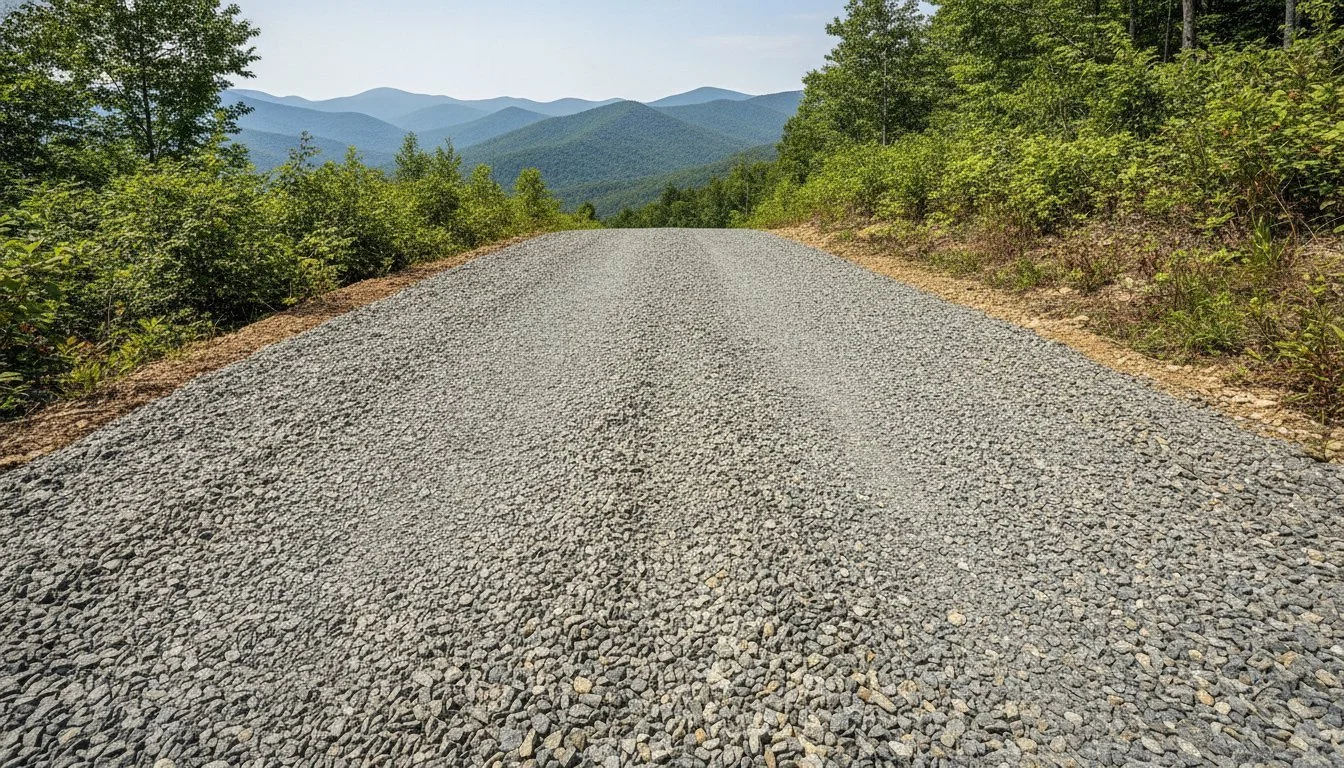
A heavy stone won't stay on a steep slope just because of its weight. Relying on mass alone is exactly why many homeowners find their expensive stone in the drainage ditch after the first summer storm. If you live in the High Country, you've likely felt the frustration of spinning tires on an icy January morning or the recurring cost of hiring a tractor to regrade your entrance. Finding the best gravel for a mountain driveway requires a shift in strategy from simple coverage to structural interlocking.
We understand that a driveway is more than just a path. It's your primary link to the community and a critical component of your property's value. You deserve a surface that remains stable through the aggressive freeze-thaw cycles common in Watauga County. This guide explores the specific aggregate types and modern stabilization tools, such as geocell grids and non-woven geotextiles, that prevent stone migration. You'll learn how to combine materials with proper engineering to create a dependable, low-maintenance road that stands up to steep grades and the harshest North Carolina winters.
Key Takeaways
Identify why angular aggregates like ABC Stone provide the necessary interlocking structure to resist erosion on steep Appalachian grades.
Learn why selecting the best gravel for a mountain driveway requires prioritizing mechanical friction over rounded decorative stones that can act like ball bearings under tires.
Understand the importance of installing a non-woven geotextile fabric layer to keep your stone from migrating into the underlying soil.
Discover how strategic bulk sourcing and proper sub-base preparation can eliminate the recurring costs of frequent driveway regrading.
The Unique Challenges of High Country Mountain Driveways
Standard engineering often falls short when confronted with the verticality of Watauga and Avery County. A typical Gravel road on flat terrain relies on gravity to keep stones in place, but on a mountain grade, gravity becomes an active force of displacement. When you're searching for the best gravel for a mountain driveway, you have to account for the fact that every rainstorm and vehicle ascent applies lateral pressure that wants to push your investment into the drainage ditch. Without the right interlocking structure, uncompacted stone surfaces quickly succumb to the sheer force of heavy Appalachian rainfall.
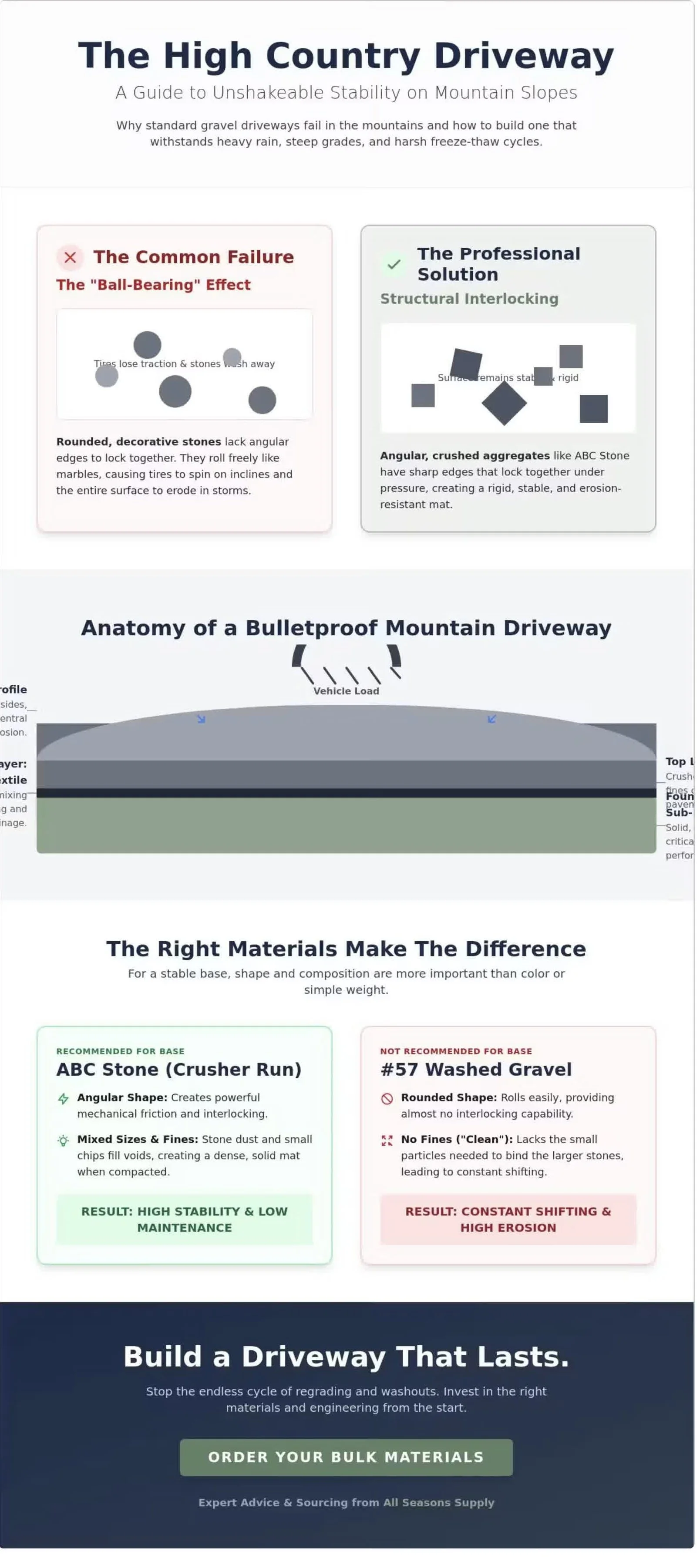
The "ball-bearing" effect is a common failure point that many property owners overlook. It occurs when homeowners choose stones based on aesthetics rather than mechanical friction. Rounded materials lack the sharp edges needed to lock together under pressure. Instead, they roll over one another like marbles. On a steep incline, winter driving is nearly impossible. Tires cannot find a stable grip, and the stones simply shift beneath the vehicle's weight, leading to rutting and a complete loss of traction during the first freeze.
Slope vs. Drainage: The Two Enemies of Stability
Water is the primary architect of driveway failure in the mountains. On a steep grade, rainfall gains velocity within seconds. If your driveway profile is flat, this fast-moving water flows down the tire tracks, stripping away fine material and leaving deep, dangerous ruts. We advocate for a "crowned" profile, where the center of the drive is slightly higher than the edges. This design forces water to shed immediately toward the sides, preventing it from gaining the momentum needed to wash out your stone base.
Local Climate Factors in Boone and Blowing Rock
The High Country experiences some of the most volatile temperature swings in North Carolina. These rapid freeze-thaw cycles cause the ground to "heave," a process that physically lifts and loosens the driveway's bond. In Boone and Blowing Rock, spring runoff from melting snow adds another layer of hydraulic stress. If your materials aren't properly sized and compacted, they'll simply float away during the seasonal thaw. Furthermore, snow plowing can scrape away loose top layers. Choosing the best gravel for a mountain driveway means selecting a material that packs down into a dense, solid mat that can withstand both the plow blade and the expansion of frozen earth.
The Best Gravel Types for Steep Mountain Grades
Stability on an incline depends on mechanical friction rather than on the material's weight alone. When selecting the best gravel for a mountain driveway, the physical shape of the individual stones determines whether the surface will hold firm or shift under the pressure of a climbing vehicle. Rounded stones act like ball bearings, whereas angular, crushed aggregates interlock to form a rigid structure. ABC Stone is a mixture of various-sized crushed stone and dust designed to compact into a hard, pavement-like surface. This specific blend is the primary choice for professional contractors throughout the High Country because it addresses both structural integrity and surface traction.
ABC Stone: The Structural Powerhouse
ABC Stone, often referred to as "crusher run," is engineered for maximum density. It contains a calculated ratio of large aggregate, smaller chips, and stone dust. This variety in size is intentional. When heavy machinery or vehicle traffic passes over the material, the smaller particles migrate into the gaps between the larger stones. This process, known as compaction, creates an interlocking matrix that resists the downward pull of gravity on steep slopes. In Watauga County, where driveway grades often approach the ten percent limit established by local ordinances, this interlocking mechanism is essential for preventing the driveway from sliding downhill during heavy use. For property owners looking to establish a permanent base, you can order ABC Stone in bulk to ensure consistent coverage across the entire grade.
Screenings and Fines: Creating the Bond
A common mistake in mountain driveway construction is using "clean" stone, such as #57 washed gravel. While clean stone provides excellent drainage, it lacks the "fines," or stone dust, necessary to form a bond. Without these small particles, the larger stones have nothing to hold them in place, leading to constant shifting and rutting. Screenings act as the structural glue for your driveway. These fine particles fill the remaining voids in the aggregate, creating a surface that is much more resistant to rainwater erosion.
According to the Gravel Roads Construction and Maintenance Guide published by the Federal Highway Administration, the proper percentage of fines is critical for maintaining the road's shape and preventing "raveling," or the loss of loose stone. Using screenings as a top-dressing not only improves winter traction by providing a grittier surface for tires but also protects the underlying layers from being stripped away by spring runoff. By prioritizing a material that includes these binding agents, you ensure that the best gravel for a mountain driveway stays exactly where you placed it, regardless of the weather cycles in Boone and Blowing Rock.
Stability vs. Aesthetics: ABC Stone vs. Decorative Rock
Homeowners in the High Country often seek an entrance that reflects the natural beauty of the Blue Ridge Mountains. However, selecting a material based solely on visual appeal can lead to hazardous driving conditions. The best gravel for a mountain driveway must prioritize traction and interlocking strength over smooth textures. While decorative stones have their place in landscaping, they rarely provide the structural integrity required for a steep incline.
The Danger of Rounded Stones on Inclines
Pea Gravel is a popular choice for garden paths and level walkways, but it's a dangerous option for a mountain grade. Because the stones are small and naturally rounded, they cannot lock together. This creates a "ball-bearing" effect, causing the stone to roll under tire pressure. When a vehicle attempts to climb a steep slope covered in pea gravel, the tires simply displace the stone, leading to deep ruts and a complete loss of traction. This issue becomes even more pronounced during the icy winter months in Watauga County, where any lack of friction can cause a vehicle to slide off the road.
River Rock presents a similar challenge for driving surfaces. While it's visually striking, its smooth, water-worn surface offers zero mechanical friction. We recommend using River Rock specifically for side ditches or culvert exits. In these areas, the stones effectively slow down water velocity and prevent soil erosion without compromising the stability of the driving lanes. Crushed ABC stone remains the superior choice for the road itself because its sharp, angular edges bite into the tire tread and provide a predictable, solid surface.
Achieving a High Country Aesthetic Safely
You don't have to sacrifice style for safety. It's possible to maintain a rugged, professional look by using functional materials in the driving lane and decorative accents in lower-traffic areas. This hybrid approach ensures your property remains accessible while still looking refined.
Entrance Accents: Use Flagstone or Fieldstone to create high-impact visual borders or pillars at the driveway entrance. These materials signal quality and permanence without compromising road traction.
Softening the Look: If the industrial gray of crushed stone feels too harsh, consider using Screenings as a top dressing. These fine particles can soften the driveway's color profile while actually increasing the bond between the larger stones.
Natural Drainage: Bordering your driveway with larger stones helps it blend into the landscape. This also provides a clear visual edge for drivers during heavy snow or fog.
By focusing decorative efforts on the periphery, you ensure that the best gravel for a mountain driveway does its job in the center. This strategy protects your investment, reduces the need for constant regrading, and maintains the safety of everyone accessing your home.
How to Install and Maintain a Mountain Driveway
A durable mountain road begins with the earth beneath the stone. Pouring even the best gravel for a mountain driveway directly onto soft, uncompacted soil is a recipe for failure. Within one season, the weight of your vehicles will push that stone into the mud, leaving you with a messy, unstable surface. Professional installation requires a systematic approach to drainage and layering that accounts for the specific geological challenges of the High Country.
The 3-layer rule is the industry standard for roads that last for decades. Start with a foundation of large, angular base rock to provide structural support. Follow this with a middle course of intermediate stone to bridge the gaps. Finally, apply a top layer of ABC stone to create a dense, interlocking driving surface. Between the soil and your first layer of rock, always install a non-woven geotextile fabric. This invisible barrier prevents the sub-grade soil from mixing with your clean aggregate, ensuring your driveway doesn't "disappear" into the mountain over time.
Compaction is the final, non-negotiable step. A heavy vibratory roller should be used on each layer of stone as it is installed. This process forces the angular edges to lock together and eliminates the air pockets that allow water to penetrate the roadbed. Without proper compaction, even the highest quality stone will shift under tire pressure, leading to immediate rutting.
Preparation and Sub-Base Essentials
Before the first truck arrives, clear all organic material from the path. Roots, leaves, and topsoil decompose over time, creating voids that lead to sinkholes and shifting. Once the path is cleared to the mineral soil, it must be compacted. Determining the amount of material needed is a critical logistical step. You can apply the same volume calculation logic found in our guide on How to Calculate Bulk Mulch for Your Boone Yard to ensure you order the correct tonnage of stone for your specific driveway dimensions. A typical mountain drive requires a minimum depth of eight to twelve inches of total aggregate to remain stable under heavy loads.
Maintenance Tips for the 2026 Season
Proactive maintenance prevents small issues from becoming expensive repairs. Watch for "rilling," which are tiny channels carved by water runoff. If left unchecked, these rills grow into major washouts that can undermine the entire roadbed. When a pothole appears, don't simply dump a bucket of loose rock into the depression. You must first dig out the hole to create vertical sides, fill it with a stone-and-fines mixture, and compact it thoroughly. This ensures the new material bonds with the existing road surface.
Spring is the ideal time for annual grading. The ground is moist enough to allow for easy reshaping, but firm enough to hold the new crown. If you've noticed significant stone migration after the winter thaw, it's time to schedule a bulk gravel delivery to restore the protective top layer of your driveway.
Sourcing Driveway Materials in Boone and Watauga County
Success in mountain driveway construction depends heavily on sourcing materials from a supplier who understands the local geography. The geology of the Appalachian Mountains dictates the quality and durability of the stone available in our region. Choosing the best gravel for a mountain driveway involves more than just selecting a type; it requires a partner who understands how these aggregates behave on the specific grades found in Watauga County. Sourcing locally ensures that the stone you receive is compatible with the native soil and can withstand the high-velocity runoff typical of our spring seasons.
Bulk delivery is the most cost-effective method for managing a mountain property. Attempting to repair a steep drive with small loads or bagged material often results in inconsistent layering, which leads to weak spots and eventual washouts. A single, large-scale delivery enables uniform application across the entire surface, creating the dense, interlocking mat necessary for long-term stability. Our team provides expert consultations to help you determine the exact tonnage required for your slope and drainage needs, preventing resource waste and ensuring operational continuity for your home or business. We focus on the practical logistics of procurement so you can focus on the long-term accessibility of your property.
Bulk Delivery Logistics for Mountain Properties
Delivering heavy aggregate to a steep or narrow mountain site requires precision and planning. You should ensure that the drop-off point is clear of low-hanging branches and overhead power lines before the truck arrives. A firm, level area for unloading is essential to prevent the delivery vehicle from becoming stuck or creating ruts in your existing landscape. For a deeper look at the specific materials available for regional projects, refer to The Essential Guide to Landscape Stone in Vilas, NC, for details on local stone varieties. Proper site preparation ensures that the delivery process remains efficient and safe for everyone involved.
The All Seasons Supply Advantage
All Seasons Supply brings over 50 years of combined experience in High Country landscaping materials to every client relationship. We operate as an industrious partner for homeowners and contractors, offering the practical knowledge needed to navigate complex mountain projects. Our inventory includes ABC Stone, screenings, and decorative accents like river rock, all sourced to meet the rigorous demands of our local climate. We prioritize clear, value-driven communication and reliable scheduling so your project stays on track regardless of the season. If you're ready to secure your slope, Contact All Seasons Supply for a bulk gravel delivery quote and ensure your driveway is built to last through 2026 and beyond.
Securing Your High Country Access for the Long Term
Building a reliable entrance in the Appalachian Mountains requires a commitment to structural integrity over simple aesthetics. As we've explored, the best gravel for a mountain driveway is a material like ABC Stone that provides the angular interlocking needed to resist gravity and heavy runoff. Success also depends on the invisible layers; specifically, the use of geotextile fabrics and the rigorous compaction of each stone course. By prioritizing these engineering principles, you protect your property from the recurring costs of erosion and ensure safe passage through every seasonal cycle.
All Seasons Supply is here to act as your dependable partner in this process. We're a local, family-owned and operated business since 2019, backed by over 50 years of combined industry experience. Our team maintains specialized knowledge of High Country erosion and drainage patterns to ensure your project succeeds the first time. We're ready to support your next maintenance refresh or new installation with professional advice and reliable logistics.
Order Bulk Driveway Gravel for Delivery in Boone and Watauga County today to stabilize your property. We look forward to helping you build a driveway that stands firm against the elements.
Frequently Asked Questions
Is ABC stone the same as crusher run?
Yes, ABC stone is the industry term for what many locals call crusher run. It consists of a specific blend of crushed stone and stone dust. This mixture is engineered to compact into a solid, durable surface. It remains the best gravel for a mountain driveway because the fines act as a binder, locking the larger, angular rocks in place to prevent shifting on steep grades.
How much gravel do I need for a 100-foot mountain driveway?
A standard 100-foot driveway, 10 feet wide and 6 inches deep, requires approximately 35 to 40 tons of stone. Volume calculations depend on the specific width of your path and the current condition of your sub-base. Deep ruts or soft soil may require additional base material. We recommend consulting with a professional to determine the exact tonnage needed to ensure full coverage and long-term stability on mountain slopes.
Can I plow a gravel driveway in the winter without losing all my stone?
You can plow a gravel driveway effectively by adjusting the height of your plow blade. Most professional operators use skid shoes to keep the blade approximately one inch above the stone surface. This prevents the edge from catching and scraping away your top layer. If your driveway is properly compacted with ABC stone, the surface will be firm enough to withstand careful plowing throughout the High Country winter season.
What is the steepest grade a gravel driveway can handle?
The Town of Boone Unified Development Ordinance states that driveway grades shouldn't exceed ten percent unless approved by the Fire Department. While gravel can technically be installed on steeper inclines, the maintenance frequency increases significantly as the grade rises. On slopes exceeding 10%, you must use advanced stabilization techniques, such as geocells or heavy compaction, to prevent the stone from migrating downhill during heavy rainfall or vehicle traffic.
Should I use a weed barrier under my driveway gravel?
You should use a heavy-duty non-woven geotextile fabric rather than a standard garden weed barrier. While weed barriers are designed for flower beds, they lack the tensile strength to support vehicle weight. Geotextile fabric serves as a structural separator. It keeps your expensive stone from sinking into the native clay soil while still allowing water to drain through; this is essential for maintaining a stable driveway foundation.
How often should I add a new layer of gravel to my mountain driveway?
Most mountain driveways require a top dressing for maintenance every 2 to 5 years. This frequency depends on your local traffic volume and the severity of seasonal washouts. If you notice the larger base rocks becoming visible or ruts forming, it's time to add a fresh layer of ABC stone. Regular maintenance prevents the underlying structural layers from being compromised by weather or heavy vehicle use.
What is the best way to stop gravel from washing away on a hill?
The most effective way to prevent washouts is to crown the driveway so water sheds to the sides rather than running down the tire tracks. Using the best gravel for a mountain driveway, specifically angular ABC stone, ensures the rocks lock together. Additionally, installing culverts and keeping side ditches clear of debris will divert high-velocity runoff away from the driving surface before it can gain enough momentum to strip away your stone.
Can I use pea gravel for my mountain driveway if I compact it?
No, pea gravel won't stabilize regardless of how much you compact it. Because the individual stones are naturally rounded, they function like ball bearings and will constantly shift under tire pressure. This lack of friction makes it impossible to maintain a solid surface on a mountain grade. Pea gravel is an excellent choice for level garden paths, but it shouldn't be used for any driving surface where traction and slope stability are required.