
Pine Bark Mulch in Boone, NC: The High Country Guide to Long-Lasting Landscapes
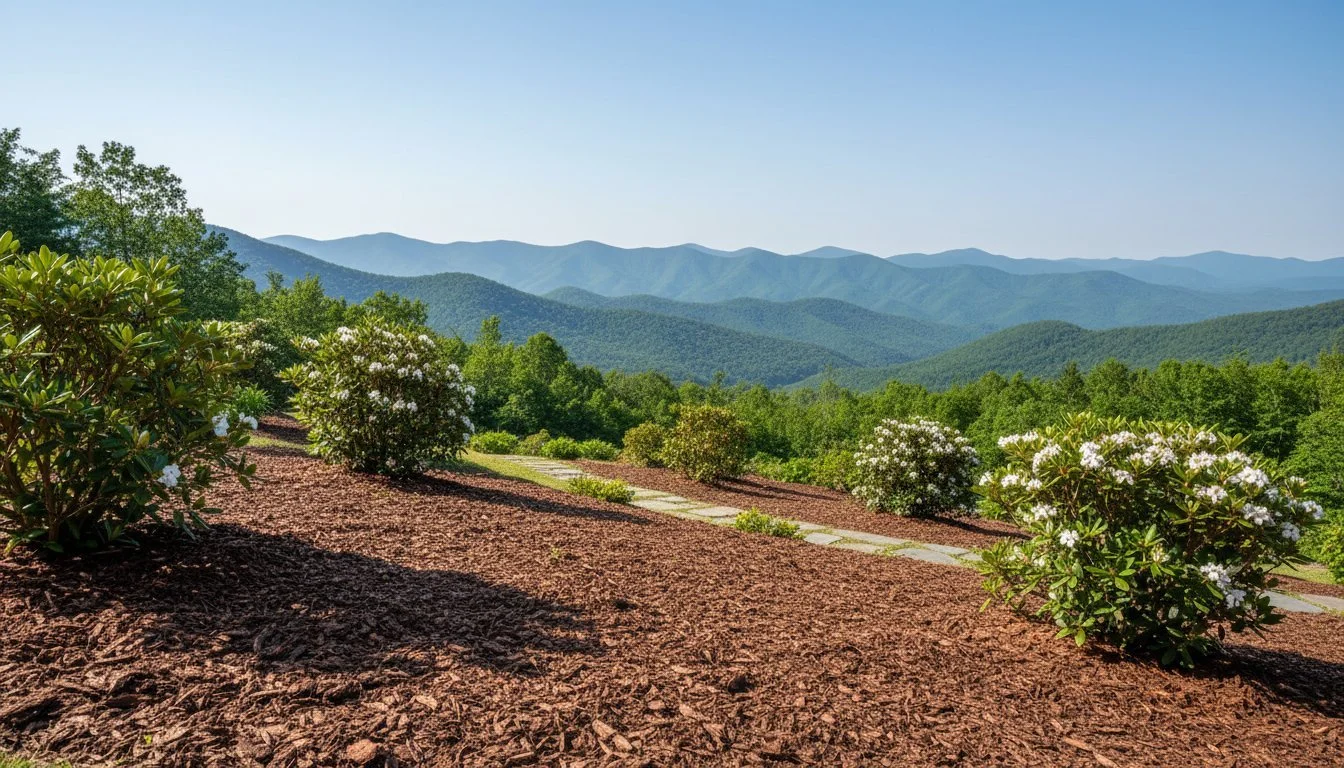
What if your landscaping budget didn't wash down a 20-degree mountain slope during the first heavy rain of the season? In Boone, North Carolina, where wind gusts frequently exceed 40 miles per hour, property owners often find that standard wood chips simply won't stay in place. This is why professional landscapers across Watauga County rely on pine bark mulch as a heavy, durable solution that anchors itself to the terrain while providing essential nutrients to the soil.
You already know that the High Country's unique environment, characterized by acidic soil with pH levels often dropping below 5.0, presents a constant challenge for maintaining healthy rhododendrons and mountain laurels. This guide explains why pine bark mulch is the premier choice for stabilizing windy slopes and supporting the specific needs of acid-loving plants. We'll provide the information you need to select the right grade for your property and explain how our bulk delivery solutions keep your operations efficient, regardless of your mountain location's accessibility.
Key Takeaways
Learn why this material offers a superior lifespan of up to three years, significantly reducing the frequency and cost of seasonal reapplication.
Understand how the natural acidity of pine bark mulch aligns with the specific soil requirements of High Country flora to promote healthier plant growth.
Discover professional techniques for applying and securing material on the steep grades and windy slopes common to Beech Mountain properties.
Evaluate the logistical advantages of bulk delivery solutions for maintaining large mountain acreages efficiently and sustainably.
What is Pine Bark Mulch and Why Does it Excel in Boone?
Maintaining a professional landscape in the High Country requires materials that withstand the unique climate of Watauga County. Pine bark mulch is a primary solution for facility managers and property owners who need durability and aesthetic consistency. This material is a sustainable byproduct of the timber industry, created by processing the outer bark of pine trees into various sizes and textures. Understanding what mulch is and how its specific composition affects soil health is the first step in creating a resilient property border or garden bed.
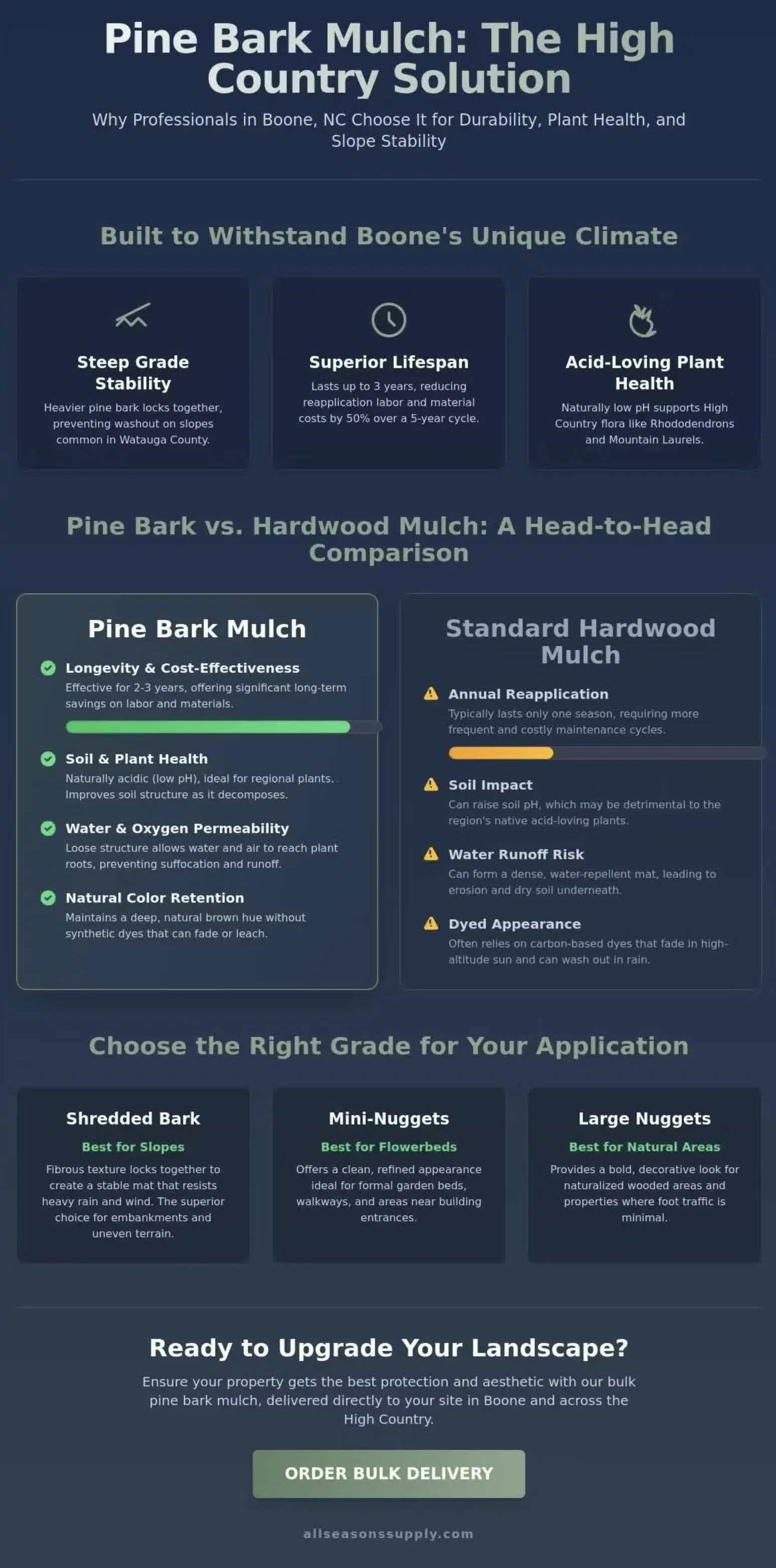
In Boone, the soil profile often leans toward the acidic side, making pine bark an ideal match. It's naturally low pH supports the health of regional staples like rhododendrons, azaleas, and mountain laurels. Unlike lighter materials, pine bark consists of heavier, denser particles that resist displacement during the frequent high-wind events common at elevations above 3,300 feet. It offers a slower decomposition rate than traditional hardwood alternatives. This longevity provides a predictable maintenance schedule and reduces overall labor costs, as the coverage lasts longer before a refresh is needed.
The Anatomy of Pine Bark: Nuggets vs. Shredded
Facility owners choose between three main textures based on specific site requirements. Large nuggets provide a bold, decorative look for naturalized wooded areas with minimal foot traffic. Mini-nuggets offer a more refined appearance for formal flowerbeds near building entrances or signage. For properties with uneven terrain or sloped embankments, shredded pine bark mulch is the superior choice. The jagged, fibrous edges of shredded bark lock together, creating a stable mat that stays in place during heavy Appalachian rainstorms. This mechanical bond prevents washout and keeps mulch off your sidewalks and parking lots.
Environmental Benefits for Watauga County
Boone's weather is famously unpredictable. Pine bark acts as a thermal regulator, insulating root systems against the sudden spring frosts that often occur as late as May 20th. During the dry summer months, a consistent three-inch layer of bark effectively retains soil moisture, reducing the need for supplemental irrigation and lowering water utility costs. As the bark slowly breaks down over several seasons, it integrates organic matter into the soil. This process improves soil structure and nutrient capacity over time, ensuring your landscape remains healthy without the need for excessive chemical interventions.
Pine Bark vs. Hardwood Mulch: The High Country Comparison
Selecting the right ground cover in Watauga County requires an understanding of how materials interact with our unique climate. Pine bark mulch offers distinct advantages in longevity and soil health compared to standard hardwood options. While hardwood is a common choice, its functional lifespan is typically limited to 12 months. In contrast, pine bark remains effective for 2 to 3 years. This extended durability reduces the frequency of reapplication, which is a critical factor for managing large-scale commercial landscapes or steep residential slopes.
Color retention is another area where pine bark excels. It maintains a natural, deep chocolate-brown hue without synthetic dyes. Hardwood mulch often relies on carbon-based colorants that can leach into the soil or fade under Boone’s intense high-altitude sunlight. Beyond aesthetics, the physical structure of the mulch affects plant health. Hardwood fibers often knit together, creating a dense mat that sheds water rather than absorbing it. Pine bark maintains a loose, aerobic environment. This structure ensures that oxygen and moisture reach the root zone, supporting the long-term health of your inventory. For technical specifications on proper depth, see this Mulch Application Guide.
The value of pine bark becomes clear when evaluating long-term maintenance budgets. While the upfront cost per cubic yard is higher than that of hardwood, the three-year lifespan means you'll spend 50% less on labor and materials over a five-year cycle. This efficiency provides operational continuity for property managers who need predictable results without constant intervention.
When to Choose Hardwood Over Pine Bark
Hardwood is a reliable solution for specific applications. It's particularly effective for high-traffic pathways where the interlocking fibers provide a stable walking surface. Modern architectural designs often utilize the uniform look of dyed hardwood to complement sharp building lines. If your facility maintenance plan prioritizes pathway stability or a specific color-matched aesthetic, we offer Bulk Hardwood Mulch Delivery in Boone, NC, to keep your operations running smoothly.
The "Float" Factor: Managing Heavy Rainfall
A frequent concern for property owners in Blowing Rock and Foscoe is the buoyancy of mulch during mountain storms. Large pine bark nuggets can float and wash away during heavy downpours. To mitigate this risk in drainage-prone areas, we recommend shredded pine bark or mini-nuggets. These smaller, textured pieces settle more effectively into the terrain. In flood zones or on steep grades, the shredded variety provides the best reliability because the fibers grip the soil surface. This ensures your landscape investment stays in place, even during the heavy rain cycles typical of the Blue Ridge Mountains. We focus on providing the right solutions for every topographic challenge. Visit allseasonssupply.com to coordinate your next delivery.
Supporting High Country Flora: The Acid-Loving Advantage
Boone landscapes demand materials that handle extreme weather and specific acidic soil profiles. Pine bark mulch provides a natural solution for these conditions because its pH level typically falls between 4.0 and 5.0. This acidity matches the requirements of native High Country vegetation, which often struggles in more alkaline environments. Beyond pH balance, this mulch creates a physical barrier that reduces the spread of soil-borne diseases. Fungal spores often splash onto lower leaves during heavy Appalachian rainstorms; a thick layer of bark intercepts these pathogens before they reach the plant.
During the spring thaw in Avery County, where snowmelt can be rapid and heavy, nutrient leaching becomes a significant risk for property owners. The dense structure of pine bark slows water infiltration. This allows the soil to absorb moisture at a manageable rate while keeping essential minerals near the root zone. Research from the University of Missouri Extension highlights the benefits of mulching for maintaining consistent soil temperatures and moisture levels, which is critical for mountain survival.
Perfect Pairings: Rhododendrons, Azaleas, and Blueberries
These species are iconic to the Blue Ridge landscape and require acidic environments to process nutrients effectively. When you apply pine bark mulch around these shrubs, you're replicating the native forest conditions they're used to. This ensures the plants don't experience the stress of nutrient lockout, which is common in neutral soils. To achieve the best results with your mountain laurels and azaleas, follow these practical steps:
Apply a 2- to 3-inch layer of mulch around established mountain laurels to protect shallow roots.
Extend the coverage to the drip line to ensure maximum bloom density next season.
Maintain a small gap between the mulch and the plant stem to prevent moisture-related rot.
For more information on selecting the right varieties for your property, consult The Complete Guide to Nursery Plants in Blowing Rock to keep your landscape healthy and vibrant year-round.
Soil Conditioning for Long-Term Health
High Country soil often consists of heavy clay or fragmented rock, which resists root penetration. Soil conditioning is the process of improving soil physical properties to promote root growth. As pine bark decomposes, it creates a "duff" layer similar to a natural forest floor. This organic matter breaks up compacted clay and increases aeration. Over a 24-month period, this process transforms difficult terrain into a fertile medium that supports deeper root systems and better drought resistance. It's a long-term investment in the structural integrity of your land.
Application and Maintenance on Mountain Slopes
Managing a landscape in the High Country requires a strategy that accounts for verticality and variable weather. High winds in Boone frequently reach 40 miles per hour during the spring months, making the timing of your application critical. You should aim to spread your pine bark mulch in late April or early May. This window allows the material to settle before the heaviest summer rainstorms arrive while avoiding the peak gusts of early spring. Proper timing ensures that your investment stays on the ground rather than blowing across the property line.
Calculating Your Bulk Needs
Accurate measurements are the foundation of a successful project. When you calculate square footage on a sloped property in areas like Beech Mountain, you must account for the actual surface area rather than a flat map view. A steep slope can increase your required volume by 15 percent compared to a level lot. Maintaining a consistent 3-inch depth is the standard for pine bark mulch. This depth provides enough weight to resist wind displacement while ensuring the soil remains insulated and moist. To determine your exact requirements, use our How Much Mulch Do I Need? calculator to avoid under-ordering and logistical delays.
Erosion Control Strategies
Stabilizing material on steep grades requires specific mechanical techniques. Large pine bark nuggets are particularly effective on slopes because their size and weight create natural friction. You can implement micro-terracing by placing larger pieces in staggered rows to break the velocity of water runoff during heavy Appalachian downpours. For grades exceeding a 30-degree incline, consider these steps:
Install biodegradable jute netting or landscape fabric to provide a high-friction base layer.
Use natural barriers, such as stones or timber, to create anchor points for the mulch.
Wet the mulch thoroughly immediately after spreading. This process removes air pockets and helps the individual pieces interlock, which increases stability by 25 percent during the first 48 hours.
Maintenance is about efficiency rather than a total overhaul. You don't need to replace your entire inventory every season. High-quality pine bark decomposes slowly, so a simple top-dress of one inch every 12 months is usually sufficient to maintain color and depth. Plan for a full replacement every 36 months to prevent the bottom layers from becoming overly compacted. This consistent schedule ensures your facility grounds remain professional and well-protected throughout the year. If you're ready to secure your landscape for the coming season, order your bulk mulch solutions today.
Bulk Pine Bark Mulch Delivery in Boone and Beyond
Bulk delivery is the most practical solution for maintaining the expansive acreage typical of High Country estates. One cubic yard of pine bark mulch covers 324 square feet at a one-inch depth. To cover the same area with retail products, a property manager would need to purchase, transport, and open 13.5 individual 2-cubic-foot bags. On a project requiring 30 yards of material, bulk delivery prevents 405 plastic bags from entering the waste stream. This reduction in plastic waste aligns with the conservation-minded values of Watauga County residents while significantly lowering the labor hours required for installation.
Managing large landscapes requires efficient logistics and reliable supply chains. All Seasons Supply operates as a steady partner for residential and commercial clients, ensuring that bulk materials are moved from our facility to your site without the overhead of retail markups. We prioritize a streamlined process that emphasizes operational continuity, allowing your landscaping crew to focus on installation rather than material acquisition. It's a method that values your time and your property's environmental health.
Preparing your site is essential for a successful delivery. Mountain driveways often feature tight turns and steep inclines that require professional navigation. We recommend a minimum overhead clearance of 14 feet to avoid contact with power lines or tree limbs. If your driveway is gravel, ensure it is compacted to support a fully loaded truck weighing up to 30,000 pounds. Clear communication regarding underground utilities or septic drain fields is vital to protect your infrastructure during the drop-off process. Marking your desired drop zone with a tarp or stakes helps our drivers place the pine bark mulch exactly where it's needed.
Our Service Area: Serving the High Country
We operate as an industrious partner for clients in Boone, Blowing Rock, Banner Elk, and Foscoe. Our scheduling process is designed for reliability, ensuring your materials arrive exactly when your crew is ready to work. We prioritize clear placement instructions to keep your site organized and functional. You can find detailed ordering information at Bulk Mulch Delivery in Boone, NC.
The All Seasons Supply Difference
With 50 years of combined experience in mountain landscaping, All Seasons Supply provides more than just raw materials. We offer complete solutions that include locally grown nursery stock specifically adapted to the High Country climate. Our pine bark mulch acts as the finishing touch to these professional installations, providing long-term moisture retention and weed suppression. We invite you to contact us for a consultation regarding your 2026 landscaping project to ensure your inventory is secured and your site remains productive year-round.
Secure Your High Country Landscape Investment
Protecting your mountain landscape requires materials that withstand heavy High Country rainfall and steep grades. Choosing pine bark mulch provides a stable, acid-rich environment that supports local species like azaleas and rhododendrons while resisting the rapid decomposition common in hardwood alternatives. This durability makes it a practical solution for properties where maintenance efficiency is a priority.
All Seasons Supply brings over 50 years of combined industry experience to every project from our locally owned facility in Foscoe, North Carolina. We recognize that mountain logistics are often complex. Our team utilizes specialized delivery equipment designed specifically to navigate the narrow roads and difficult terrain unique to Boone and the surrounding area. This ensures your bulk supply arrives exactly where it's needed, maintaining the operational continuity of your property management plan. We're here to serve as your dependable partner in building a resilient, professional outdoor space.
Order Your Bulk Pine Bark Mulch Today to ensure your landscape remains vibrant and protected throughout the changing seasons.
Frequently Asked Questions
Is pine bark mulch safe for pets and local wildlife in the High Country?
Pine bark is safe for pets and local wildlife because it's a 100 percent natural byproduct of the timber industry. Unlike some dyed mulches or cocoa bean hulls, it doesn't contain theobromine or synthetic chemicals that cause distress in animals. It provides a stable ground cover that protects the soil without introducing toxins into the High Country ecosystem, ensuring a reliable environment for all creatures.
Does pine bark mulch attract termites or other pests to my Boone home?
Pine bark mulch doesn't inherently attract termites or pests to your property. While any organic material provides moisture, research from the University of Florida shows termites prefer solid wood over bark nuggets. To maintain a secure perimeter, keep mulch layers 6 inches away from your home's foundation. This practice ensures your structural integrity remains intact while benefiting from the mulch's protective qualities.
How often should I refresh pine bark mulch on a steep slope?
You should refresh pine bark mulch every 12 to 24 months on the steep terrain typical of Boone. Large nuggets are less likely to wash away than fine shreds during heavy Appalachian rainfalls. If your slope exceeds a 30-degree incline, check the coverage after the spring thaw to ensure the soil remains protected. Maintaining a consistent 3-inch depth provides the best erosion control for your landscape.
Can I use pine bark mulch in my vegetable garden?
You can use bark in your vegetable garden to regulate soil temperature and moisture. It's particularly effective for acid-loving crops such as tomatoes and peppers. As it breaks down, it contributes organic matter that helps maintain a stable soil environment. This solution prevents soil splashing, which reduces the spread of soil-borne diseases to your plants by 50 percent compared to bare earth.
How much does bulk pine bark mulch delivery cost in Watauga County?
Bulk delivery costs in Watauga County depend on your specific location and the total cubic yardage ordered. Standard delivery fees account for the fuel and labor required to navigate mountain roads. Contact our team for a precise quote tailored to your project's logistics. We prioritize efficient routing to provide the most reliable service for our professional and residential clients.
What is the best time of year to apply mulch in the NC mountains?
The best time to apply mulch in the NC mountains is during the early spring, specifically between late March and mid-April. Applying it before the summer heat helps retain moisture during the drier months. A secondary application in late October protects root systems from the freeze-thaw cycles common in the High Country. This seasonal approach ensures your landscape remains resilient year-round.
Does pine bark mulch smell as strongly as hardwood or cedar?
Bark has a subtle, earthy aroma that is less pungent than the sharp scent of cedar or the sour smell of decomposing hardwood. It provides a clean, natural fragrance that dissipates quickly after application. This makes it a preferred choice for facility managers looking to enhance aesthetics without overwhelming visitors with strong odors. It offers a professional finish that complements the surrounding mountain environment.
Can I mix pine bark with pine straw for a more natural look?
You can certainly mix bark with pine straw to create a layered, natural aesthetic. Professional crews in Watauga County often use bark as a base layer for moisture retention and top it with straw for a traditional High Country look. This combination provides a 2-layer defense against weeds and erosion. It's a practical solution that leverages the strengths of both materials to ensure long-term soil health.