
The Ultimate Fall Garden Prep Checklist for Boone and the High Country
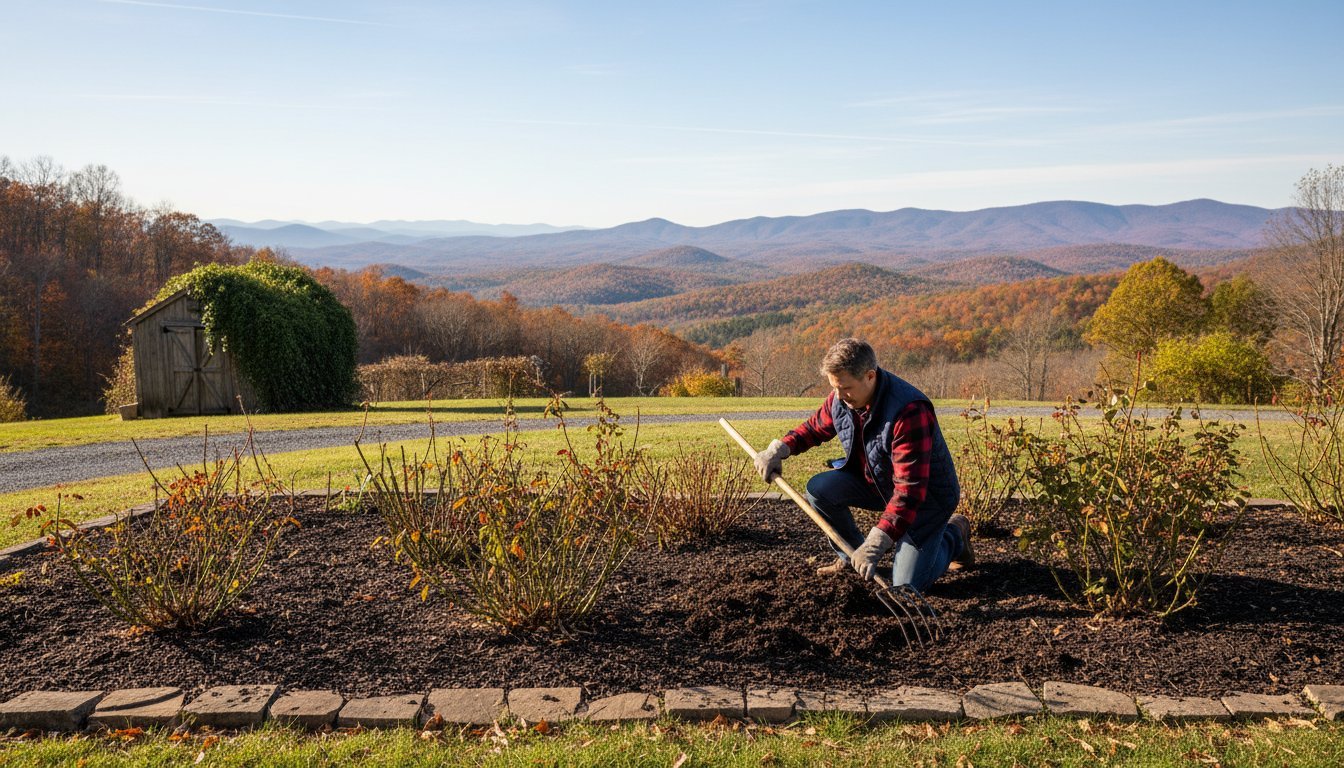
Last November, a homeowner in Watauga County watched as three years of landscaping progress vanished when a sudden 20-degree drop in temperature triggered severe frost heave in their new garden beds. This isn't an isolated incident; Watauga and Avery counties often experience over 50 freeze-thaw cycles in a single winter season, which can be devastating for unprotected perennials. Effective fall garden prep is the only way to ensure your landscape survives the harsh High Country transition and remains a healthy, professional-grade asset.
We understand that maintaining a mountain property is physically demanding, especially when you're hauling 50-pound bags of mulch up a 15-percent grade driveway. You likely already know that the heavy rainfall from our typical mountain summers, which often exceeds 50 inches annually, leaves your soil depleted of essential nutrients by October. This guide provides a comprehensive, integrated winterization plan tailored to our unique climate. You'll gain a reliable strategy to restore soil health for the 2026 growing season and to protect your expensive shrubs from the elements. We'll outline the essential steps of soil testing, strategic mulching, and professional-grade plant protection to ensure your outdoor operations run smoothly until spring.
Key Takeaways
Understand the critical timing window for High Country winterization to protect your landscape before the ground officially freezes.
Master the essential steps of fall garden prep by fortifying your soil with organic matter and applying insulating mulch to withstand extreme temperature cycles.
Learn how to safeguard your investment by properly hardening off new plantings and protecting vulnerable trees from heavy mountain snow loads.
Establish a reliable maintenance schedule for bulk supply deliveries and final weeding to ensure your property is prepared for a productive spring.
High Country Fall Garden Prep: Why Timing Matters in the Mountains
Success in mountain landscaping depends on understanding the narrow window between the first light frost and the final ground freeze. In Boone, this fall garden prep period is significantly shorter than in lower-lying regions of North Carolina. While Piedmont gardeners might work well into December, High Country professionals must complete their winterization by early November to avoid frozen soil. Proper preparation protects your facility's aesthetic and financial investment. It prevents common issues like root rot from poor drainage and frost heave; this occurs when repeated freezing and thawing cycles push perennials out of the soil.
The 2026 climate outlook for Watauga County indicates a 15% increase in early-season temperature volatility. Forecasters predict an abrupt shift from mild afternoons to sustained overnight freezes. This makes early intervention essential. By applying essential gardening principles to your seasonal transition, you ensure that soil health remains stable throughout the dormant months. Our team focuses on providing the inventory and expertise needed to manage these logistical challenges before the first snowfall.
Understanding the High Country Frost Schedule
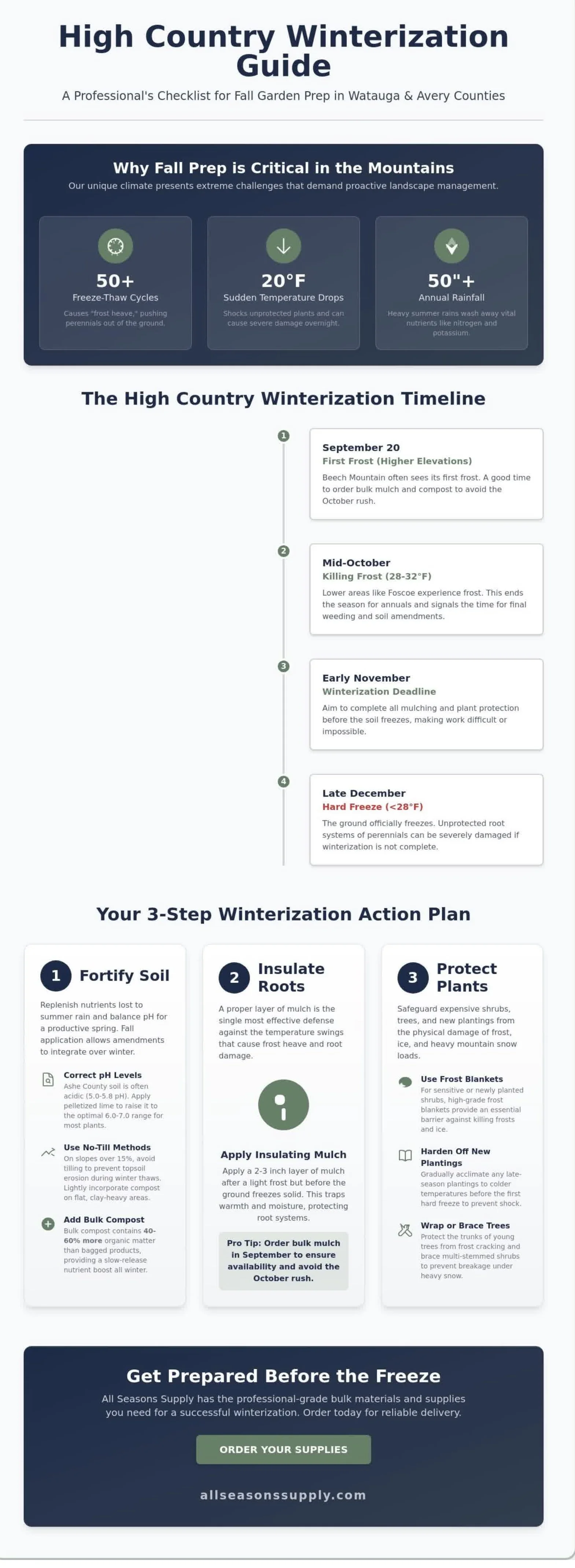
Elevation dictates your timeline. Beech Mountain often experiences its first frost by September 20; however, lower areas like Foscoe may stay frost-free until mid-October. You must distinguish between a killing frost and a hard freeze. A killing frost occurs when temperatures dip between 28 and 32 degrees Fahrenheit, ending the season for annuals. A hard freeze happens when temperatures stay below 28 degrees for several hours. This can damage the root systems of unprotected perennials. Use local weather stations to track micro-climate shifts specific to your property's elevation.
Inventory Check: Tools and Supplies Needed Before the Snow
Reliability starts with having the right equipment on hand before the supply chain slows down. Your fall garden prep inventory should include specialized heavy-duty rakes for wet leaf removal, digital soil testers to check pH levels before dormancy, and high-grade frost blankets. We recommend ordering bulk mulch in September to avoid the October rush. This layer provides the thermal insulation necessary for root protection. For detailed instructions on the application, refer to our guide on protecting plants from frost to ensure your facility remains professional and well-maintained through the winter.
Soil Fortification: Amending Your Beds for a Productive 2026
High Country summers often see intense rainfall. In 2024, many areas of Watauga County recorded over 50 inches of annual precipitation. This volume washes away vital nitrogen and potassium from your garden beds. Proper fall garden prep starts with replacing these lost minerals before the ground freezes in late December. Waiting until April forces you to work with cold, saturated earth, which often leads to soil compaction. Adding organic matter now is superior to spring applications. Cold weather doesn't stop decomposition; it simply regulates the pace. Soil microbes work through the winter months to integrate amendments into the soil structure. Experts at fall garden care emphasize that adding leaves and compost in October provides a slow-release nutrient boost for the next growing cycle. Soils in Ashe County frequently test at a pH of 5.0 to 5.8. Most vegetable crops require a pH range of 6.0 to 7.0 to thrive. Applying pelletized lime in the fall gives the material six months to react with the soil chemistry. This proactive approach ensures your 2026 planting season begins with balanced, nutrient-available ground.
To Till or Not to Till: Managing Mountain Soil
Slopes in Boone make erosion a primary concern for every gardener. Use no-till methods on slopes over 15 percent to keep your topsoil from washing into the valley during winter thaws. If you manage heavy clay areas, a light turn of the top 3 inches helps incorporate compost without destroying the beneficial fungal networks. This method maintains soil integrity while improving drainage. It's a reliable way to handle the stubborn red clay common in Western North Carolina.
The Role of Bulk Compost and Topsoil
Bulk compost typically contains 40 to 60 percent more organic matter than standard bagged "garden soil" found in retail chains. It provides a dense concentration of nutrients that synthetic fertilizers can't match. Fall soil amending is the single most effective way to ensure a 2026 garden thrives. Use high-quality topsoil to level depressions in your lawn now. This allows grass to establish deep roots before winter dormancy begins. You can find a complete inventory of soil solutions.
Winterizing with Mulch: Protecting Roots Against Deep Freezes
Proper fall garden prep in the High Country requires more than just clearing debris. Mulch acts as a vital thermal blanket for your landscape. It regulates soil temperatures during the volatile freeze-thaw cycles common in Boone and surrounding areas. Without this protection, the soil expands and contracts rapidly. This process, known as frost heaving, can push perennial root balls out of the ground and expose them to sub-zero temperatures. This exposure often leads to root death before spring arrives.
A consistent 3-4 inch layer of mulch is the standard for protecting High Country perennials. This specific depth provides enough insulation to keep the ground frozen once the deep freeze sets in. It prevents the premature thawing that damages plant tissue during brief warm spells in January or February. Beyond protection, a fresh application of mulch provides a clean, professional appearance for your property before the holiday season begins. It offers a polished look that lasts until the spring thaw.
For properties located on windy ridges in Banner Elk or Blowing Rock, material choice is critical. Lightweight mulches often blow away during winter storms. Shredded hardwood is preferred because its fibers interlock. This creates a heavy mat that resists high winds and stays in place throughout the season.
Choosing the Right Mulch for Winter Insulation
Hardwood mulch offers superior durability compared to pine bark nuggets, which tend to float or blow away during heavy mountain rains. Designer Brown or Black mulches are particularly effective for winterizing. These darker pigments absorb solar radiation during the day, which helps maintain a stable, slightly warmer soil temperature. To ensure you have enough material for your project, refer to our bulk mulch delivery in Boone, NC, guide for accurate quantity estimates based on your specific square footage.
Proper Application Techniques for Sloped Landscapes
Managing mulch on the steep slopes of the High Country requires specific techniques to prevent washouts during the spring thaw. We recommend using a double-shredded product for hillsides because it grips the soil better than smoother varieties. When mulching trees, always use the "donut" method. Keep the material 3 inches away from the trunk flare to prevent moisture buildup and winter rot. This also discourages rodents from nesting against the bark. For large-scale High Country properties, calculate your needs by knowing that 1 cubic yard of mulch covers 108 square feet at a 3-inch depth. This level of precision ensures operational efficiency and maintains your budget.
Protecting Your Investment: Trees, Shrubs, and Hardscapes
Protecting your landscape investment requires more than a simple cleanup. In Boone, the transition from fall garden prep to full winter dormancy happens quickly. Young nursery trees are particularly vulnerable during this window. A single 8-inch snowfall can snap unsupported leaders or split trunks that haven't established a deep root system. You should harden off any late summer plantings by tapering off nitrogen-rich fertilizers by August 15. This practice encourages the plant to focus on root development rather than new, tender foliage that will succumb to the first hard frost.
While some advice suggests leaving leaves for pollinators, this often backfires in the High Country. Thick layers of maple or oak leaves, when compressed by heavy snow, create an anaerobic environment. This layer smothers mountain grass and promotes snow mold in 65 percent of untreated lawns. We recommend mulching leaves directly into the soil with a mower or removing them to a compost pile to maintain turf health. Additionally, roadside beds face challenges posed by chemical de-icers. Salt spray from plows can reach up to 15 feet from the curb. This increases soil salinity and dehydrates roots, making burlap screens essential for roadside survival.
Sheltering High Country Hardy Shrubs and Trees
Winter burn occurs when 30 mph winds pull moisture from evergreen needles faster than frozen roots can replace it. You can prevent this by wrapping sensitive species, such as Boxwoods or Yews, in breathable burlap. For heavy snow loads, use 2-inch wooden stakes and heavy-duty twine to support horizontal branches. This structural reinforcement prevents the splaying and breakage common in 10-inch wet snow events. If you're still planning your layout, consult our Blowing Rock nursery plants guide for species specifically bred for Zone 6b conditions.
Winterizing Hardscapes: Stone and Gravel Maintenance
Hardscape requires specific attention before the first freeze-thaw cycle begins. Pea gravel migration is a common issue during snow removal. Installing 4-inch metal or poly edging keeps stone in place when shovels or blowers are in use. You should also inspect flagstone walkways for stability. If stones have shifted more than 0.5 inches, reset them now. This prevents trip hazards and prevents water from seeping under the stone, which can cause heaving when temperatures drop below 32 degrees. Finally, clear 100 percent of debris from the river rock drainage channels. Clean swales are the only way to manage the 50 gallons per minute of runoff common during the March snowmelt.
Secure your facility's exterior with professional-grade maintenance tools and supplies from All Seasons Supply.
The All Seasons Supply Fall Checklist: Your Local Resource
Completing your fall garden prep requires a methodical approach to ensure your landscape survives the harsh High Country winter. Our team has developed a streamlined five-step process to help you transition your property efficiently. Following these steps protects your investment and reduces the workload required when the ground thaws in the spring.
Step 1: Conduct a final weed-out. Remove invasive species before they drop seeds that will overwinter in the soil. Eliminating one mature weed now prevents hundreds of seedlings from emerging in May.
Step 2: Schedule bulk delivery. Arrange for soil and mulch shipments before the first significant snowfall, which often occurs in Boone by late October. Having materials on-site allows you to work during the final weeks of manageable weather.
Step 3: Manage perennials. Cut back plants like hostas or daylilies that turn to mush after a hard frost. Leave sturdy stalks, such as coneflowers or sunflowers, to provide essential winter interest and food for local bird populations.
Step 4: Winterize irrigation. Drain all hoses and irrigation lines. The freeze-thaw cycles in Watauga County are frequent and severe; trapped water will expand and cause pipes to burst, leading to expensive repairs.
Step 5: Apply final ground cover. Spread a fresh layer of pine straw or shredded hardwood mulch. This insulating blanket regulates soil temperature and prevents frost heaving, which can eject new plantings from the ground.
Bulk Delivery Solutions for Watauga and Avery Counties
We provide reliable delivery services across a wide radius, including Boone, Blowing Rock, and Banner Elk. With 50 years of experience operating in the High Country, our drivers understand how to navigate steep mountain grades and narrow gravel driveways that often challenge standard delivery trucks. Choosing a single bulk delivery is a highly efficient alternative to manual labor. One three-cubic-yard delivery replaces approximately 40 to 50 individual bags of mulch, saving you hours of transit time and eliminating significant plastic waste.
Consulting with the Experts in Foscoe
Our nursery in Foscoe serves as a hub for local horticultural knowledge. We invite you to visit us for a professional health check of your plant inventory. Our staff provides technical guidance for DIY homeowners and comprehensive support for commercial contractors managing large-scale estates. We focus on practical solutions that ensure long-term property value and operational continuity. Contact us today to schedule your fall mulch delivery!
Secure Your High Country Landscape for the Seasons Ahead
Successful fall garden prep in the High Country requires a proactive approach to soil health and root protection. By amending your beds now, you're setting the foundation for a productive 2026 growing season. Our team brings 50+ years of combined High Country landscaping experience to every project. This expertise ensures your trees and shrubs withstand the deep freezes common in our region. We prioritize mountain-hardy nursery stock that's specifically grown to thrive in our unique climate. All Seasons Supply provides the tools and materials you need to complete your seasonal checklist efficiently. We offer local delivery to Boone, Blowing Rock, and Banner Elk, making it easier to manage your property maintenance without logistical delays. Trust our dependable solutions to protect your landscape investment through the harshest winter months. Our team is ready to support your long-term property goals with reliable service and high-quality inventory.
Order Your Bulk Fall Mulch and Soil for Boone Delivery
Preparing your property today ensures a vibrant and healthy landscape when the spring thaw arrives.
Frequently Asked Questions
When should I start fall garden prep in Boone, NC?
You should begin your fall garden prep in mid-September to stay ahead of the first frost, which typically occurs by October 10 in Boone. Starting 4 weeks before the ground freezes allows roots to settle and soil amendments to integrate. This timeline ensures you complete essential tasks, such as aerating and seeding, before temperatures consistently drop below 40 degrees Fahrenheit. Our team provides the materials needed to meet these critical deadlines.
Is it better to mulch in the spring or the fall in the High Country?
Applying mulch in the fall is superior for plant health because it stabilizes soil temperatures during the High Country's freeze-thaw cycles. While spring mulching helps with weed suppression, a fall application provides a critical thermal layer for root systems. We recommend a fresh layer before the first hard freeze to maintain a consistent environment for your perennials throughout the winter months. This approach ensures long-term landscape reliability.
Can I still plant nursery trees in October in Blowing Rock?
You can successfully plant nursery trees in Blowing Rock throughout October as long as the ground remains workable. Deciduous trees enter dormancy during this period, reducing transplant shock and allowing roots to develop before the deep freeze in January. Ensure you provide at least 5 gallons of water per inch of trunk diameter weekly until the first significant snowfall to support establishment. This strategy builds a resilient foundation for the landscape.
How much mulch do I need to protect my perennials from frost heave?
Maintain a mulch depth of 3 to 4 inches to effectively prevent frost heave in your garden beds. This specific thickness provides enough insulation to keep the soil at a stable temperature, preventing the expansion and contraction that pushes shallow-rooted plants out of the ground. Avoid piling mulch directly against stems or trunks; keep a 2-inch gap to prevent rot and pest issues. Proper application is a simple solution for winter protection.
Do I need to remove all the fallen leaves from my garden beds?
You don't need to remove every leaf, but you should clear or shred them if they form a mat more than 2 inches thick. Thick layers of whole leaves can block oxygen and trap excessive moisture, leading to fungal diseases in 15 percent of typical landscape plants. Shredded leaves make excellent organic mulch, returning nutrients to the soil as they decompose over the winter. This practice supports a healthy ecosystem.
What is the best way to protect my shrubs from heavy snow damage?
Protect upright shrubs like arborvitae by wrapping them with burlap or using heavy-duty twine to secure branches together. High Country winters often bring snow loads exceeding 10 pounds per square foot, which can snap brittle limbs. For smaller foundation plants, wooden A-frame shelters provide a reliable solution to deflect snow falling from rooflines, ensuring your landscape remains intact until spring. These measures prevent costly replacements and maintain facility aesthetics.
How do I know if my soil needs compost or topsoil this fall?
Use compost if your goal is to improve nutrient levels and soil structure, but choose topsoil to fill low spots or change the grade. A soil test showing organic matter below 5 percent indicates a need for a 2-inch layer of compost. Integrating these materials during your fall garden prep ensures the biology has 5 months to stabilize before the spring growing season begins. We offer both solutions to meet your specific soil requirements.
Does All Seasons Supply deliver bulk materials to Beech Mountain in the fall?
All Seasons Supply delivers bulk mulch, compost, and topsoil to Beech Mountain throughout the autumn season. Our fleet is equipped to handle the steep terrain and 5,506-foot elevation challenges common in the area. We prioritize efficient scheduling to ensure your materials arrive before the first major winter weather event, supporting your facility maintenance goals with professional consistency. Our team remains a dedicated partner for all your bulk material needs.