The Complete Guide to Pea Gravel and Drainage Rock in Boone, NC
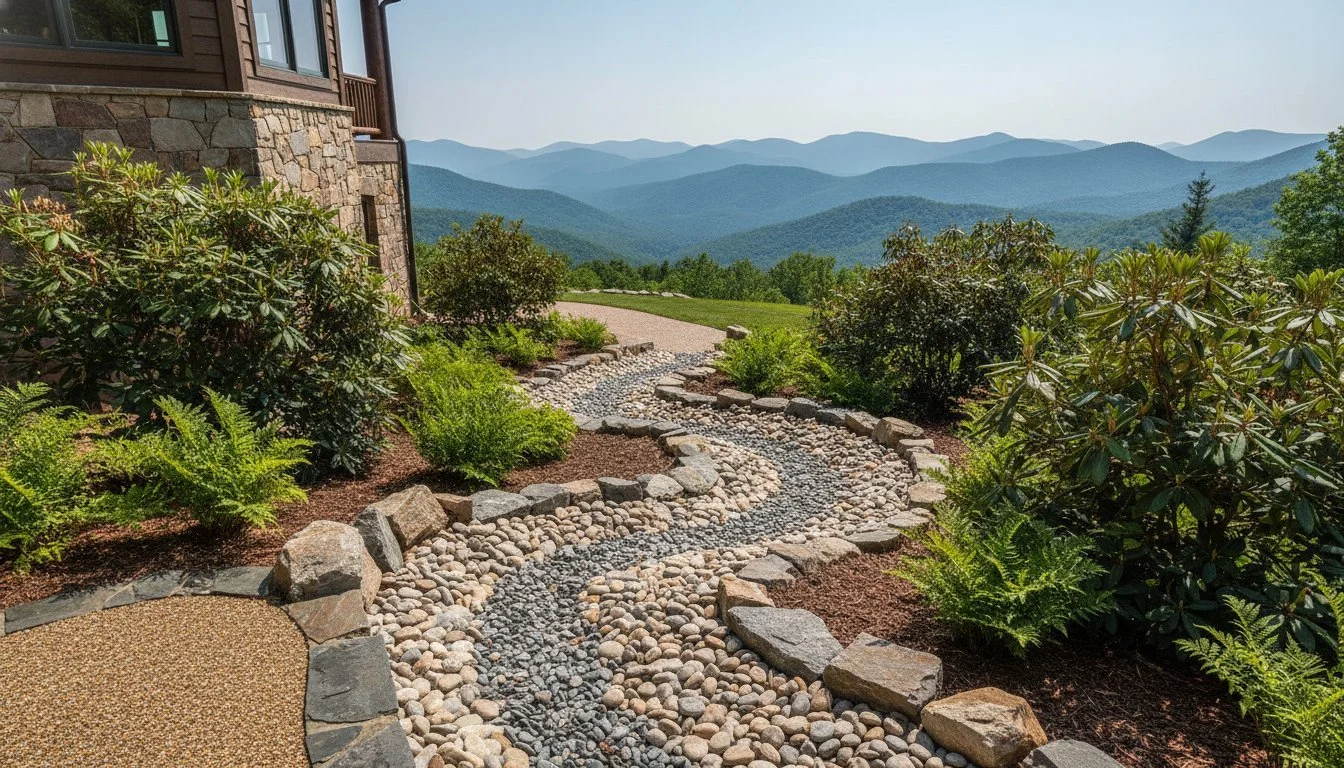
After a heavy afternoon thunderstorm in Boone, you step outside only to find a new river carving a path through your mulch and pooling against your foundation. It's a common frustration for homeowners across the High Country. Our steep slopes and intense rainfall make managing water a constant challenge, and finding the right pea gravel drainage solutions in Boone, NC is the first step toward a permanent fix. You deserve a yard that looks beautiful without turning into a muddy mess every time the clouds roll in.
We've spent 50 years helping neighbors navigate these mountain conditions, and we're here to help you master your runoff. You'll learn how to choose the perfect drainage stone to protect your property and create a landscape that functions as well as it looks. We'll walk through the key differences between decorative pea gravel and functional drainage rock so that you can choose the right materials for a dry, stable, and attractive yard.
Key Takeaways
Understand how Boone’s steep slopes and heavy mountain rainfall impact your property and why specific drainage stones are necessary for foundation protection.
Learn to identify the best materials for your project, including the specific benefits of using pea gravel drainage Boone NC solutions for permeable surfaces.
Compare the stability of angular ABC stone against the superior water flow of rounded river rock to choose the right fit for your specific soil conditions.
Follow a simple two-step process to map your yard's water flow and select the most effective drainage method, such as a French drain or a dry creek bed.
Discover the practical advantages of bulk stone delivery for High Country projects, ensuring you have the right volume of material for a permanent solution.
Why Drainage Rock is Essential for Boone Landscapes
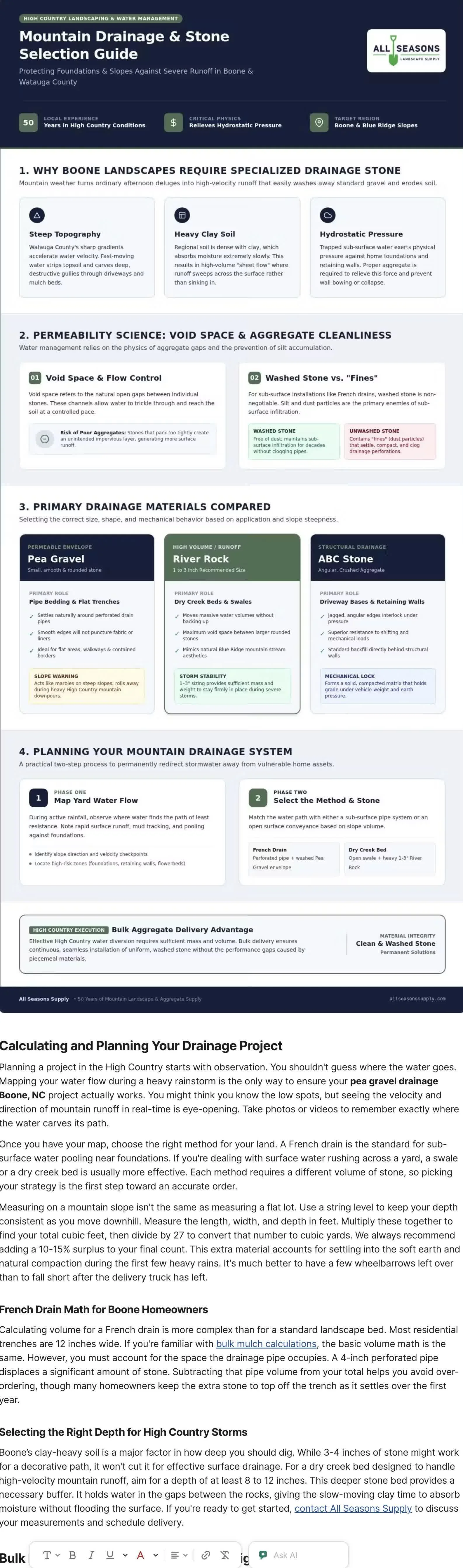
Boone weather is unpredictable. When a storm hits the Blue Ridge, the water volume can be overwhelming. Without the right aggregate, that water finds the path of least resistance. This often leads straight toward your home's foundation. Standard gravel often washes away in these mountain deluges. Effective pea gravel drainage strategies in Boone, NC, rely on understanding how our local geography interacts with water.
Watauga County is famous for its steep terrain. While these slopes offer beautiful views, they also turn gentle rain into high-velocity runoff. This speed strips away topsoil and carves deep gullies in driveways. Using rock isn't just about looks. It's about physics. Large stone or heavy aggregate manages hydrostatic pressure, which is the force water exerts against structures like retaining walls. Without proper drainage rock to relieve this pressure, walls can bow or even collapse over time.
Managing Mountain Runoff and Soil Erosion
Most soil in the High Country is heavy with clay. Clay absorbs water slowly. This leads to "sheet flow," where water moves across the surface rather than sinking in. We use stone as a natural check dam. By placing material like Pea Gravel or River Rock strategically, you can slow down the water's velocity. This protects your flowerbeds from seasonal washouts. It also keeps your driveway gravel from ending up at the bottom of the hill after a summer storm.
The Science of Rock Permeability
Successful water management follows basic drainage system principles that prioritize permeability. In the trade, we talk about "void space." This refers to the gaps between individual stones. These gaps allow water to trickle through and reach the soil at a controlled pace. If you use the wrong material, like a rock that packs too tightly, you've essentially created a paved surface that encourages more runoff.
Silt is the enemy of any long-term system. Over time, fine particles can clog these void spaces. This is why choosing the right size and shape is vital. Clean, washed stone helps keep subsurface infiltration high. Whether you're installing a French drain or a simple perimeter border, the goal is to keep water moving through the rock, not sitting on top of it. It's a permanent solution that respects the natural landscape while protecting your investment.
Best Types of Rock for Drainage Systems
Drainage rock isn't just any stone you find in a quarry. It's a specific type of permeable aggregate used to direct water away from your home's foundation and yard. At All Seasons Supply, we provide materials built to handle the unique pressures of the High Country. Our inventory includes Pea Gravel, River Rock, and ABC Stone, each serving a distinct role in your water management plan. Size selection dictates performance. A stone that's too small might wash away, while one that's too large might not filter debris effectively.
One critical, often-overlooked factor is whether the stone is washed. For any sub-surface project, like a French drain, washed stone is the only option. Unwashed stone contains "fines," which are tiny dust particles that eventually settle and clog your pipes. Starting with clean material ensures your pea gravel drainage system in Boone, NC stays functional for decades, not just a few seasons. If you're unsure which volume you need, you can check our bulk options to find the right fit for your property.
Pea Gravel: The Versatile Filter
Pea gravel is a top choice for pipe bedding and small trenches. Its small, rounded shape lets it settle naturally around perforated pipes, creating a stable but permeable envelope. Because the edges are smooth, it won't puncture landscape fabric or thin drainage liners. It's excellent for flat areas, but be mindful on steep slopes. Its rounded nature means it can act like marbles, potentially rolling out of place during a heavy Boone downpour. It works best in contained borders or level walkways.
River Rock: Aesthetic and High-Flow
When you need to move a massive volume of water, River Rock is the most effective tool. These larger rounded stones are ideal for creating dry creek beds and decorative swales. They provide maximum void space, allowing water to rush through without backing up. For most mountain runoff scenarios, we recommend the 1-3 inch size. This provides enough weight to stay put during a storm while maintaining a beautiful, natural look that mimics our local mountain streams.
ABC Stone and Screenings
For structural drainage, angular stone is often superior to rounded varieties. ABC Stone features jagged edges that interlock under pressure. This makes it the standard choice for driveway bases or the area directly behind a retaining wall. Screenings also help fine-tune water flow paths, especially when you need a tighter pack that still lets some moisture seep through. Choosing the right landscape stone in Vilas, NC means balancing these structural needs with your land's natural flow.
Pea Gravel vs. River Rock vs. Crushed Stone
Choosing between rounded and angular stone is the most critical decision for any pea gravel drainage Boone, NC project. This choice defines the balance between stability and flow. In our mountain environment, you're often fighting two battles at once: keeping the ground from moving and keeping the water from pooling. Understanding the mechanical properties of these stones helps you decide which one wins for your specific yard layout.
The primary difference lies in how the stones interact with each other. Rounded stones, like pea gravel and river rock, have smooth surfaces that don't interlock. This creates large gaps, or void spaces, that allow water to move at high velocities. Crushed stone is the opposite. Its jagged, angular edges lock together under pressure. While this creates a rock-solid surface, it naturally slows the rate of infiltration. If you're managing a flat area with heavy runoff, flow rate comes first. If you're working on a slope, stability takes the lead.
The Case for Rounded Stone
Rounded stones are the undisputed kings of high-volume water management. Because they don't pack tightly, they provide maximum void space for rapid water movement. This makes them ideal for sub-surface systems like French drains or perimeter foundations. Another major benefit is their clog resistance. Fine silt and mountain clay have a harder time "sticking" to smooth surfaces and filling the gaps between rounded rocks. Over a decade of Boone winters and springs, a system built with rounded river rock or pea gravel is much more likely to remain clear and functional than one built with crushed aggregate.
The Case for Angular Crushed Aggregate
Sometimes flow isn't your only concern. On steep embankments or high-traffic driveways, rounded stones can act like marbles, rolling downhill or shifting under tires. This is where angular stone shines. The mechanical interlocking of crushed aggregate provides a stable base that stays put even during a deluge. It's the standard choice for structural support behind retaining walls when you need material that holds its shape while still letting moisture escape. As a trusted landscape stone supplier in Vilas, NC, we often recommend angular stone for projects where weight and friction are necessary to prevent erosion. It’s about finding that sweet spot where your drainage system is permeable enough to work but stable enough to last.
Calculating and Planning Your Drainage Project
Planning a project in the High Country starts with observation. You shouldn't guess where the water goes. Mapping your water flow during a heavy rainstorm is the only way to ensure your pea gravel drainage Boone, NC project actually works. You might think you know the low spots, but seeing the velocity and direction of mountain runoff in real-time is eye-opening. Take photos or videos to remember exactly where the water carves its path.
Once you have your map, choose the right method for your land. A French drain is the standard for sub-surface water pooling near foundations. If you're dealing with surface water rushing across a yard, a swale or a dry creek bed is usually more effective. Each method requires a different volume of stone, so picking your strategy is the first step toward an accurate order.
Measuring on a mountain slope isn't the same as measuring a flat lot. Use a string level to keep your depth consistent as you move downhill. Measure the length, width, and depth in feet. Multiply these together to find your total cubic feet, then divide by 27 to convert that number to cubic yards. We always recommend adding a 10-15% surplus to your final count. This extra material accounts for settling into the soft earth and natural compaction during the first few heavy rains. It's much better to have a few wheelbarrows left over than to fall short after the delivery truck has left.
French Drain Math for Boone Homeowners
Calculating volume for a French drain is more complex than for a standard landscape bed. Most residential trenches are 12 inches wide. If you're familiar with bulk mulch calculations, the basic volume math is the same. However, you must account for the space the drainage pipe occupies. A 4-inch perforated pipe displaces a significant amount of stone. Subtracting that pipe volume from your total helps you avoid over-ordering, though many homeowners keep the extra stone to top off the trench as it settles over the first year.
Selecting the Right Depth for High Country Storms
Boone’s clay-heavy soil is a major factor in how deep you should dig. While 3-4 inches of stone might work for a decorative path, it won't cut it for effective surface drainage. For a dry creek bed designed to handle high-velocity mountain runoff, aim for a depth of at least 8 to 12 inches. This deeper stone bed provides a necessary buffer. It holds water in the gaps between the rocks, giving the slow-moving clay time to absorb moisture without flooding the surface. If you're ready to get started, contact All Seasons Supply to discuss your measurements and schedule delivery.
Bulk Delivery and Expert Advice in the High Country
When you're tackling a major project, the last thing you want is a pile of plastic bags cluttering your yard. Bulk delivery is standard for any serious pea gravel drainage installation in Boone, NC. It's significantly more cost-effective than buying by the bag, and it saves you from the back-breaking labor of loading and unloading a personal vehicle. We've spent 50 years helping neighbors in the High Country choose the right materials. We know that delivering the right volume directly to your site is key to a smooth project.
Preparing your property for a delivery is simple but important. You'll need a clear, flat space for our trucks to drop the stone. Avoid areas with low-hanging branches or overhead power lines. If you want us to dump the rock on a specific spot, like a tarp or a designated section of the driveway, just let us know when you call. We take pride in our steady, reliable service. We want to make sure the material lands exactly where it’s most helpful for your workflow. Our team is familiar with the tight turns and steep drives common in Boone, Blowing Rock, and Banner Elk so that we can guide you on the best placement for your bulk rock.
Why Local Sourcing Matters in Vilas, NC
Our yard is located right here in Vilas, which means we understand the specific challenges of NC mountain landscapes. We select the stones we provide to match the natural geology of our region. They look right in a mountain setting because they belong here. If your drainage project involves significant digging, you might also need topsoil near me to restore the area around your new French drain or swale. Using local materials helps keep your landscape healthy and cohesive. We've seen how our native soil reacts to every type of stone, and we're happy to share that expertise.
Ordering Your Bulk Drainage Rock
Scheduling your delivery is straightforward. We serve the heart of the High Country with a focus on personal accountability. Many homeowners choose to combine their rock order with mulch near me for a complete property overhaul. This allows you to address drainage issues and aesthetic landscaping in one go. We’re proud of our heritage as a family-owned business, and we treat every order with the care it deserves. When you're ready to protect your property from the next big storm, contact All Seasons Supply for a quote.
Protect Your High Country Property with the Right Stone
Managing mountain runoff doesn't have to be a recurring spring headache. By selecting the right balance of rounded river rock for flow and angular stone for stability, you can build a landscape that stands up to the heaviest storms. Remember that mapping your yard's water path is the most important step before you start digging. Implementing a strategic pea gravel drainage system in Boone, NC is a permanent investment in your home's foundation and your yard's beauty.
We're proud to offer over 50 years of combined High Country landscaping experience to help you get the job done right. Our team delivers across Watauga and Avery Counties, and we keep high-quality bulk River Rock and Pea Gravel in stock year-round. Don't let another storm carve gullies in your driveway or pool against your house. You've got the plan, and we've got the materials to make it happen. Order Bulk Pea Gravel for Delivery in Boone and start your project with confidence today.
Frequently Asked Questions
What is the best size rock for a French drain in Boone?
For a French drain in the High Country, we recommend 3/4-inch to 1.5-inch washed River Rock. This size provides enough void space for water to move quickly through the trench without clogging from silt or clay. Using washed stone is essential because it lacks the "fines" or dust that eventually settle and block your drainage pipe. This ensures your system handles heavy mountain storms for years to come.
Can I use pea gravel for drainage around my foundation?
You can certainly use pea gravel for foundation drainage, as it's an excellent permeable aggregate that filters water effectively. Its rounded shape allows for high infiltration rates, which is vital for managing pea gravel drainage in Boone, NC systems. However, remember that pea gravel behaves like marbles on slopes. If your foundation sits on a steep grade, you should use a border or trench to keep the stone from shifting.
How much drainage rock do I need for a 50-foot trench?
The volume depends on your trench's width and depth. For a standard 50-foot trench that's 12 inches wide and 12 inches deep, you'll need approximately 2 cubic yards of stone. This calculation includes a small surplus to account for settling. If you're adding a 4-inch drainage pipe, that'll take up some space, but we still recommend ordering based on the full trench volume to ensure you have enough material to top it off.
Is river rock better than crushed gravel for drainage?
River rock is generally better for high-flow drainage because its rounded edges create larger gaps for water to pass through. Crushed gravel, like ABC stone, interlocks and packs down tightly, which makes it stable for walking but slower for drainage. For dry creek beds or swales that manage mountain runoff, the smooth surfaces of river rock prevent debris from snagging. This helps your system stay clear over many seasons of intense High Country weather.
Do I need landscape fabric under my drainage rock?
We highly recommend using a non-woven landscape fabric under your drainage rock. In our local clay-heavy soil, dirt will eventually migrate into the stone and clog the gaps without a barrier. Fabric allows water to pass through while keeping the soil and rock separate. This simple step extends the life of your drainage system by years, preventing the need to dig up and clean out your stone after a few wet winters.
What is the difference between ABC stone and drainage rock?
The main difference is the presence of "fines" or rock dust. ABC stone is a graded mixture of different sizes designed to compact into a solid, structural base for driveways or walls. Drainage rock, like our washed pea gravel or river rock, is "clean" and lacks those small particles. This cleanliness lets water flow through the stone rather than sit on top of it, making it the superior choice for water management projects.
How much does bulk pea gravel delivery cost in Boone?
Delivery fees for bulk pea gravel in Boone are calculated based on the volume of material you order and the distance to your property. We provide delivery across Watauga, Avery, and Ashe Counties from our yard in Vilas. Bulk delivery is almost always more cost-effective than buying bagged products from a big-box store. For an accurate quote tailored to your project needs and location, reach out to our team directly.
Can I use drainage rock for a mountain driveway?
You can use drainage rock for driveways, but you should choose the shape carefully. For steep mountain inclines, angular ABC stone is the standard because it interlocks to provide a stable driving surface that won't wash away. Rounded rocks like pea gravel are beautiful but can shift under a vehicle's weight, especially on a grade. Many homeowners use a structural base of crushed stone and then top it with a thin layer of decorative river rock.