
Best Deer-Resistant Perennials for Boone, NC & High Country Gardens
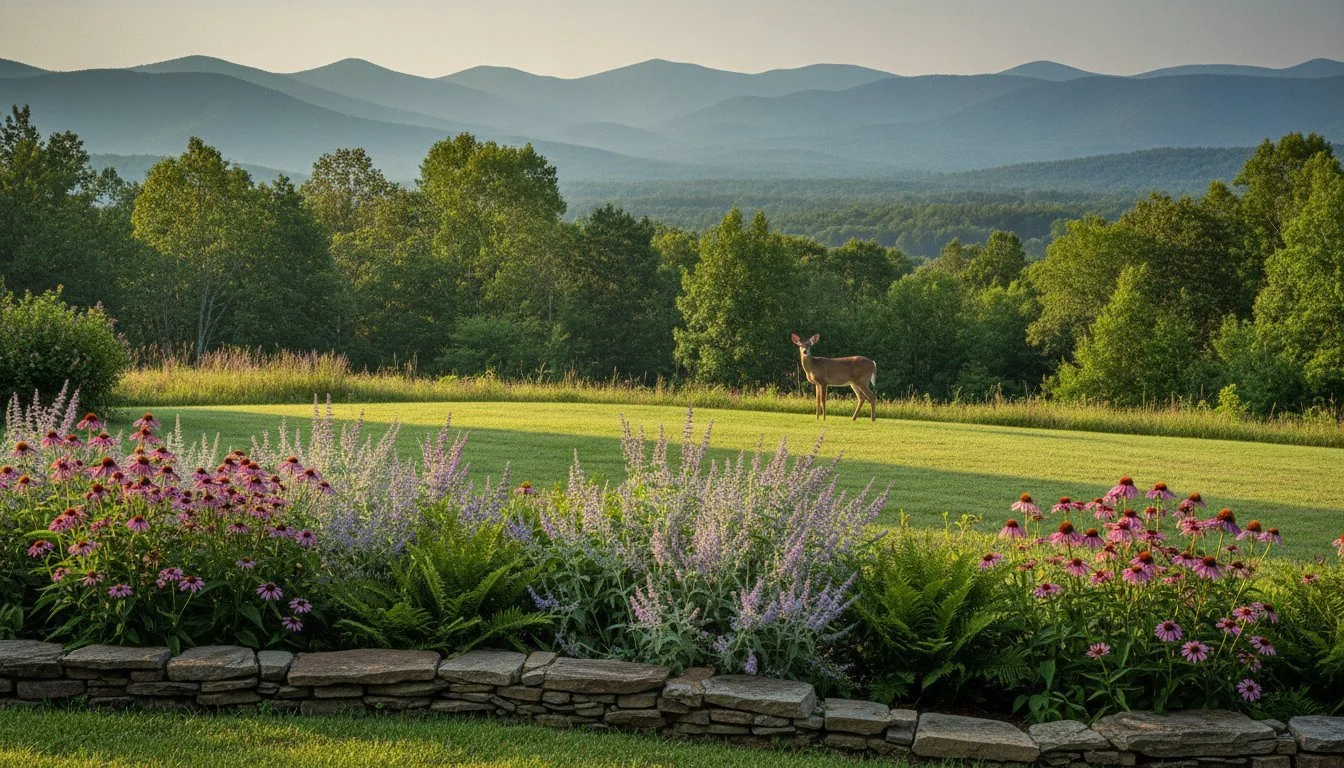
You wake up to find your expensive nursery stock reduced to bare stems; the local deer herd treated your new landscape like an all-you-can-eat buffet. It's a common frustration for mountain residents who shop at big-box stores only to see their investments vanish overnight or wither during the first hard frost. Finding deer-resistant perennials NC gardens can actually sustain requires more than just reading a generic plant tag. It demands a strategy built on local acclimation and specific regional knowledge.
We understand that a beautiful garden shouldn't feel like a constant battle against the elements and wildlife. You deserve a landscape that offers long-term reliability and professional-grade results without the daily stress of monitoring for damage. In this article, we will identify the specific perennial species that thrive in the rocky, high-elevation soil of the High Country. You'll learn how to select plants that are naturally hardy to Zone 6 winters and how to use bulk soil amendments to ensure your garden has the foundational strength it needs to flourish. From choosing the right stock to preparing your site, we provide the practical insights necessary to transform your outdoor space into a dependable, low-maintenance asset.
Key Takeaways
Understand how Watauga County’s high elevation affects plant hardiness and why generic nursery stock often fails to survive Zone 6 winters.
Identify the specific varieties of deer-resistant perennials NC landscapes require, categorized by their natural deterrents such as fuzzy textures, toxic sap, and strong scents.
Learn how to implement a strategic garden layout that uses companion planting to shield more vulnerable species from local wildlife naturally.
Discover why amending mountain clay with high-quality topsoil and compost is essential for developing the deep root systems that support a plant's natural chemical defenses.
Recognize the operational advantage of using locally grown nursery stock that is already acclimated to the unique climate and rocky soil of Boone and Blowing Rock.
The High Country Challenge: Why Deer Resistance Matters in NC Mountains
Designing a landscape in the North Carolina mountains requires a shift in expectations compared to gardening in the Piedmont. It's vital to understand that deer resistance is a deterrent strategy rather than a "deer-proof" guarantee. No plant is entirely immune to hungry animals; however, choosing deer-resistant perennials NC homeowners can rely on involves selecting species with physical traits that deer find unpalatable. These include fuzzy leaf textures, strong aromatic scents, or bitter sap, which signals that the plant is not a viable food source.
In Watauga County, elevations ranging from 3,000 to 5,000 feet create a high-stress environment for both vegetation and wildlife. Mountain deer are notably more aggressive foragers than their lowland counterparts because their natural food sources are frequently limited by shorter growing seasons and harsher weather. This increased pressure means that plants must be exceptionally hardy to survive. Success depends on using locally acclimated perennials that have the structural integrity to withstand both heavy browsing pressure and the unique climate of the Blue Ridge.
Blowing Rock and Boone Hardiness Zones
Gardening success in this region depends heavily on recognizing the shift from USDA Zone 7a to 6b, which often occurs with changes in ridge-line exposure and elevation. While a plant might be labeled as hardy in a general sense, specimens sourced from lower-elevation nurseries often lack the resilience needed for a High Country winter. These plants are frequently pushed into early growth in warmer climates, leaving them vulnerable when moved to the colder air of Boone or Blowing Rock. Buying locally grown nursery stock ensures your perennials are synchronized with the local season, providing a dependable foundation for your landscape.
The "False Spring" and Perennial Dormancy
The "False Spring" is a common logistical challenge in the mountains where sudden, hard freezes follow warm April temperatures in mid-May. These late frosts can devastate new growth if a plant hasn't established a deep, resilient root system. Using high-quality topsoil and compost helps perennials develop the energy reserves necessary to recover from these temperature swings. Acclimation for Blue Ridge perennials is the physiological process where a plant adapts to the specific elevation, UV intensity, and temperature fluctuations of the mountain environment before it's installed in your garden. This preparation ensures your investment survives the volatile weather cycles that define High Country living.
Top Deer-Resistant Perennials for Boone and Blowing Rock
Success in the High Country requires selecting plants that offer more than just aesthetic value. You need species that actively discourage grazing through specific physiological traits. When you select deer-resistant perennials that NC nurseries have acclimated to mountain life, you're investing in a landscape that maintains its professional appearance year-round. All Seasons Supply stocks these hardy varieties, ensuring your garden beds remain intact despite the heavy deer pressure common across Watauga County.
Professional garden design in this region focuses on multi-season interest and biological deterrents. By choosing plants with fuzzy foliage, bitter sap, or strong aromatic oils, you create a natural barrier that protects your nursery stock investment. These plants don't just survive; they thrive in the rocky soil and high-elevation climate that often defeats generic big-box alternatives.
Sun-Loving Deterrents for Open Slopes
Open mountain slopes often face intense UV exposure and drying winds. Lavender and Nepeta (Catmint) are excellent choices for these areas because their high concentration of aromatic oils acts as a natural repellent. Deer generally avoid the strong scent of these plants, making them dependable anchors for sunny borders. Native options like Echinacea (Coneflower) and Rudbeckia provide rugged durability and long-lasting summer color. For added structure, ornamental grasses offer a coarse texture that deer find unpalatable. These grasses provide multi-season interest, remaining upright even during winter months to give your garden depth when other plants are dormant.
Shade-Tolerant Species for Wooded Lots
Wooded properties in Blowing Rock present a different set of challenges, primarily lower light and moisture retention. Hellebores, or Lenten Roses, are widely considered the gold standard for these environments. Their toxic sap and leathery leaves make them virtually deer-proof, and they offer early spring color while snow is still on the ground. For a lush understory, Bleeding Hearts and various ferns thrive under mountain hemlocks where other plants might struggle. If your lot includes sloped drainage areas, Astilbe provides vibrant plumes and thrives in the damp soil typical of High Country hollows. Building a resilient garden starts with the right stock. You can find a comprehensive selection of these hardy perennials at our local nursery, where every plant is chosen for its ability to withstand the unique rigors of our region.
Strategies for Protecting Your Perennial Investment
Protecting your landscape investment requires a tactical approach that goes beyond simple plant selection. While choosing deer-resistant perennials NC growers recommend is the first step, how you position those plants determines their long-term survival. Deer are creatures of habit and efficiency. They prefer flat terrain and easy-to-reach foliage. By understanding these behavioral patterns, you can design a garden that is naturally less appealing to local herds.
The first year is the most critical period for any new installation. Young nursery stock is tender and lacks the established root systems needed to recover from heavy browsing. Even resistant species can be sampled by curious fawns. Providing temporary physical protection during the first growing season allows the plant to develop its natural chemical defenses and structural toughness. Once established, these perennials become far more resilient to the environmental pressures of the High Country.
Designing with Scent and Taste
Scent-based defense is highly effective in Watauga County. Interplanting aromatic Alliums and herbs like sage or rosemary confuses a deer's sense of smell, making it harder for them to locate more palatable plants nearby. This masking technique acts as a biological shield for your garden. Additionally, bordering your beds with fuzzy or prickly foliage creates a physical deterrent. Deer dislike the sensation of coarse textures on their sensitive muzzles. This discomfort often encourages them to move on to otherwise accessible targets.
Physical Deterrents and Mountain Microclimates
Topography plays a major role in how deer interact with your property. Slopes are naturally more difficult for deer to navigate, while flat lots often serve as primary grazing corridors. You can enhance these natural defenses by using strategic hardscaping to disrupt their movement. As a premier landscape stone supplier that Vilas NC residents trust, we provide fieldstone and river rock for creating tiered barriers or rocky outcroppings. These features do more than add aesthetic value; they create physical obstacles that make grazing less convenient.
High-country ridgelines also face severe wind exposure, which can cause winter desiccation even in hardy species. Positioning your beds to take advantage of natural windbreaks helps maintain a more stable environment for your plants. Be mindful of frost pockets in low-lying areas of your lot. These spots trap cold air and can damage early growth. Reserve those locations for your most cold-tolerant species to ensure your garden remains viable through the unpredictable mountain spring.
Professional Soil Prep: The Secret to Hardy Perennials
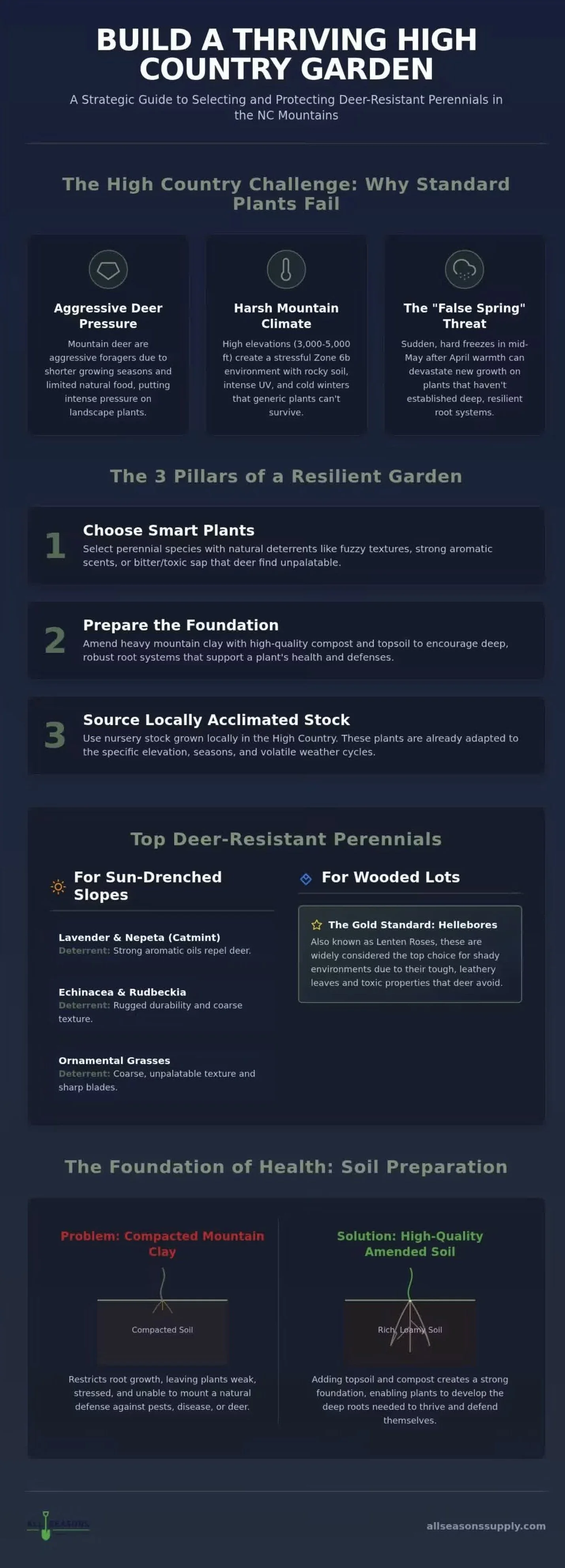
Success in mountain landscaping depends on what happens below the surface. Watauga County is known for dense clay and fractured rock, which present significant obstacles for new root development. Even the most reliable deer-resistant perennials NC homeowners choose will fail if they're forced to grow in unamended native soil. A plant's primary defense against browsing is its ability to produce secondary metabolites, such as bitter alkaloids or sticky saps. These natural chemical deterrents are only produced at optimal levels when the plant has a robust, healthy root system supported by nutrient-dense soil.
Drainage is the single most important factor for perennial survival during wet mountain winters. When heavy clay traps water around a dormant root ball, it can lead to crown rot and winterkill. Amending your planting site ensures that excess moisture moves away from the plant while still providing the hydration needed for long-term health. To properly prepare a planting hole, dig a space twice as wide as the root ball and mix the native soil with equal parts compost and potting soil. This creates a transition zone that encourages roots to spread rather than circling the hole.
Using Compost and Topsoil for Success
Breaking up heavy mountain clay requires the mechanical and biological benefits of organic matter. When you prepare a new garden bed, mixing bulk compost with your native soil improves aeration and nutrient availability. For larger landscape projects, sourcing high-quality topsoil near me provides a clean, consistent base that allows young roots to establish quickly before the first hard freeze. Blue Ridge perennials generally perform best in a slightly acidic environment with a soil pH maintained between 5.5 and 6.5. This specific preparation protocol provides your landscape with the operational foundation it needs to withstand both environmental stress and wildlife pressure.
Mulching for Winter Root Protection
Once your perennials are established, protecting the root zone from extreme temperature fluctuations is vital. Hardwood mulch is the professional choice for Zone 6 gardens because its density provides superior insulation against the freeze-thaw cycles common in the High Country. It's important to use the "Donut Method" when applying mulch; keep the material two to three inches away from the plant's stem to prevent moisture buildup and crown rot. For more delicate species, pine straw offers a lightweight, breathable winter blanket that protects without compacting the soil. You can find all the necessary bulk soil and mulch supplies at our yard to ensure your project starts with the right foundational materials.
Sourcing Locally-Grown Plants at All Seasons Supply
Selecting the right species is only half the battle; the origin of your nursery stock determines its ultimate survival. At All Seasons Supply, we leverage over 50 years of combined industry experience to provide deer-resistant perennials NC residents can trust. Our plants are grown and maintained at elevations exceeding 3,500 feet. This ensures they're already acclimated to the UV intensity and temperature swings of the Blue Ridge before they arrive at your property. Unlike plants sourced from warmer, lower-elevation nurseries, our stock doesn't suffer the shock of sudden climate shifts. This gives your landscape a significant operational head start.
We provide a comprehensive system for mountain gardening that combines high-quality perennials with the foundational materials required for success. A healthy landscape requires more than just a hole in the ground. It needs the right blend of topsoil, compost, and hardwood mulch to thrive. By sourcing everything from a single, dependable partner, you ensure consistency and quality across your entire project. Our team focuses on long-term relationships and practical results, ensuring your garden remains a valuable asset for years to come.
The Industrious Partner for High Country Gardeners
Our nursery stock is specifically chosen for its toughness and resilience. We don't stock generic varieties that struggle in rocky soil; we provide species proven to withstand the heavy deer pressure and harsh winters of Watauga County. Our team offers personalized consultations to help you match specific plants to your lot's unique microclimate. Whether you're dealing with a wind-swept ridge in Blowing Rock or a shaded hollow in Banner Elk, we help you select the most resilient options. We're committed to sustainable mountain growth and the long-term success of our local community gardens.
Bulk Delivery for Every Landscape Project
Efficiency is key when managing landscape improvements. We simplify the procurement process by allowing you to order your perennials alongside bulk mulch, stone, and soil. This "complete system" approach saves time and ensures your plants have the necessary amendments on the day of installation. Our delivery fleet provides reliable service across Watauga, Avery, and Ashe counties, serving clients in Boone, Blowing Rock, and Banner Elk. We maintain a steady, predictable delivery rhythm to keep your project on schedule regardless of the season.
Find Your Hardy High Country Perennials at All Seasons Supply
Build a Sustainable Mountain Landscape Today
Creating a thriving garden in the High Country requires moving beyond trial and error. By selecting deer-resistant perennials NC nurseries have specifically acclimated to our 3,500-foot elevation, you eliminate the risk of losing plants to sudden frost or heavy browsing. Success depends on a systemic approach: choosing species with natural deterrents and supporting them with high-quality topsoil and hardwood mulch necessary for deep-rooted establishment. This foundation ensures your landscape remains a professional, low-maintenance asset regardless of the season.
All Seasons Supply stands as your industrious partner in this process. With over 50 years of combined industry experience, we're a locally owned and operated resource dedicated to your project's success. We offer comprehensive bulk delivery of plants and materials throughout the High Country, ensuring you have the strategic tools needed for a resilient garden. You don't have to navigate these logistical challenges alone. Browse Locally-Grown Nursery Plants in Blowing Rock to start your next project with confidence.
We look forward to helping you cultivate a beautiful, enduring outdoor space.
Frequently Asked Questions
When is the best time to plant perennials in the High Country?
The ideal planting window for perennials in the High Country is late spring, typically after the final frost in mid-May, or early autumn during September. Planting in September allows root systems to establish in the cooling soil before winter dormancy. We recommend avoiding early-April planting due to frequent "False Spring" cycles that can damage new nursery stock. Ensuring your soil is properly amended with compost during this window maximizes long-term survival.
Are any perennials truly "deer-proof" in Blowing Rock?
No perennial is completely deer-proof, but many species are highly resistant due to toxic sap or coarse textures. In Blowing Rock, high deer pressure means even resistant plants might be sampled by fawns. However, choosing deer-resistant perennials NC experts recommend, such as Hellebores or Lavender, significantly reduces the likelihood of landscape destruction. Success depends on a multi-faceted approach that combines plant selection with strategic site placement and hardscaping barriers.
How do I know if a plant is hardy enough for Zone 6b?
You should verify that any plant you purchase is rated for USDA Zone 6b or lower to ensure it survives mountain winters. Many big-box stores sell stock rated for Zone 7, which often fails during extreme freezes along Blowing Rock's ridge lines. It's safer to purchase locally grown nursery stock that has already been acclimated to 3,500 feet. This preparation ensures the plant's internal biology is synchronized with our specific regional climate.
Do I need to cut back my perennials before the first frost?
We generally advise against cutting back most perennials before the first frost. Leaving the dead foliage and spent flower stalks provides a natural layer of insulation for the plant's crown and roots during the early winter. This practice also provides habitat for beneficial insects and seeds for local birds. You should wait until late winter or early spring, just before new growth emerges, to tidy up your garden beds and apply fresh mulch.
What are the best deer-resistant perennials for shade in Boone?
For shaded lots in Boone, we recommend Hellebores, Ferns, and Astilbe as the most dependable choices. These species thrive in the cooler, moist environments found under mountain hemlocks and hardwoods. Hellebores are particularly valuable because their leathery leaves and bitter sap make them a low priority for foraging deer. Integrating these with moisture-loving Bleeding Hearts creates a lush, professional-looking understory that remains resilient despite the limited light and high wildlife pressure.
Does All Seasons Supply deliver nursery plants and mulch to Banner Elk?
Yes, All Seasons Supply provides comprehensive bulk delivery of nursery plants, mulch, and stone to Banner Elk and surrounding areas. Our delivery fleet serves residential and commercial projects throughout Watauga, Avery, and Ashe counties. This service allows you to coordinate the arrival of your perennials with the bulk topsoil and hardwood mulch needed for installation. We maintain a predictable delivery schedule to ensure your project stays on track regardless of the season.
How much mulch do I need to protect my perennials in winter?
You should apply a layer of hardwood mulch approximately two to three inches deep to protect perennial roots during the winter. This thickness provides the necessary insulation to regulate soil temperatures during the freeze-thaw cycles common in Zone 6b. Always use the "Donut Method" by keeping the mulch a few inches away from the plant's base. This prevents moisture from being trapped against the crown, which is a leading cause of winter rot.
Why do my perennials die even if they are rated for my zone?
Perennials often die despite proper zone ratings due to poor soil drainage or a lack of local acclimation. Native mountain clay often retains water, leading to root rot during wet winters. Additionally, plants sourced from lower elevations may break dormancy too early during a "False Spring," leaving them vulnerable to late freezes. Using deer-resistant perennials NC nurseries have grown at high elevations, combined with professional soil amendments, is the best way to prevent these losses.