
Best Evergreen Shrubs for Boone, NC: High Country Planting Guide 2026
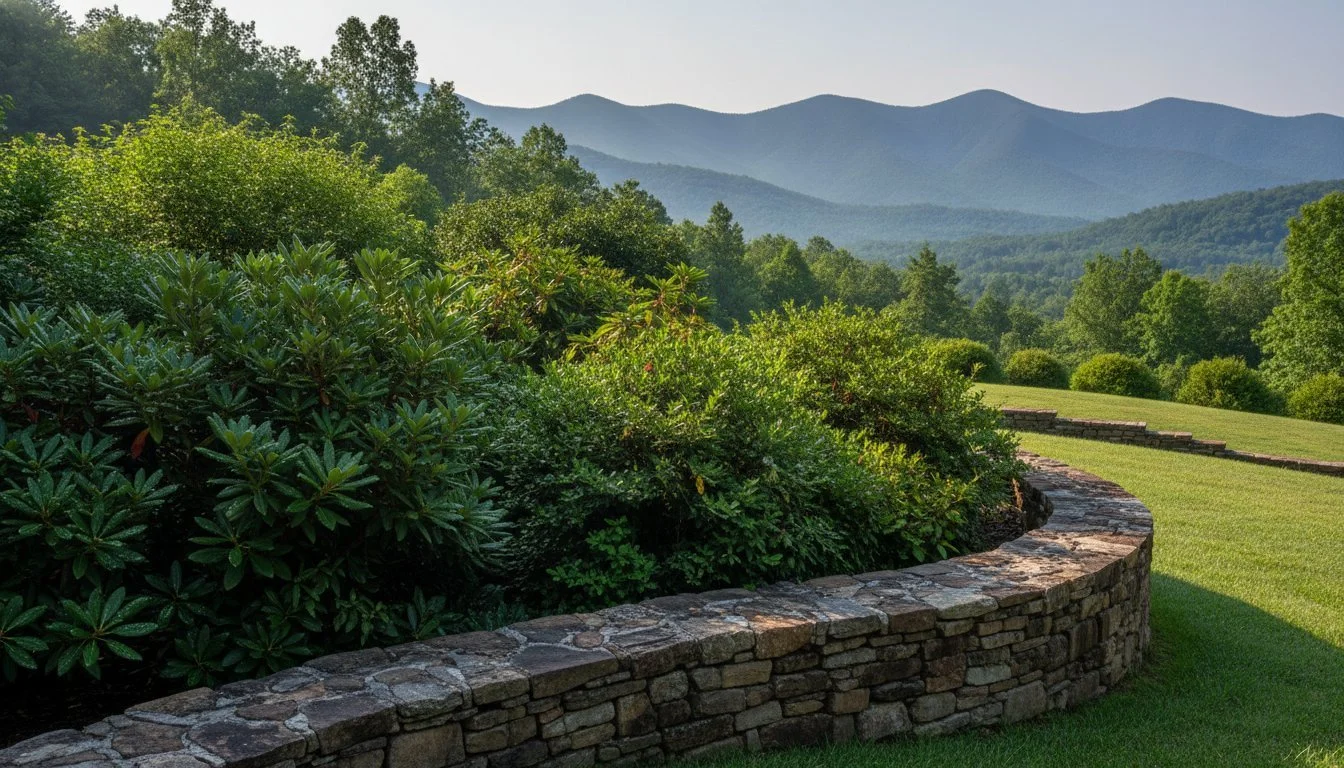
In the High Country, "evergreen" is a performance metric rather than just a color. It represents the difference between a landscape that thrives through a Boone winter and one that succumbs to winter burn by February. Selecting the right evergreen shrubs for North Carolina requires focusing on elevation-hardy species that can withstand heavy snow and deer browsing. Many property owners find that standard nursery stock often fails when faced with the poor drainage and fluctuating temperatures common on our mountain slopes.
You deserve a privacy screen or foundation planting that remains resilient and functional year-round. We recognize that maintaining a professional landscape is an investment in your property's long-term value and operational continuity. This guide highlights the most durable evergreen shrubs for Western North Carolina and explains how to ensure their year-round survival. You'll learn about the best species for our climate, along with expert advice on using local topsoil and hardwood mulch to create a stable environment for your plants to flourish. By focusing on acclimated nursery stock and proper soil management, you can build a landscape that stands steady against the cycles of the High Country.
Key Takeaways
Identify your specific USDA Hardiness Zone to avoid the common mistake of using Piedmont-focused plant lists that fail in the mountain climate.
Prioritize native species such as Rhododendron and Mountain Laurel, which are naturally acclimated to local soil and weather patterns.
Discover how to select the most resilient evergreen shrubs for North Carolina by matching species characteristics to specific property goals like privacy screening or erosion control.
Utilize the "Deep Hole, Wide Pocket" planting technique and strategic fall scheduling to maximize root establishment before the winter freeze.
Invest in locally grown nursery stock rather than big-box alternatives to ensure your plants are already adapted to the High Country's unique environmental stresses.
Understanding North Carolina's Evergreen Zones: High Country vs. Piedmont
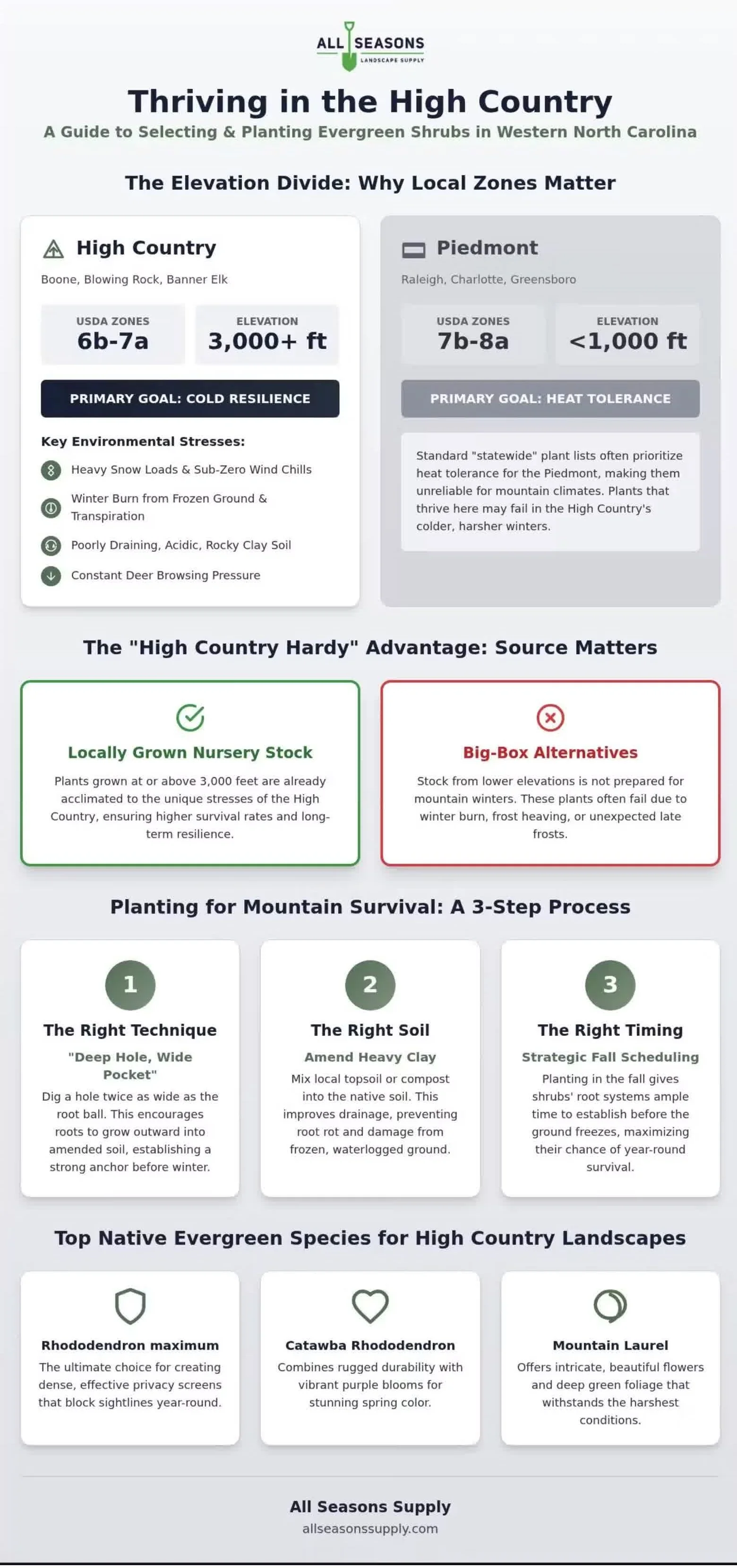
Success in mountain gardening begins with recognizing that North Carolina is not a plant-growth monolith. While a nursery guide for the Triangle might suggest certain species, those same plants often struggle in the higher elevations of Watauga and Avery Counties. Choosing the right evergreen shrubs for North Carolina involves more than just picking a hardy plant; it requires understanding our region's specific hardiness zones. Boone and the surrounding High Country typically fall into USDA Zones 6b and 7a, whereas central cities like Raleigh or Charlotte sit in the much warmer 7b or 8a zones. This ten-degree difference in average minimum temperatures determines which plants survive the winter and which perish.
Standard "statewide" evergreen lists frequently fail mountain homeowners because they prioritize heat tolerance over cold resilience. When researching the Flora of North Carolina, it's clear that species diversity shifts dramatically with elevation. High-altitude environments present unique challenges, such as rapid transpiration. During winter, evergreens continue to lose moisture through their leaves. If the ground is frozen, the roots cannot pull in water to replace what is lost, leading to "winter burn" or complete desiccation. We recommend selecting locally grown nursery stock because these plants are already acclimated to our specific atmospheric pressures and temperature cycles, providing a level of reliability that big-box store alternatives cannot match.
The Role of Elevation in Plant Hardiness
Living at 3,000 feet or higher fundamentally changes the growing season. In places like Blowing Rock, the primary threat isn't just the absolute low temperature, but the volatility of the weather. Early spring thaws can trick a plant into breaking dormancy, only for a late May frost to kill the new growth. Wind-chill protection is often more critical than the thermometer reading. High-velocity winds on exposed mountain ridges can strip moisture from evergreen foliage in hours. Strategic placement and the choice of wind-resistant species are essential steps for maintaining a healthy, green landscape throughout the year.
Soil Conditions of the High Country
Watauga County is known for its acidic, rocky soil, which presents a different set of logistical hurdles for plant health. While many native evergreens prefer acidic conditions, the heavy clay content in our valleys can trap water around root balls. Poor drainage is the leading cause of death for evergreen shrubs in the mountains. When roots sit in waterlogged clay that subsequently freezes, the expansion causes physical damage to the plant's vascular system. We suggest using soil amendments such as compost or high-quality topsoil during planting to improve soil structure and encourage deep rooting. This preparation ensures your landscape remains a stable, long-term asset rather than a recurring maintenance expense.
Top Evergreen Shrub Species for High Country Landscapes
Selecting evergreen shrubs for North Carolina requires a strategic approach that prioritizes cold hardiness over aesthetic alone. We define 'High Country Hardy' as nursery stock grown at or above 3,000 feet of elevation. This distinction is vital for operational success. It ensures the plant has already survived the heavy snow loads and sub-zero wind chills typical of Watauga County. Your choice generally falls into two categories: broad-leaf and needle-leaf evergreens. Broad-leaf varieties feature flat, wide leaves that provide lush texture, while needle-leaf types utilize thin, waxy needles to minimize moisture loss during the frozen winter months.
Broad-Leaf Evergreens for Year-Round Texture
Native species remain the most dependable foundation for any mountain landscape. The Rhododendron maximum serves as the king of mountain privacy screens, reaching heights that easily block sightlines. For those seeking vibrant spring color alongside winter durability, the Catawba Rhododendron is an essential selection for its purple blooms and rugged nature. Mountain Laurel (Kalmia latifolia) offers similar benefits, providing stunning, intricate flowers and foliage that stays deep green even in the harshest conditions. If you're managing a property in Beech Mountain or Banner Elk where deer browsing is a constant challenge, certain Boxwood and Holly varieties offer the resistance you need. Inkberry Holly is a particularly hardy, native alternative to Boxwood, resisting the pests and diseases that often plague non-native varieties while maintaining a formal shape.
Needle-Leaf Evergreens for Structure and Density
Needle-leaf species offer the structural integrity needed to handle mountain wind and snow without breaking. Dwarf Alberta Spruce is an excellent choice for tight spaces and foundation beds due to its slow growth and tight, conical shape. For steep slopes in areas like Foscoe, certain Juniper varieties provide exceptional erosion control. Their deep root systems stabilize rocky mountain soil, while their low-profile foliage efficiently covers the ground. When rapid privacy is the priority, the Arborvitae 'Green Giant' stands out as the industry standard for fast-growing windbreaks. These trees are resilient and maintain their dark green color throughout the winter cycle. You can browse our current selection of hardy shrubs to find the right fit for your specific elevation and soil type.
Selecting the Right Shrub for Your Property's Needs
Choosing the right evergreen shrubs for North Carolina requires a functional framework based on your property's specific topography. It is not just about aesthetics; it is about operational longevity. You must match the plant to the site's environmental stress. For instance, intense UV exposure at higher elevations can scorch some leaves, while the dense forest canopy in Watauga County favors shade-tolerant species. Mature size is another critical factor. Selecting a shrub that outgrows its space leads to unnecessary pruning costs and potential structural issues for your home. We recommend checking the growth rate of any species before purchase to ensure it fits your long-term maintenance plan.
Sun-tolerant evergreens like certain Junipers or Hollies handle the thin mountain air and intense exposure well. Conversely, for shaded pockets, look at the species featured in the North Carolina Arboretum's native gardens for inspiration on what thrives under a heavy canopy. These native selections are already adapted to the local light cycles and soil chemistry. Properly matching light requirements prevents the leggy growth and thinning foliage that often occurs when sun-loving plants are forced into the shade.
Privacy Screens and Windbreaks
Privacy is a primary goal for many High Country residents. To achieve a functional screen, select species that reach 8-12 feet at maturity. Spacing is critical. Planting too close leads to poor air circulation and fungal growth. We suggest a mixed-species hedge. This strategy prevents a single pest or disease from destroying your entire windbreak. It ensures your property remains secluded even if one species faces a specific biological challenge. A diverse hedge also provides a more natural look that blends into the surrounding mountain forest.
Foundation and Ornamental Plantings
Foundation plantings in areas like Blowing Rock require a disciplined approach to size. Choosing the right evergreen shrubs for North Carolina for these specific spots ensures your mountain views aren't obscured as the plants mature. Look for varieties with variegated foliage or winter berries to add visual interest during the dormant months. You can complement these plantings with professional-grade landscape stone to create a clean, durable border. This reduces maintenance and enhances the property's overall aesthetic stability. Using stone as a mulch alternative around foundations also improves drainage, which is the primary factor in preventing root rot in our heavy mountain clay.
Planting and Maintenance: Ensuring High Country Survival
Installing evergreen shrubs in North Carolina's High Country requires a methodical approach to overcome rocky terrain and extreme temperature swings. We recommend the 'Deep Hole, Wide Pocket' technique to ensure long-term stability. Dig a hole twice as wide as the root ball but no deeper than the original container. This creates a pocket of loose, amended soil that allows young roots to spread horizontally before they encounter the compacted clay or rock layers deeper in the mountain. Fall is the ideal season for this work. Planting between September and November gives the shrub several months to establish a root system in soil that remains warm, even as air temperatures begin their winter decline.
Hydration remains the most overlooked aspect of winter maintenance for mountain landscapes. Evergreens don't go dormant in the same way deciduous trees do; they continue to lose moisture through their foliage year-round. If the ground is frozen and the plant is already dehydrated, winter burn becomes a significant risk. Check your soil moisture during dry spells in December and January. If the ground is workable, provide a deep watering to ensure the roots have the reserves needed to survive desiccating mountain winds. This proactive step often makes the difference between a thriving hedge and one that requires expensive replacement in the spring.
Soil Preparation and Mulching Strategy
Successful establishment of evergreen shrubs for North Carolina depends on the quality of the immediate environment. You can use bulk topsoil and compost to provide the necessary nutrients and structure for new growth. For the acid-loving species common in our area, such as Rhododendron or Mountain Laurel, Pine Bark mulch is often superior to hardwood mulch because it helps maintain a lower soil pH. Apply a 3-inch layer around the base, keeping it away from the trunk itself to prevent rot. This layer acts as a thermal insulator, regulating soil temperature during Boone's frequent freeze-thaw cycles and preventing the soil from heaving, which can expose delicate roots to the sub-zero air.
Winter Protection and Snow Load Management
Winter survival isn't guaranteed just because a plant is hardy. Young or sensitive shrubs benefit from burlap wraps during their first two winters to block desiccating winds. Manage heavy snow loads by gently shaking branches upward. Never pull down on a weighted limb, as this often leads to snapping. Anti-desiccant sprays can provide an extra layer of protection for broad-leaf varieties by reducing transpiration during the coldest weeks. These tools are helpful for property owners who want to maintain the aesthetic integrity of their landscape regardless of the weather cycle. To get started on your next project, you can order bulk materials online for delivery throughout the High Country.
Sourcing Your Shrubs: The All Seasons Supply Advantage
Sourcing evergreen shrubs for North Carolina requires a supplier that understands the physiological demands of high-altitude environments. Most retail garden centers stock plants grown in milder climates, which leads to immediate stress when they're transplanted into the cold, thin air of the High Country. We prioritize locally grown nursery stock that is already acclimated to mountain weather cycles. This approach minimizes transplant shock and ensures your investment remains a stable part of your landscape for years to come. Our team brings over 50 years of combined industry experience to every client interaction, providing the technical knowledge necessary to navigate complex planting projects with confidence.
Efficiency in landscape management is about more than just plant selection; it's about reliable logistics. We operate as a steady partner for property owners and contractors alike, ensuring that high-quality materials are available exactly when your project timeline requires them. By sourcing from a local family-owned business, you gain access to expertise that big-box retailers cannot replicate. We understand the specific challenges of Watauga and Avery Counties because we live and work in the same environment, allowing us to provide solution-oriented advice that prioritizes your property's long-term health.
Our High Country Nursery Stock
Located in Vilas, NC, we specifically curate our seasonal inventory for mountain resilience. We don't just sell plants; we offer strategic tools for your property's success. When you visit our garden center, you can personally select from a variety of hardy shrubs and trees that have already survived the local freeze-thaw cycles. This hands-on selection process ensures you receive the highest quality materials for your specific soil conditions and sun exposure. Our staff is available to help you identify which evergreen shrubs for North Carolina will best meet your needs for privacy, aesthetics, or erosion control.
Bulk Delivery Services for Homeowners and Contractors
Transporting large-scale landscape shrubs and bulk materials is a significant logistical challenge. We solve this through our dedicated fleet and flat-rate delivery services to Boone, Blowing Rock, Banner Elk, and surrounding areas. Whether you're handling a residential renovation or a commercial project, we provide predictable scheduling to keep your work on track. You can streamline your entire project by combining your plant order with a bulk mulch delivery. This integrated service model ensures you have the necessary topsoil, compost, and mulch on-site for immediate use. We handle the heavy lifting and procurement details so you can focus on successfully executing your landscape design.
Building a Resilient High Country Landscape
Establishing a durable landscape in the mountains requires more than just aesthetic intuition; it demands a commitment to elevation-hardy species and precise soil management. Success depends on selecting evergreen shrubs for North Carolina that have already been acclimated to the sub-zero wind chills and heavy snow loads of our region. By prioritizing native stock and implementing strategic mulching practices, you ensure your property remains a stable and valuable asset through each winter. Proper preparation today prevents the logistical and financial burden of replacing dead nursery stock in the spring.
We've served the Boone and Blowing Rock areas since 2019 as a locally owned and operated partner. Our team leverages 50+ years of combined industry experience to help you navigate the complexities of mountain gardening. We provide the high-quality nursery stock and bulk materials necessary for operational continuity on your property. You can browse our locally-grown nursery stock and schedule delivery to begin your next project with confidence. Your mountain landscape can thrive for years with the right preparation and a dependable supply partner at your side.
Frequently Asked Questions
What is the best evergreen for privacy in Boone, NC?
The Arborvitae 'Green Giant' is the most efficient choice for fast-growing privacy screens in the Boone area. It reaches mature height quickly and maintains a dense, conical shape that blocks sightlines year-round. For a more naturalized mountain look, the native Rhododendron maximum provides an impenetrable barrier that thrives in our local soil. Both species are reliable performers when sourced as acclimated nursery stock, ensuring they can withstand our specific atmospheric pressures.
Are there any deer-resistant evergreen shrubs for the High Country?
Boxwoods and certain varieties of Inkberry Holly are dependable deer-resistant options for mountain landscapes. In areas with high wildlife pressure, such as Beech Mountain or Banner Elk, these species are less likely to be browsed than more palatable options like Arborvitae. Pieris japonica is another excellent choice that deer typically avoid. We recommend these hardy selections to ensure your landscape remains intact and professional-looking without the need for constant chemical deterrents.
How do I protect my evergreens from winter burn in the mountains?
Protecting evergreen shrubs in North Carolina from winter burn requires a combination of proper hydration and physical barriers. Applying an anti-desiccant spray in late fall reduces moisture loss through the leaves when the ground is frozen. For young or exposed plants, wrapping them in burlap provides a necessary shield against sub-zero wind chills. You should also maintain a thick layer of mulch to regulate soil temperature and prevent the root system from desiccating.
When is the best time to plant shrubs in Western North Carolina?
Fall is the superior season for planting in Western North Carolina, specifically between September and November. This window allows the root system to establish itself in soil that is still warm from the summer while the air temperature cools. Early root development is critical for surviving the first winter. While spring planting is possible, fall-planted evergreens typically show greater resilience and faster growth during their first full year because they aren't immediately stressed by summer heat.
Do you deliver large nursery trees and shrubs to Blowing Rock?
We provide full-service delivery of all large nursery trees and shrubs to Blowing Rock and the surrounding High Country. Our fleet is equipped to handle large-volume orders for residential renovations or commercial projects, ensuring your materials arrive safely and on schedule. By coordinating your plant delivery with bulk materials like topsoil or mulch, you can streamline your project logistics. This integrated approach prioritizes your operational efficiency and ensures your planting site is prepared immediately.
Can I use pine straw instead of hardwood mulch for my shrubs?
You can use pine straw, but we often recommend pine bark mulch for acid-loving evergreen shrubs in North Carolina. Pine straw is an effective insulator, but it can be prone to displacement on steep mountain slopes during high winds. Hardwood mulch or pine bark provides more stability and weight, helping to keep moisture in the soil. Both materials are available for delivery, and we can help you determine which option best suits your property's specific topography.
How often should I water newly planted evergreens in the winter?
Newly planted evergreens require deep watering once a week during the winter if there hasn't been significant precipitation and the ground isn't frozen. Hydration is vital because these plants continue to lose moisture through their foliage even in December. If the ground is workable, provide enough water to thoroughly soak the root ball. This proactive maintenance prevents the cellular damage associated with winter desiccation, ensuring your plants remain healthy and vibrant when the spring growing season begins.
What should I do if my evergreen branches bend under heavy snow?
You should gently shake the branches upward to remove heavy snow accumulation. Never pull down on a weighted limb or use a shovel to scrape off ice, as this often leads to snapping or permanent structural damage. If branches are severely bent, they may need temporary support once the snow melts to help them return to their natural shape. Proper species selection and strategic placement can also minimize the risk of snow-related branch breakage.