
What is ABC Stone? The Essential Guide for Boone Driveways and Construction
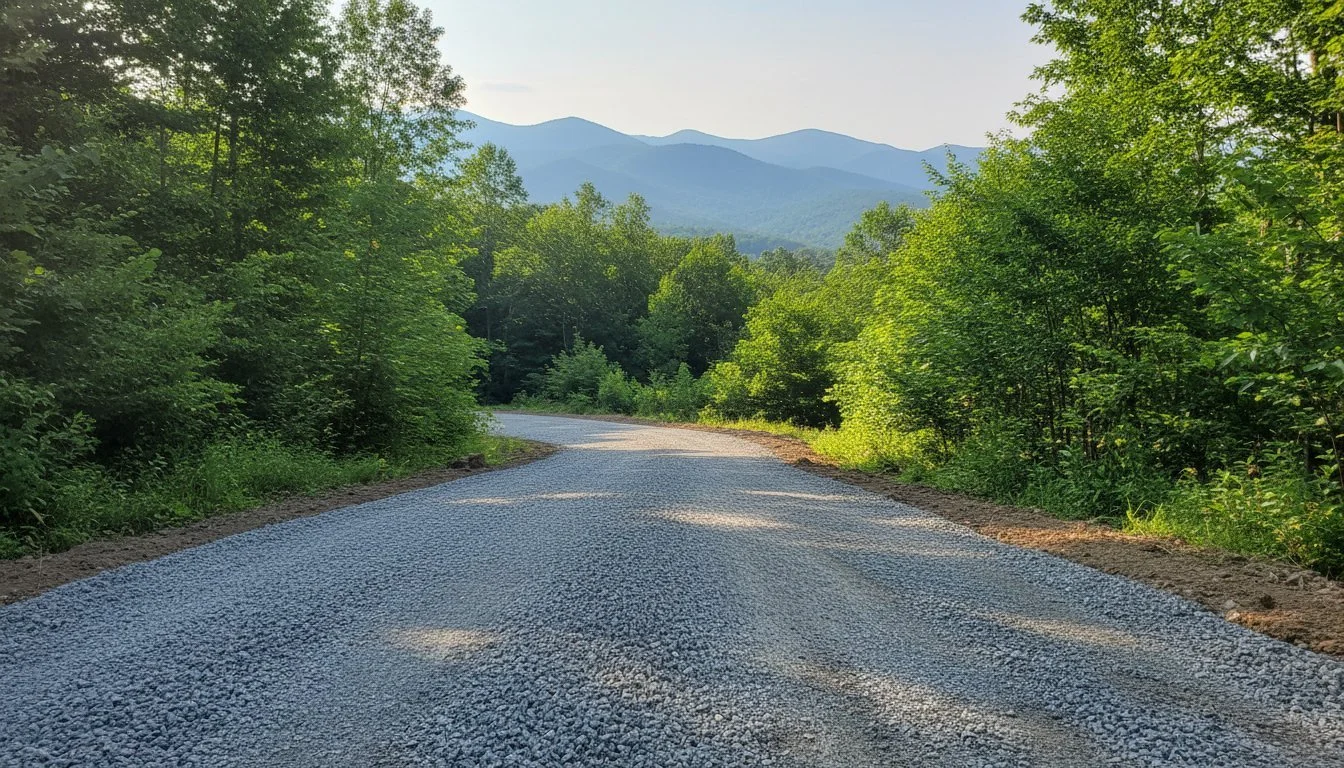
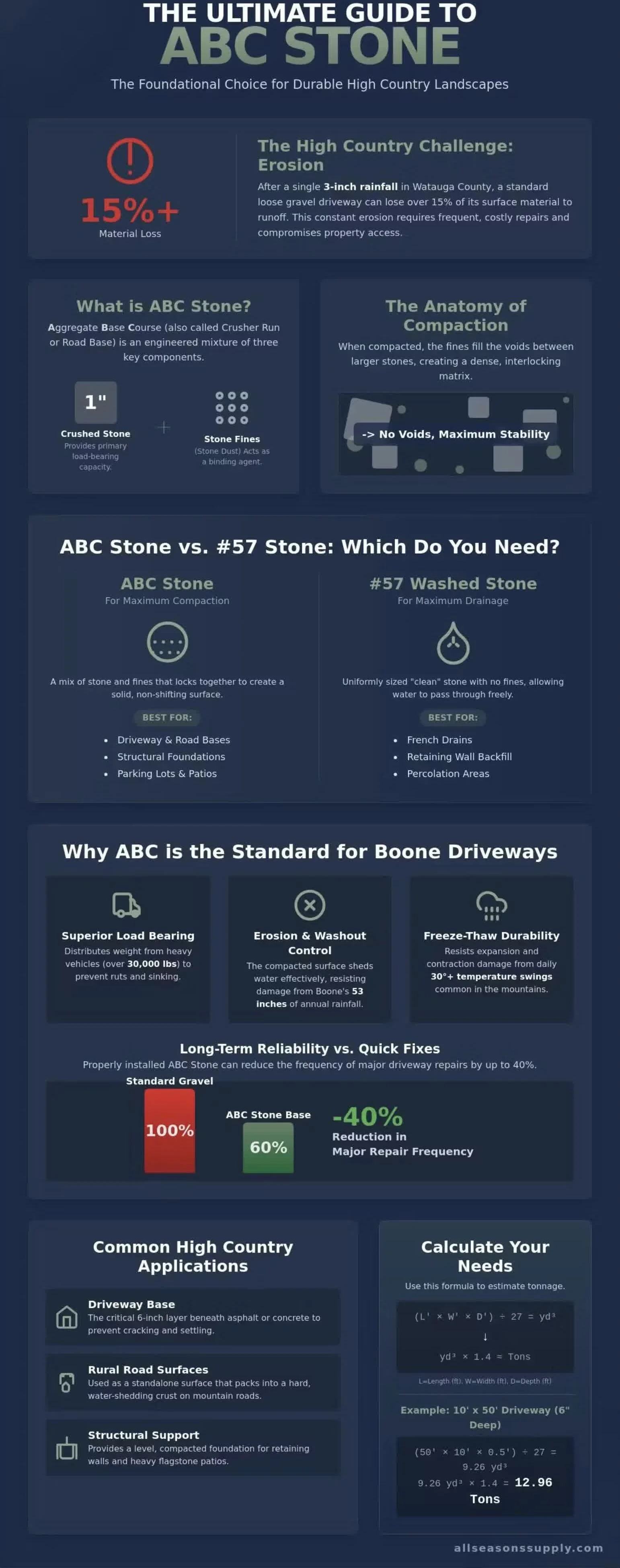
After a single 3-inch rainfall in Watauga County, a standard gravel driveway can lose over 15% of its surface material to erosion and runoff. Maintaining a functional property in the High Country requires more than just a seasonal top-off of loose gravel. You likely understand that steep grades and heavy mountain precipitation demand a material that locks into place rather than shifting under pressure. This is where ABC stone becomes an essential solution for property management and construction projects that need to last.
All Seasons Supply provides this guide to ensure your infrastructure remains dependable year-round. You'll discover why ABC stone is the foundational choice for durable High Country landscapes and how to apply it for paths that stay put. We'll clarify common confusion among aggregate types, provide exact formulas for calculating material costs, and explain our logistical process for delivering bulk loads to challenging mountain sites. This article provides a comprehensive roadmap for building a stable driveway foundation that protects your investment and ensures operational continuity, regardless of the weather.
Key Takeaways
Understand how the unique blend of crushed aggregate and fines creates the maximum compaction required for a stable, interlocking surface.
Learn how to protect your High Country property from erosion and freeze-thaw damage with materials engineered for mountain climates.
Identify when to prioritize the superior compaction of ABC stone over the drainage capabilities of washed 57 stone.
Utilize practical formulas to calculate your precise tonnage needs and prepare your site for a safe, efficient delivery.
Discover how local sourcing in Watauga County provides a reliable solution for maintaining project timelines and reducing logistical costs.
What is ABC Stone? Defining Aggregate Base Course
ABC stone serves as the foundational element for nearly every construction project in the High Country. The acronym stands for Aggregate Base Course. This material isn't just random gravel; it's a carefully engineered mixture of crushed stone and fine particles, often called "fines" or stone dust. North Carolina Department of Transportation (NCDOT) specifications generally require this mix to range from 1-inch-diameter stones to a powder-like dust. This specific gradient ensures that the material performs reliably under heavy loads and varying weather conditions.
Local contractors in Watauga County frequently use different names for this product depending on the specific quarry or application. You'll hear it called "Crusher Run" or "Road Base" at the job site. Regardless of the name, the goal remains the same: creating a stable, non-shifting surface. Builders in Boone choose ABC stone because it provides a predictable solution for the region's varied terrain and frequent freeze-thaw cycles. Standard North Carolina mixtures strictly comply with NCDOT Type ABC specifications, ensuring consistency from the quarry to the project location. This consistency allows for predictable compaction rates, which is essential when calculating the volume of material needed for a 500-foot driveway or a commercial parking lot.
The Anatomy of ABC Aggregate
The structural integrity of this aggregate comes from its diverse particle sizes. Larger stones provide the primary load-bearing capacity, preventing the base from shifting under the weight of a 15-ton delivery truck. Meanwhile, the stone dust fills the voids between these larger rocks. When moisture is added and the material is compacted with a vibratory roller, the fines act as a binding agent. This creates a dense, interlocking matrix that resists erosion better than "clean" stone. Clean stone lacks the smaller particles needed for a solid lock, which often leads to "rutting" or shifting in high-traffic areas. This specific size ratio is why ABC is the superior choice for foundations compared to single-size gravel.
Common Applications in the High Country
Professional builders rely on this material for its versatility across a wide range of mountain environments. It serves as a primary solution for three main areas:
Driveway Base: It serves as the critical 6-inch layer beneath asphalt or concrete in residential Boone developments, helping prevent cracking.
Rural Road Surfaces: Many mountain access roads use this aggregate as a standalone surface because it packs down into a hard, crust-like finish that sheds water effectively.
It also provides a flat, packed base under retaining walls and heavy patios, ensuring everything is evenly in contact with the ground to prevent sinking.
Why ABC Stone is the Standard for Boone Driveways
Reliability in the High Country starts with a stable foundation. Builders in Watauga and Avery counties prioritize ABC stone because it provides a structural integrity that loose gravel cannot match. Boone receives an average of 53 inches of rainfall annually, which creates significant erosion risks for properties in the mountains. The specific blend of crushed aggregate and stone dust in ABC stone creates a densely compacted surface that resists washout during heavy downpours. This compaction is essential for managing the freeze-thaw cycles common in the Blue Ridge Mountains, where temperatures often swing 30 degrees in a single day, causing soil to expand and contract.
Load-bearing ability is another key point for local roads. A regular delivery truck can weigh over 30,000 pounds. A snowplow is even heavier, putting more strain on a driveway. Without a strong, locked-together gravel layer underneath, these heavy vehicles quickly cause deep grooves. This gravel spreads the weight, preventing the driveway from sinking into the soft mountain ground. It’s the best choice for lasting maintenance. It can also cut major repair needs by 40% compared to using basic gravel alone.
Taming Mountain Terrain
Steep grades are a reality for projects in areas like Beech Mountain, where driveways often exceed a 12% incline. Using round river rocks or oversized gravel on these slopes can cause the sliding-gravel effect, where the material eventually migrates to the bottom of the hill. The angular edges of the stone allow the pieces to lock together under pressure. This creates a stable mat that stays in place even under heavy torque from 4WD vehicles. Proper drainage is built into this system; the compacted base allows water to shed off the surface into designated channels without stripping away your material inventory.
Long-Term Reliability vs. Quick Fixes
Skipping the base layer is a common mistake that leads to potholes and structural failure within the first 24 months. When you build with a professional-grade base, you're investing in the operational continuity of your property. Maintaining this integrity is straightforward. We recommend a light top dressing every 2 to 3 years to fill in minor surface wear. This proactive approach ensures your road remains functional year-round. If you're planning a new build or a renovation, finding the right aggregate solutions ensures your driveway stands up to the elements year-round.
A key component of durable driveways and construction is choosing between ABC stone and 57 stone. Let’s clarify these options to support your project goals.
Selecting the right aggregate impacts your project's strength. The core difference between these two materials is the presence of "fines," which are tiny rock particles and dust mixed with the larger rocks. ABC stone is an unwashed mix made to lock together. By comparison, 57 stone is washed to remove these small pieces, leaving only even, one-inch rocks.
This "clean" versus "dirty" distinction affects both performance and aesthetics: unwashed aggregate looks dusty and industrial when delivered but becomes a solid, immovable surface once wet and compacted, while 57 stone provides a more decorative, textured surface that remains permeable. For many Boone builders, the key comparison is whether water should stay on the surface or flow through it.
Choosing 57 Stone for Drainage
57 stone is the preferred solution for projects where controlling water is the main goal. Because it has no small particles, it keeps about 20% open space between the rocks. This allows water to flow easily, making it ideal for French drains, septic fields, and backfilling behind retaining walls. In Blowing Rock, where yearly rainfall is about 56 inches, 57 stone keeps water from pushing hard enough to cause walls to fall or flood foundations. It does not get packed down, so it always feels loose underfoot.
Choosing ABC Stone for Stability
ABC stone is the industry standard for driveways, walkways, and pads for heavy machines. The varied rock sizes in the mix allow it to pack tightly when laid down 4 to 6 inches deep. This builds a firm, concrete-like surface that resists moving, even under a 15,000-pound vehicle. It works well for holding soft mountain soil in place. Budget-wise, this gravel is usually 15% to 20% cheaper than washed stone because it requires less quarrying effort.
In practice, many builders combine both ABC and 57 stone for optimal results. Here’s a common professional strategy for layering these materials effectively:
The Base: Use a 6-inch layer of well-packed ABC stone for strength. a 2-inch layer of 57 stone or screenings for a clean, mud-free finish.
The Result: A driveway that doesn't sink but still offers excellent surface drainage and a polished appearance.
Planning Your Delivery: Calculations and Site Prep
Success with your project depends on accurate logistics. ABC stone is a heavy material that requires precise ordering to avoid multiple delivery fees or project delays. You need to account for both the raw volume and the physical space required for a heavy tandem truck to maneuver on your property. Proper planning prevents common headaches like running short on material or having a truck get stuck in soft mountain soil.
How Much ABC Stone Do I Need?
Estimating your needs starts with a basic square footage calculation. A standard guideline is that one ton of ABC stone typically covers 100 square feet at a depth of 2 inches. For a standard 20-by-20-foot driveway, you'll need roughly 4 tons for a thin top layer. However, you must account for the compaction factor. Because this material is designed to pack down into a solid base, you should order 10% to 15% more than your raw measurements suggest. If you're building a new parking pad from scratch, a 4 to 6-inch base is standard, which requires significantly more tonnage to achieve structural stability. You can review our bulk material delivery process for more planning tips to ensure your project stays on schedule.
Preparing for the Delivery Truck
High Country terrain presents unique challenges for heavy equipment. A fully loaded tandem dump truck can weigh over 50,000 pounds. This weight requires a firm, stable surface. If your drop site is soft or saturated from recent rain, the truck can easily sink or damage your lawn. You'll also need to clear overhead obstacles before the driver arrives. Low-hanging power lines or tree branches in areas like Foscoe and Vilas often snag on raised dump beds. Most trucks require at least 18 to 20 feet of vertical clearance when the bed is fully extended to release the load.
Clear communication with your driver saves hours of manual labor. Mark your intended drop spot with a tarp, stakes, or bright spray paint. This ensures the driver places the load exactly where you need it, minimizing the distance you have to move the stone with a shovel or tractor. If your driveway is steep or narrow, discuss these details when you order. Our team prioritizes reliability and safety, ensuring your materials arrive exactly where they need to be without compromising your property's integrity.
Measure twice: Verify your square footage and depth requirements before calling.
Check the weather: Avoid deliveries immediately after heavy rain to prevent ground rutting.
Clear the path: Ensure there's a 10 to 12-foot-wide path for the truck to enter.
Contact All Seasons Supply today to schedule your ABC stone delivery and keep your project moving forward with a partner you can trust.
Sourcing ABC Stone in Vilas and Watauga County
Sourcing materials locally in the High Country is a strategic decision for any construction project. Delivering heavy aggregate over long distances significantly increases fuel surcharges and overall project costs. By choosing a supplier within Watauga County, builders effectively reduce these delivery fees while supporting the local business ecosystem. We understand the logistical challenges of mountain terrain and provide the reliability required to keep your job site moving.
All Seasons Supply serves as your dependable partner for bulk stone needs. Our team brings 50 years of experience to every project consultation. This deep local knowledge helps us recommend the exact material volume required for the unique soil conditions of the Blue Ridge Mountains. Our delivery range is comprehensive, covering a 300-square-mile radius that includes Vilas, Boone, Blowing Rock, and Banner Elk. This geographic focus allows us to maintain a predictable delivery rhythm that larger regional suppliers often struggle to match.
The All Seasons Advantage
We provide high-quality aggregate that meets rigorous local construction standards. Consistency is our hallmark. Every load of ABC stone we deliver is processed to ensure reliable compaction and stability for your driveways or building pads. We approach every delivery with quiet confidence, focusing on the logistical details so you don't have to worry about the supply chain.
Our service model emphasizes integrated solutions. We understand that a successful project often requires more than just rock. We offer a complete inventory that includes:
Professional-grade landscape fabric for long-term stabilization.
Fine screenings to create a smooth, walkable finish.
Bulk inventory levels that accommodate large-scale commercial builds.
Ready to Start Your Project?
Securing the materials you need shouldn't be complicated. We provide clear, value-driven quotes for bulk ABC stone delivery across Watauga County. Our pricing reflects a commitment to transparency and long-term professional relationships. We value your time and prioritize efficiency in every transaction to ensure your project stays within budget.
If you need to verify the material size or texture, we invite you to visit our Vilas location. Seeing the inventory in person ensures the product aligns perfectly with your project specifications. Our staff is available to answer technical questions and help calculate the precise tonnage your site requires. We focus on the practical details to provide you with peace of mind from the first load to the final grade.
Contact All Seasons Supply for your ABC stone delivery today!
Secure Your High Country Project Today
Building a driveway in Boone requires materials that withstand heavy rain and steep mountain grades. ABC stone remains the industry standard for these projects because its mixture of crushed rock and stone dust creates a dense, interlocking base. Choosing this specific aggregate ensures your foundation won't shift under pressure or wash away during seasonal storms. Since 2019, All Seasons Supply has provided reliable logistics to move heavy loads to the most challenging job sites in Vilas and Watauga Counties. We're a locally owned family business that understands the specific demands of North Carolina terrain. Our team specializes in expert delivery to steep and remote locations where precision is non-negotiable. You can trust our steady process to keep your construction timeline on track and your costs predictable. Whether you're refreshing a residential drive or starting a new commercial build, we provide the inventory and expertise to get the job done right.
Get a Bulk ABC Stone Quote for Your High Country Project
Your property deserves a solid foundation, and we're ready to help you build it.
Frequently Asked Questions
Is ABC stone the same as crusher run?
ABC stone and crusher run are different names for the same versatile material. This product contains a specific blend of crushed rock and stone dust designed for maximum compaction. North Carolina Department of Transportation (NCDOT) standards define this as Aggregate Base Course, ensuring the mix provides a stable foundation for heavy loads. It's the primary solution for builders who need a reliable, interlocking base for high-traffic areas.
Can I use ABC stone as a finished driveway surface?
You can use ABC stone as a finished surface, but it's most effective as a foundational layer. The stone dust binds the larger rocks together to create a hard, pavement-like crust. While this provides a smooth ride, Boone’s average annual rainfall of 53 inches can turn the fine particles into a messy slurry. Most property owners add a 2-inch top layer of washed stone to maintain a clean appearance.
How thick should a layer of ABC stone be for a new driveway in Boone?
Standard residential driveways require a compacted depth of 4 to 6 inches of ABC stone to ensure long-term stability. If your site features the heavy clay soil common in Watauga County, increasing the base to 8 inches prevents the stone from sinking. Professionals install this material in 3-inch lifts, compacting each layer separately. This methodical approach ensures the driveway can support a 15-ton delivery vehicle without developing deep ruts.
Does ABC stone wash away easily on steep hills?
ABC stone resists erosion more effectively than washed gravel because the fine particles act as a natural adhesive. On mountain driveways with grades exceeding 12 percent, the material packs down into a solid mass that stays put during heavy storms. To ensure total reliability, you should install 12-inch drainage culverts and properly crown them. These solutions direct water away from the road surface, protecting your infrastructure from the 4-inch rain events typical in Appalachia.
What is the best way to compact ABC stone?
The most efficient way to compact this material is by using a vibratory plate compactor or a 5-ton smooth drum roller. You'll achieve 95 percent compaction density when the stone is slightly damp, as moisture helps the particles slide into place. Run your equipment over the surface in 4 overlapping passes to create a dense, impermeable base. This process is essential for creating a professional-grade foundation that withstands the freezing and thawing cycles of mountain winters.
How much does a cubic yard of ABC stone weigh?
A single cubic yard of ABC stone weighs approximately 3,000 pounds, or 1.5 tons. This weight varies slightly depending on the inventory's moisture level at the time of delivery. When planning your budget, remember that the material loses about 20% of its volume upon full compaction. For a 500-square-foot area at a 4-inch depth, you'll need to order roughly 10 tons of stone to reach your target thickness.
Do I need a permit for a gravel driveway in Watauga County?
You don't need a permit for simple driveway repairs, but new construction often requires specific documentation. Any new entrance connecting to a state-maintained road needs an NCDOT Driveway Permit to ensure safety standards are met. If your project disturbs more than 21,780 square feet of land, the Watauga County Planning Department requires a formal Erosion and Sedimentation Control Plan. Always verify your specific zoning requirements with the Boone Planning and Inspections office before starting.