
Best Perennials for Boone, NC: A High Country Planting & Survival Guide
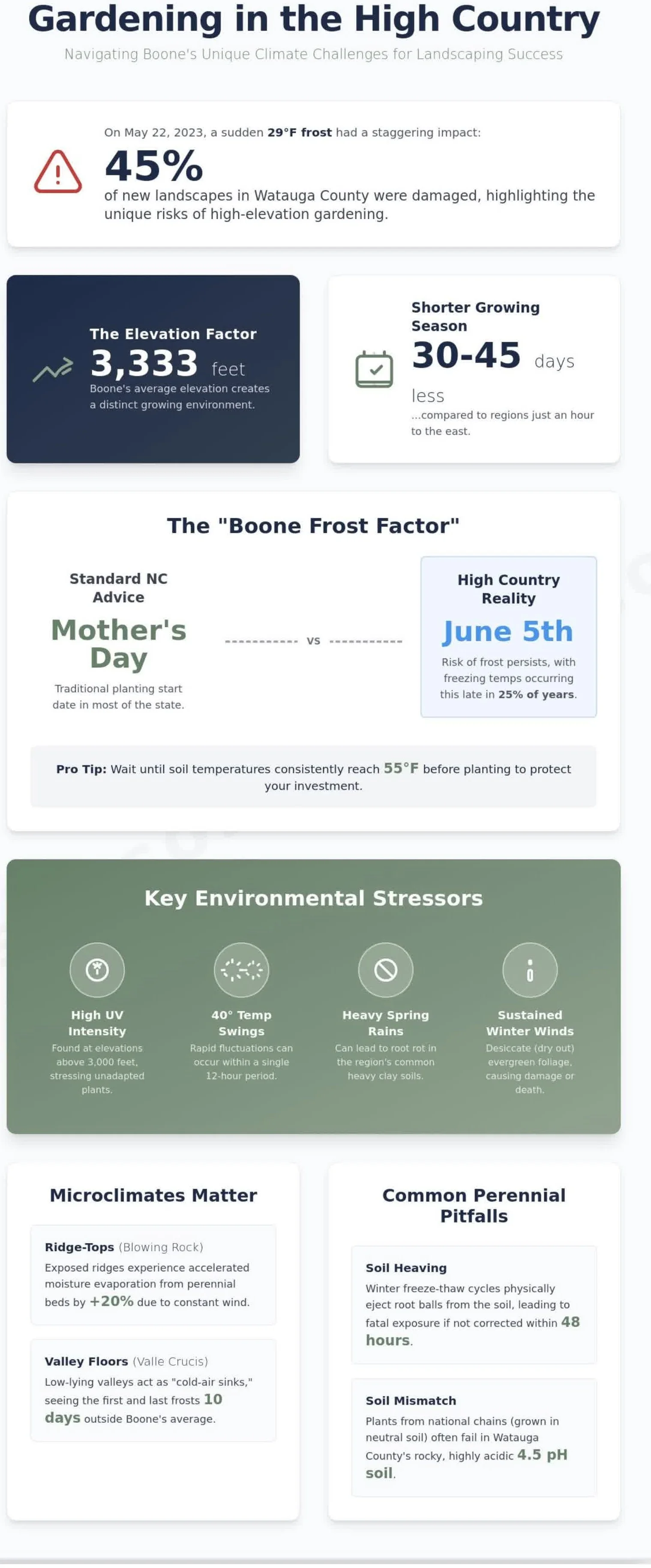
On May 22, 2023, many local property owners watched as a sudden 29-degree frost damaged nearly 45% of newly installed landscapes across Watauga County. It's a frustrating reality for anyone trying to maintain a professional site at elevations exceeding 3,300 feet. You understand that the High Country demands more than just standard gardening advice; it requires a specialized approach to overcome heavy clay and aggressive deer browsing. Selecting the right perennials for Boone, NC, is about more than just aesthetics. It's about protecting your investment with reliable, hardy solutions that ensure the long-term stability of your outdoor spaces year after year.
This guide provides the practical knowledge for consistent landscaping success. You'll discover soil secrets and mulch techniques to protect roots from our climate. We'll preview the top-performing plants and connect you with local resources to help you create a resilient, low-maintenance garden that thrives in mountain conditions.
Key Takeaways
Navigate the unique logistical challenges of high-elevation gardening by mastering the "Boone Frost Factor" and its impact on your planting timeline.
Identify the most resilient perennials Boone, NC, landscapes require for multi-season interest and natural resistance to local deer populations.
Apply professional soil amendment solutions to transform heavy mountain clay into a well-draining foundation that prevents root rot and ensures longevity.
Establish a reliable maintenance and winterization routine designed to protect your landscaping investment through harsh High Country winters.
Discover the operational advantages of sourcing locally acclimated plants and bulk materials from a partner who understands the Watauga County climate.
Understanding the High Country Climate: Why Boone Gardens are Different
Successful landscaping in the Blue Ridge Mountains requires moving beyond standard North Carolina gardening schedules. Boone, at an elevation of 3,333 feet, offers a much different growing environment than the Piedmont or foothills. Watauga and Avery Counties have shorter growing seasons—often 30 to 45 days less than areas just an hour east. This tight timeline means Boone, NC, homeowners must select perennials that perform reliably year after year.
The Boone Frost Factor often catches newcomers off guard. Regional guides say to plant after Mother's Day, but freezing temperatures in Boone can occur as late as June 5 in about 25% of years. Relying on traditional dates results in unnecessary plant loss and increased costs. Wait until soil temperatures stay above 55 degrees before installing new plants. Prioritize plants that survive 45 mph winds and heavy wet snow, which can exceed 15 pounds per square foot.
USDA Hardiness Zones 6b and 7a are our baseline for plant selection. Perennials must survive minimum temperatures between -5 and 5 degrees. But a zone rating alone isn't enough. Our climate also requires plants that can withstand rapid temperature swings of 40 degrees within 12 hours.
High UV intensity is found at elevations above 3,000 feet.
Heavy spring rains can lead to root rot in poorly drained soils.
Sustained winter winds that desiccate evergreen perennial foliage.
The Microclimates of Blowing Rock and Beech Mountain
Neighborhood specifics matter as much as regional zones. In Blowing Rock and Beech Mountain, ridge-top winds speed up moisture loss from perennial beds by 20% compared to sheltered sites. You must install windbreaks or use low-profile plants. In contrast, valley floors in Foscoe and Valle Crucis trap cold air. These areas get the first and last frosts, 10 days earlier or later than downtown Boone. Adjust your planting timeline to your neighborhood's elevation to ensure reliability and protect your investment in perennials in Boone, NC.
Common Perennial Pitfalls in the Blue Ridge Mountains
A common cause of plant failure here is heaving.
Freeze-thaw cycles in February expand and contract the ground, pushing root balls out of the soil, which can kill plants within 48 hours if not addressed. Many plants from retail chains are grown in sandy, neutral soil, but fail in Watauga County's rocky, acidic soil with a pH of 4.5. High Country Hardiness means frost resistance and soil adaptability.
Top-Performing Perennials for Boone, NC Landscapes
Achieving a sustainable landscape involves more than aesthetics; it means choosing perennials in Boone, NC, that withstand the Blue Ridge Mountains' stressors. Professional landscape management in Watauga County aligns with an elevation of 3,333 feet and 50 inches of annual precipitation. Success starts with high-performance plants offering multi-season interest and pollinator support. Efficient maintenance relies on grouping species by environmental needs. This method, called hydro-zoning, keeps high-water plants separate from drought-tolerant ones, reducing waste and labor.
Native Appalachian species have lower maintenance needs since they're adapted to local soil and USDA Zone 6b temperature swings. Deer are a big issue in the High Country, so professionals choose deer-resistant plants to protect landscapes. Select plants that deer dislike by scent or texture to avoid using chemicals. The right maintenance ensures your installation stays healthy all season.
Sun-Loving Stalwarts for Mountain Slopes
Coneflowers (Echinacea) and Black-Eyed Susans (Rudbeckia) form the bedrock of reliable mountain gardens. Both thrive in full sun and tolerate the region's heavy clay soils. Bee Balm (Monarda) attracts hummingbirds during peak summer. For dry, windy slopes where moisture evaporates quickly, Russian Sage is dependable. Its woody stems and silver foliage resist high-velocity gusts at higher elevations in spring and fall.
Shade-Tolerant Gems for Wooded Lots
Hellebores, or Lenten Roses, signal spring in the area, often blooming by February 15 even amid snow. These plants are highly deer-resistant and provide year-round evergreen foliage. Bleeding Hearts and Coral Bells (Heuchera) brighten the lot's darker corners. Hostas are popular, but managers should pick thick-leaved types to better resist slugs and deer. This targeted selection helps Boone, NC, gardeners choose perennials that withstand wildlife and offer lasting value.
The Foundation of Success: Soil and Drainage in Watauga County
Native mountain soil rarely provides enough nutrients or structure for long-term growth. In Watauga County, gardeners often face heavy clay or rocky 'fill dirt' that lacks the 5% organic matter needed for healthy plants. Without professional amendments, roots become compacted, and growth is stunted. Success with perennials in Boone, NC, starts with improving soil structure before digging begins.
Drainage remains the most significant hurdle for High Country landscapes. Heavy clay retains moisture too effectively, creating a "bathtub effect" in which water collects around root balls. This saturated environment causes root rot in approximately 70% of failed perennial installations. Integrating bulk compost and topsoil breaks up these tight particles. This process creates macropores that allow oxygen to reach the root zone, ensuring young plants establish themselves during the critical first 90 days of growth.
For a detailed breakdown of which material suits your specific project, read our guide on Topsoil vs. Compost: What Your Boone Garden Needs.
Amending Your Beds with All Seasons Topsoil and Compost
Achieving the right balance involves a specific formula. We recommend a 3:1 ratio of native soil to bulk compost for new perennial beds. This mixture introduces essential microbes while maintaining the structural stability of the local ground. In low-lying areas where standing water persists for more than 24 hours after a storm, incorporate a layer of screenings or pea gravel at the base of the planting hole. This intervention improves vertical drainage by 35% compared to unamended clay. For container perennials on High Country decks, skip the native soil entirely; use a high-quality potting soil to prevent compaction in confined spaces.
Mulching for Thermal Protection and Moisture Control
Boone winters present a unique challenge with frequent freeze-thaw cycles. Hardwood mulch provides superior insulation compared to pine bark because its heavier weight prevents it from washing away during heavy mountain rains. It creates a stable thermal blanket that regulates soil temperature. Follow the "2-inch rule" by applying a consistent layer of mulch around the base of your plants. Ensure the material does not come into direct contact with the perennial crowns, as this can trap excess moisture and invite fungal pathogens.
While functionality is the priority, aesthetics matter for curb appeal. Designer colored mulches, such as carbon black or deep mahogany, provide a sharp contrast against the vibrant greens of perennials in Boone, NC. These dyed products utilize vegetable-based pigments that are safe for the environment while maintaining their color 40% longer than natural shredded bark. This combination of protection and visual impact ensures your garden remains a professional-grade asset to your property year-round.
Mastering the Mountain Season: Planting and Winterization
Successful gardening at an elevation of 3,333 feet requires more than just digging a hole. High Country weather patterns are notoriously unpredictable. You need a structured approach to ensure perennials in Boone, NC, survive the transition from the nursery to the rocky, acidic soil of the Appalachian Mountains. Planning for the long term means accounting for both the rapid growth of summer and the heavy snow loads of January.
The Proper Way to Plant a Perennial in Rocky Soil
Dig a hole at least two times wider than the root ball of your plant. This is the "million-dollar hole" strategy. It ensures that new roots don't hit a compacted wall of clay or rock within their first month of growth. If you encounter large stones, remove them rather than planting around them. Manually tease the roots out if the plant is pot-bound. This prevents girdling and encourages deep soil penetration. For the first year, avoid high-nitrogen fertilizers that force rapid, weak foliage. Use a balanced 10-10-10 slow-release formula or a shovel of organic compost to build a stable foundation. This approach prioritizes root health over immediate floral displays.
Consistency is vital for moisture management during the establishment phase. New plants require at least 1 inch of water weekly during their first 120 days in the ground. The "Boone Gap" creates a specific challenge between the first warm days of March and the final hard frost, which often hits as late as May 20. Keep frost blankets or burlap ready. Sudden temperature drops of 30 degrees in a single evening are common here. Protecting new growth during these spikes is the difference between a thriving garden and a total loss.
Your High Country Fall Maintenance Checklist
Wait until the first hard freeze in late October to begin your cut-back routine. Don't remove every piece of dead foliage. Leave ornamental grasses and hollow-stemmed plants standing through the winter. They provide essential habitat for local pollinators and serve as natural snow fences, insulating the ground from snowmelt. Follow these specific steps for winterization:
Apply a 3-inch layer of pine straw or hardwood mulch by October 31.
Ensure the mulch does not touch the plant's crown to prevent rot.
Clear heavy ice from brittle branches, but let snow sit, as it acts as a natural insulator.
This "winter coat" prevents the freeze-thaw cycle from heaving your perennials out of the ground in Boone, NC. When the soil expands and contracts rapidly, it can expose delicate root systems to sub-zero temperatures. Proper mulching helps stabilize ground temperature. To ensure you have the right supplies for these tasks, view our inventory of seasonal landscape solutions designed for professional durability.
Why Local Sourcing Matters: The All Seasons Supply Advantage
Successful gardening in the High Country starts with plants that understand the local environment. When you invest in perennials in Boone, NC, the origin of your stock dictates the long-term health of your flower beds. Plants sourced from warmer climates or large-scale national distributors often struggle with our specific frost patterns and rocky soil. We provide nursery stock that is already acclimated to the elevations and temperature swings of Western North Carolina. This local acclimation minimizes transplant shock and increases the survival rate of your investment through its first winter.
Our operation is built on 50 years of combined experience in the regional landscape industry. We don't simply offer products; we provide integrated solutions that address the logistical challenges of mountain gardening. Our team understands how to match specific perennials to your property's drainage and light levels. This expertise ensures that your garden remains a functional asset rather than a maintenance burden. We prioritize clear, value-driven advice to help you achieve operational success in your outdoor spaces.
A One-Stop Shop for High Country Landscapers
Efficiency is vital for both professional contractors and dedicated homeowners. We operate as a comprehensive resource for sourcing high-quality plants and bulk materials in a single location. Visiting our facility in Vilas allows you to see our locally grown inventory firsthand. You can coordinate your perennial selection with a delivery of bulk mulch or decorative stone. This streamlined process saves time and simplifies the management of multiple vendors. We support your project from the initial selection to the final layer of ground cover.
Our service model focuses on the following core advantages:
Locally acclimated perennials designed for the Boone, NC, climate
Bulk mulch, soil, and stone delivery to Vilas, Boone, and Blowing Rock
Professional consultations leveraging 50 years of local expertise
A centralized inventory that simplifies project procurement
Planning Your Next Project with All Seasons Supply
Reliability is the hallmark of our service. We maintain a consistent inventory of hardy perennials and landscape supplies to meet seasonal demands. Our delivery fleet provides dependable service to Vilas, Boone, and Blowing Rock. We understand that planting windows in the mountains is short. Our team works to ensure your materials arrive on schedule so your project stays on track. We handle the heavy lifting of bulk delivery so you can focus on the precise work of planting. View our current inventory and plan your garden today!
Build a Sustainable High Country Landscape
Success in mountain gardening requires a strategic approach to plant selection and soil management. By prioritizing hardiness and proper drainage, you ensure your landscape survives the unpredictable Watauga County winters. Selecting the right perennials for Boone, NC, gardens requires the first step toward a low-maintenance, high-impact outdoor space. All Seasons Supply supports your goals with 50-plus years of combined industry experience and a deep understanding of our local environment. We are locally owned and operated in Vilas, NC, providing reliable inventory and expertise to support long-term growth. Our full-service bulk delivery covers the entire High Country, making it easy to get professional-grade supplies delivered directly to your site. We're here to provide the stability and solutions your property deserves.
Explore Our Locally-Grown Perennials and Bulk Supplies
Your vision for a thriving mountain garden is within reach when you have the right partner by your side.
Frequently Asked Questions
When is the best time to plant perennials in Boone, NC?
The best time to plant perennials in Boone, NC, is from May 15 to June 15 or during the cooler weeks of September. Planting after the average last frost date of May 10 ensures your root systems establish without freeze damage. September plantings allow for 6 to 8 weeks of root growth before the ground freezes in December. This timing provides a reliable solution for long-term plant health and garden stability.
What perennials are most deer-resistant in the High Country?
Hellebores and Foxgloves are the most effective deer-resistant options for local landscapes. These species contain alkaloids that deter browsing 95% of the time, according to local horticultural data. You can also integrate Bleeding Hearts or Ferns into your garden design. These plants offer a consistent aesthetic while minimizing the risk of wildlife damage to your property. This selection ensures your landscaping remains professional and intact throughout the season.
How much mulch do I need to protect my perennials through a Boone winter?
You need a layer of 3 to 4 inches of mulch to insulate perennials against the freeze-thaw cycles of a Watauga County winter. This depth prevents the ground from fluctuating in temperature and stops frost heaving, which can expose 50% of a plant's root mass. Applying this bulk mulch in late November provides a complete thermal barrier. It's a practical solution for maintaining your plant inventory during the harshest months of the year.
Do I need to amend my soil before planting perennials in Watauga County?
Yes, you should amend your soil, as Watauga County typically has heavy clay with a pH range of 4.5 to 5.5. Incorporating 3 inches of organic compost or aged manure improves drainage by 40% and balances nutrient availability. This proactive soil solution ensures your perennials in Boone, NC, thrive in local conditions. Using tested amendments creates a stable foundation for healthy growth and long-term facility maintenance.
Which perennials attract the most butterflies and bees in the Blue Ridge Mountains?
Joe Pye Weed and Bee Balm attract the highest volume of pollinators in the Blue Ridge Mountains. Research shows these native species can support over 15 different types of local bees and butterflies. Adding Purple Coneflowers to your landscape provides a reliable nectar source from July through September. These plants offer a practical solution for property owners seeking to support the local ecosystem efficiently without adding unnecessary maintenance.
Can I grow lavender or other Mediterranean perennials in Boone?
You can grow specific lavender varieties, such as 'Phenomenal' or 'Munstead', as long as you provide excellent drainage. These cultivars handle the humidity and cold of Zone 6b better than standard French varieties. Plant them in raised beds with a 20% gravel mix to prevent root rot during the 45 inches of annual rainfall Boone receives. This methodical approach ensures your Mediterranean plants remain a consistent and healthy part of your garden inventory.
What happens if a late frost hits my newly planted perennials?
A late frost may blacken the top 2 inches of new growth, but most established perennials will survive the event. If temperatures drop below 32 degrees Fahrenheit after May 10, cover your plants with a frost blanket or burlap. This simple step reduces heat loss by 5 degrees and protects your investment. We recommend monitoring the local forecast daily during the spring transition to maintain operational continuity in your garden landscape.
Does All Seasons Supply deliver plants along with bulk mulch?
All Seasons Supply delivers a complete range of landscape supplies, including bulk mulch and high-quality perennials, that Boone, NC, residents rely on. Our delivery service operates as a one-stop shop to streamline your project logistics and facility maintenance. We provide consistent scheduling and professional handling for every order. This integrated approach ensures you have all the necessary tools and inventory to finish your landscaping tasks on a predictable timeline.